Loading market data...
Tue, 06 Oct 2026
07:51:10 am
Tue, 06 Oct 2026
07:51:10 am
🤖 VeritasBot
Published at: October 6, 2026, 5:17 AM
Synopsis
ESDS Software Solution share price hits a 5% lower circuit for seven sessions on 6 October 2026. Track lock-in expiry, Q1 results, IPO gains and investor risks.

ESDS Software Solution shares fell 5% to ₹1,292.15 on the BSE on Tuesday, 6 October 2026, marking their seventh consecutive session at the lower circuit. The immediate focus is the expiry of a shareholder lock-in that made around 3 million shares, or roughly 2% of the company’s outstanding shares, eligible to trade. That does not confirm the shares have been sold. Weak sequential June-quarter results and the stock’s sharp rise since its IPO add to the uncertainty for investors.
The Catalyst
The one-month shareholder lock-in ended on Monday, allowing the eligible shares to be traded. Lock-in expiry can increase the potential supply of shares in the market, but it is not evidence that shareholders have placed sell orders or exited their positions. Investors should distinguish between shares becoming tradable and actual selling disclosed through exchange data.
The price decline has been sharp: ESDS fell 18.55% over the past week and 24.15% over two weeks, even though it remained up 44.29% over one month. That combination reflects a recent correction following a strong rally, rather than a simple one-way trend.
ESDS had listed on 4 September after an IPO priced at ₹429 per share. The shares opened at ₹757 on the NSE, a 76.46% premium, and at ₹746.30 on the BSE, a 73.96% premium. The stock later reached upper circuits, helping build large gains from the issue price before the current sell-off.
Financial Forensics
The June-quarter results provide another point for investors to assess. In Q1 FY27, ESDS reported profit of ₹29.27 crore, down 56% sequentially from ₹67.41 crore in the March quarter. Revenue from operations decreased 20% quarter-on-quarter to ₹133.65 crore, compared with ₹167.5 crore.
The year-on-year picture was stronger: profit rose 14%, while revenue increased by more than 7%. The contrast matters. Sequential declines may raise concerns about near-term momentum, but they do not by themselves establish a sustained deterioration; investors should track subsequent quarterly performance and the company’s explanation for the change.
| ESDS Software Solution metric | Reported figure | Investor context |
|---|---|---|
| BSE price on 6 October 2026 | ₹1,292.15 | Locked at the 5% lower circuit |
| Weekly share-price change | -18.55% | Seven consecutive lower circuits |
| One-month eligible shares | About 3 million (2%) | Tradable after lock-in expiry; not necessarily sold |
| Q1 FY27 revenue | ₹133.65 crore | Down 20% quarter-on-quarter; up over 7% year-on-year |
| Q1 FY27 profit | ₹29.27 crore | Down 56% quarter-on-quarter; up 14% year-on-year |
Source: ESDS Software Solution market and quarterly figures reported for the period.
The company’s IPO was subscribed 135.88 times on the final day and raised ₹216 crore from anchor investors. The issue consisted entirely of a fresh issue of up to ₹720 crore. ESDS said it planned to use ₹576 crore to purchase and install cloud-computing equipment and other data-centre infrastructure, with the balance for general corporate purposes.
Credit ratings offer a counterpoint to the share-price weakness. On 29 September, India Ratings upgraded the long-term rating on ₹50 crore of bank facilities to IND A/Stable from IND BBB+/Positive, and the short-term rating to IND A1 from IND A2+. The agency cited a larger, more diversified business, recurring cloud and managed-services revenue, order-book visibility and stronger credit metrics. CRISIL had also upgraded its ratings on ESDS bank facilities in September.
Business and Moat
ESDS provides AI-enabled cloud services, managed services, data-centre infrastructure and software solutions to government and enterprise customers. A moat is a durable advantage that helps a company defend its business; recurring services and established customer relationships may support that advantage, but the available figures do not guarantee future growth.
The investment play depends on whether ESDS can convert its infrastructure spending and order-book visibility into sustained revenue and profit growth. For company disclosures, investors can consult the ESDS Software Solution website and verify trading information through the NSE equity market.
Market Impact
The sell-off is a stock-specific warning for investors tracking recently listed, high-momentum shares. Lock-in expiry may heighten attention to supply, while quarterly results and the sharp run-up from the ₹429 IPO price may influence sentiment. The rating upgrades and year-on-year growth provide context, but they do not remove price volatility or guarantee a recovery.
Key Takeaways
FinScann Verdict
FinScann analysis: the lower circuits reflect a sharp reversal after substantial post-IPO gains, with lock-in eligibility and weaker sequential results weighing on sentiment. Before making a decision, assess upcoming results, company disclosures and your tolerance for volatility rather than treating the lock-in expiry or rating upgrades as a standalone buy or sell signal.
Q: Why did ESDS Software Solution shares hit the lower circuit for seven days?
A: The decline coincided with the expiry of a shareholder lock-in and followed weaker sequential Q1 FY27 revenue and profit. The available information does not establish that lock-in holders sold their shares.
Q: How many ESDS shares became eligible for trading after lock-in expiry?
A: Around 3 million shares, or approximately 2% of outstanding shares, became eligible. Eligibility does not mean those shares were sold.
Q: What was the ESDS share price on 6 October 2026?
A: The share was locked at ₹1,292.15 on the BSE, after touching its 5% lower circuit.
Q: Did ESDS report a profit decline in Q1 FY27?
A: Profit fell 56% quarter-on-quarter to ₹29.27 crore, but rose 14% year-on-year. Revenue was ₹133.65 crore, down 20% sequentially and up more than 7% year-on-year.
Disclaimer: For information only; not investment advice. Stock market investments carry risks. Please consult a SEBI-registered advisor before investing. FinScann assumes no liability for decisions made based on this report.

Financial journalist specializing in market analysis, stock research, and investment trends. Dedicated to providing accurate, timely insights for informed decision-making.
Credentials: Experienced financial journalist with expertise in equity markets and economic analysis
The information provided in this article is for educational and informational purposes only and should not be construed as financial, investment, or legal advice. welomoney does not provide personalized investment recommendations.
For detailed terms and conditions, please read our Disclaimer and Terms of Service.

Kotak, Axis and IndusInd Bank shares rose on October 6, 2026, after Q2FY27 updates. Compare loan, deposit, CASA growth and key investor signals on...
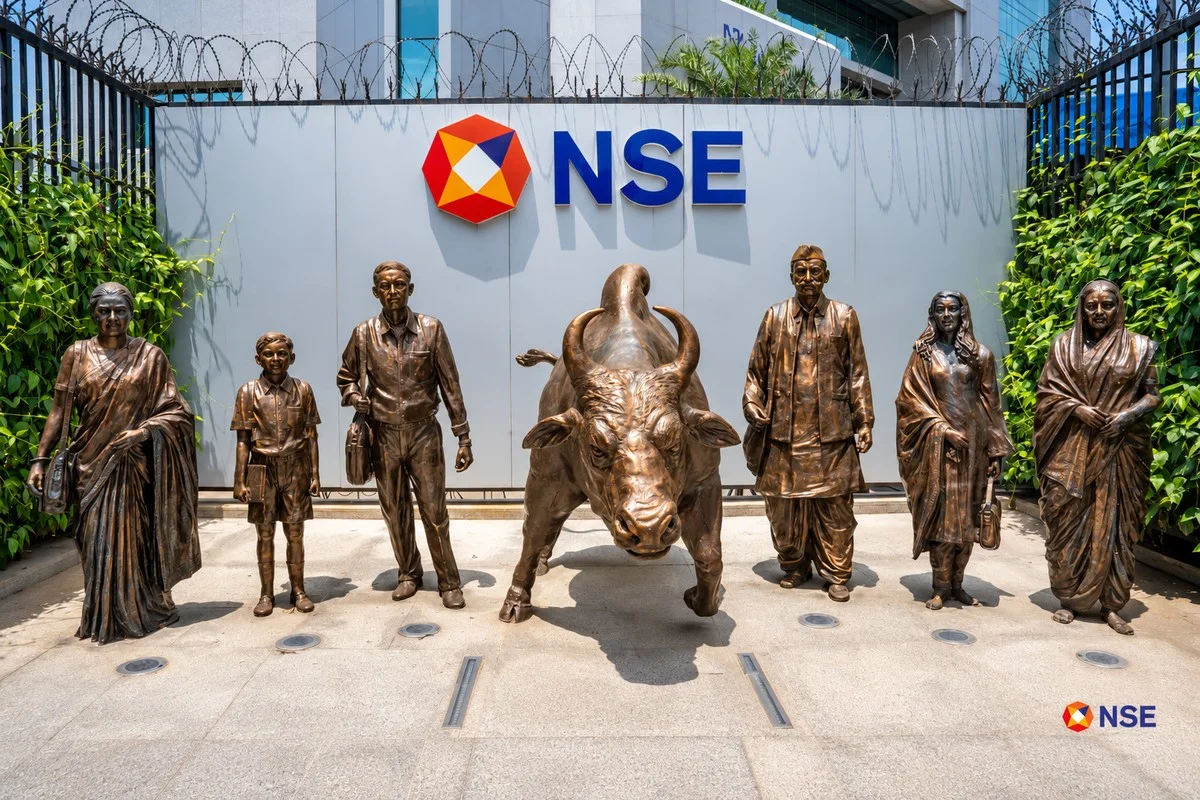
NSE shares fell after listing at Rs 1,800, dropping to 12th by market value. Experts identify Rs 1,760 support and Rs 1,795 resistance.

Goldman Sachs retains its Buy rating on IndiGo with a Rs 5,900 target, citing international growth, cost leadership and better FY28 profitability.

Kirloskar Oil Engines posted 16% Q1 FY27 revenue growth, while margins missed estimates. Motilal Oswal cut earnings estimates and raised its target...

Landmark Cars shares rose 12% to Rs 535.80 after adding BYD and M&M outlets, taking its network to 143 locations, with EV sales at 30% of Q1FY27 new...