Loading market data...
Tue, 20 Oct 2026
05:00:48 pm
Tue, 20 Oct 2026
05:00:48 pm
Synopsis
BSNL launches a ₹1.34 lakh satellite phone for defence, maritime, mining and disaster response users. Check its features, price, eligibility, and satellite phone rules in India.
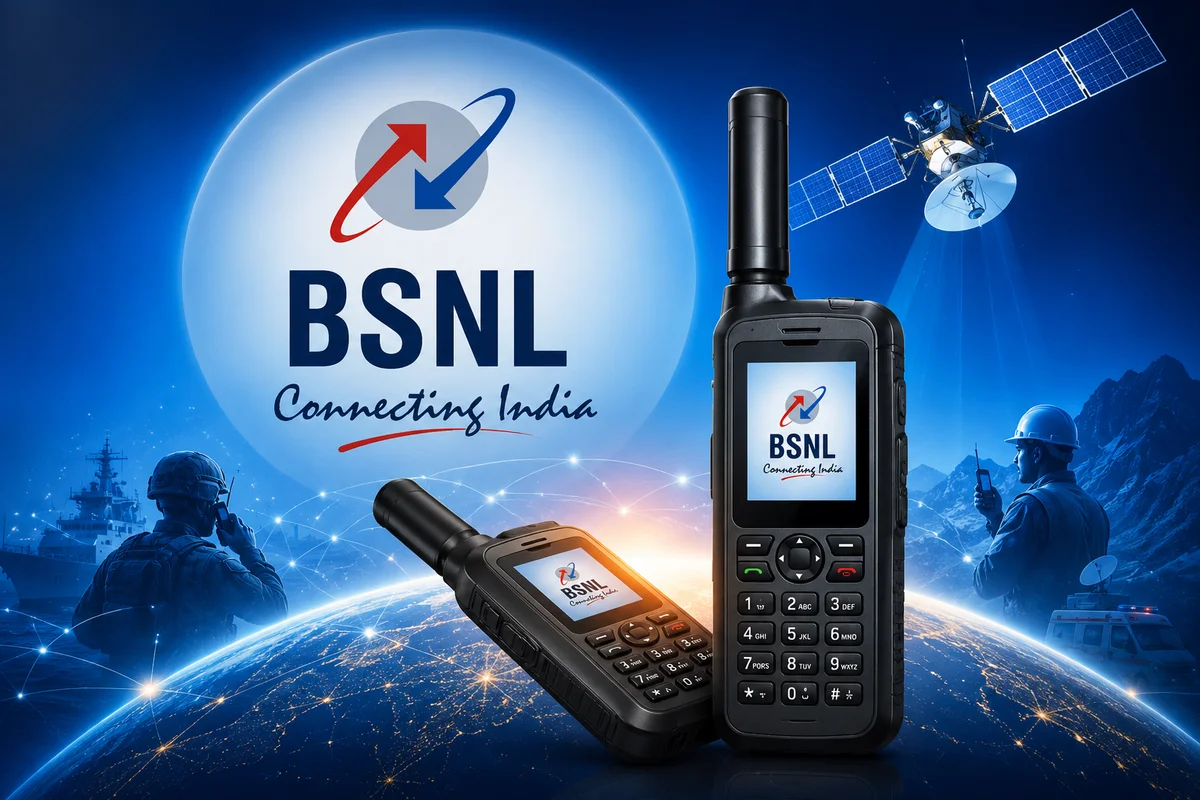
State-owned telecom operator Bharat Sanchar Nigam Limited (BSNL) has launched a satellite phone priced at ₹1,34,166, targeting users operating in remote and challenging environments where conventional mobile networks are unavailable. The device is primarily intended for defence personnel, maritime operations, disaster response teams, mining companies, and authorised off-grid users, with ownership and usage subject to strict government regulations.
BSNL has expanded its communication portfolio by launching a new satellite phone service designed for users who require connectivity beyond the reach of traditional cellular networks.
The public sector telecom company announced the launch on social media, stating that the satellite phone is built for mission-critical communication in difficult terrains and emergency situations.
According to BSNL, the device ensures reliable connectivity even in areas where conventional mobile towers are unavailable.
The newly launched BSNL satellite phone is priced at:
| Particular | Details |
|---|---|
| Device Price | ₹1,34,166 |
| Taxes | Included |
| Availability | Through authorised BSNL offices |
The satellite phone is designed to provide uninterrupted communication in remote locations.
| Feature | Description |
|---|---|
| Satellite Connectivity | Works where mobile networks are unavailable |
| Voice Calling | Enables communication from remote locations |
| Emergency Support | Designed for emergency situations |
| Long Battery Life | Suitable for extended field operations |
The service is aimed at ensuring communication continuity during emergencies, remote field operations, and critical infrastructure deployments.
Unlike regular smartphones, BSNL's satellite phone is not intended for unrestricted public use.
The device is primarily meant for authorised users such as:
Individuals or organisations interested in purchasing the device must contact their nearest BSNL office to understand eligibility requirements and obtain the necessary approvals.
Satellite phones communicate directly with satellites instead of relying on terrestrial telecom towers.
This enables connectivity in locations where traditional mobile networks are unavailable, including:
These devices play a critical role during natural disasters when conventional telecom infrastructure becomes unavailable.
Satellite phone ownership and usage remain highly regulated in India due to national security considerations.
Under the Telecommunications Act, 2023, satellite phones cannot be legally operated without prior approval from the Department of Telecommunications (DoT).
Users generally require:
Foreign nationals carrying satellite phones into India are also required to declare such devices at customs.
India maintains strict controls over satellite communication because such devices bypass conventional telecom infrastructure, making monitoring more difficult for security agencies.
The regulations became significantly stricter after the 2008 Mumbai terror attacks, during which terrorists reportedly used satellite phones to communicate with handlers outside India.
As a result, satellite phone usage is closely monitored, particularly in sensitive regions including border areas.
BSNL's satellite phone launch reflects the growing need for reliable communication infrastructure in remote and mission-critical environments.
As sectors such as defence, disaster management, mining, offshore operations, and remote infrastructure continue expanding, satellite-based communication is becoming increasingly important for operational continuity and emergency response.
The launch also strengthens BSNL's presence in specialised communication services beyond traditional telecom offerings.
The BSNL satellite phone is priced at ₹1,34,166, including applicable taxes.
The device is primarily intended for authorised users, including defence personnel, maritime operators, disaster response agencies, mining companies, and organisations operating in remote locations.
Yes. The device connects through satellites, allowing communication in areas where conventional mobile networks are unavailable.
Yes. Satellite phone usage in India is regulated under the Telecommunications Act, 2023, and generally requires prior authorisation or approval from the Department of Telecommunications (DoT).
Interested users can contact their nearest BSNL office or the company's authorised representatives to understand eligibility requirements and the approval process.

Financial journalist specializing in market analysis, stock research, and investment trends. Dedicated to providing accurate, timely insights for informed decision-making.
Credentials: Experienced financial journalist with expertise in equity markets and economic analysis
The information provided in this article is for educational and informational purposes only and should not be construed as financial, investment, or legal advice. welomoney does not provide personalized investment recommendations.
For detailed terms and conditions, please read our Disclaimer and Terms of Service.

L&T has begun preliminary work on the New Tashkent International Airport project after receiving a limited notice to proceed.

DLF share price has 41% upside, according to HSBC’s target. Compare Jefferies, CLSA and other broker views on sales, cash flow and valuations.
Divi's Laboratories shares rose 1.01% to Rs 9,242.50 after a positive EU opinion on Eli Lilly's weight loss drug Foundayo. See the growth outlook.

Awfis revenue target exceeds Rs 1,800 crore for FY27, with flexible workspace demand supporting growth. Expansion and execution remain key to watch.

L&T has won a contract worth over Rs 15,000 crore. The client, project scope and execution timeline remain undisclosed, leaving its revenue impact...