Loading market data...
Tue, 20 Oct 2026
06:01:16 pm
Tue, 20 Oct 2026
06:01:16 pm

Rudransh Sangwan
Published at: September 4, 2026, 9:53 AM
Synopsis
Ola Electric opens partner dealerships across India and plans a wider sales and service network as the company expands its electric scooter business.
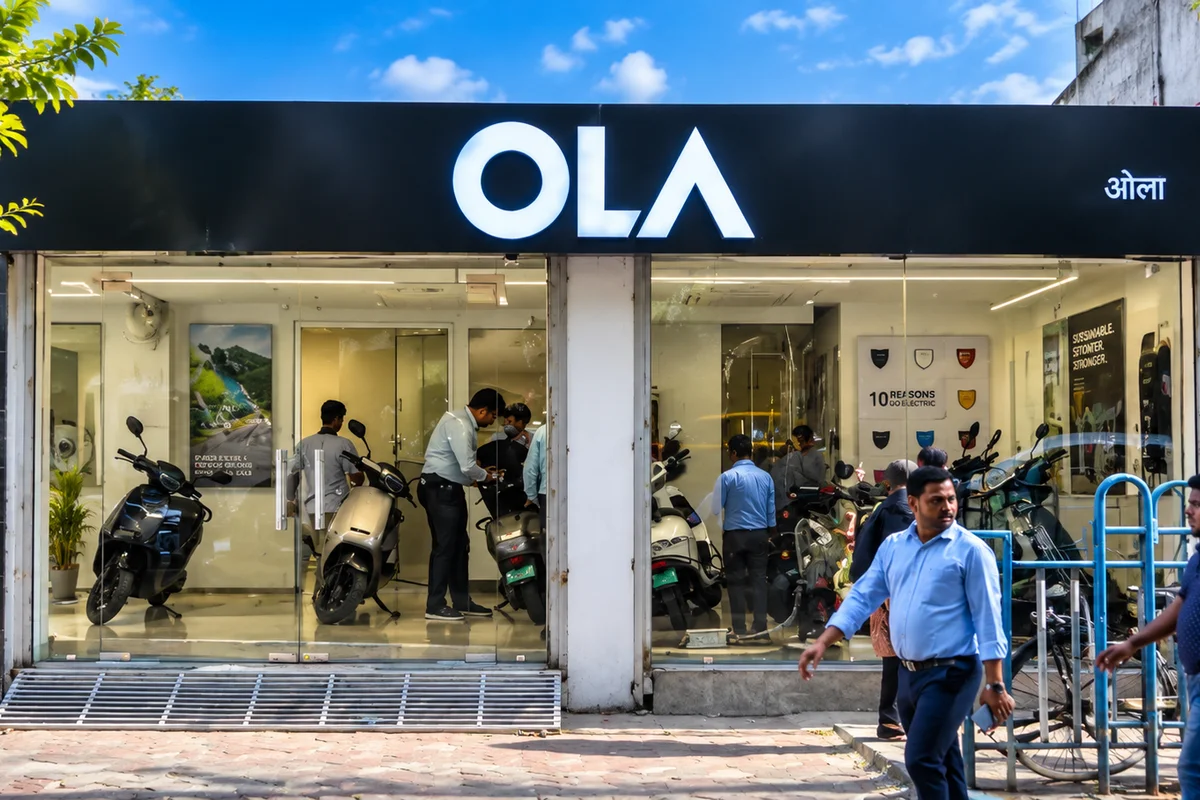
Ola Electric has launched its first set of network partner dealerships across seven states as the electric two wheeler maker shifts from its earlier direct to consumer sales model. The company plans to build a network of more than 500 partner dealerships over the next couple of quarters.
The first dealerships have opened across Rajasthan, Tamil Nadu, Maharashtra, Bihar, Telangana, Uttar Pradesh and Madhya Pradesh. The expansion is aimed at increasing local sales and improving after sales service as Ola Electric works to address customer service backlogs.
Ola Electric operated a company owned store network during its first five years. It is now moving to a dealer partner model, allowing third party partners to invest in local showrooms and service operations.
The company expects the new structure to help it expand faster while reducing the capital needed for physical retail expansion. The rollout is targeted to reach more than 500 dealerships by late 2026.
The dealership expansion comes after a sharp sequential improvement in Ola Electric's vehicle registrations in the first quarter of FY27.
| Metric | Q1 FY27 change |
|---|---|
| Vehicle registrations | +97% QoQ |
| Market share | 8.4% |
| Q4 FY26 market share | 5.1% |
| Auto revenue | +72% QoQ |
| Auto gross margin | 30.5% |
Vehicle registrations increased 97% quarter on quarter, while auto revenue rose 72%. Ola Electric's market share also increased to 8.4% from 5.1% in the previous quarter.
The company is using the dealer model not only to expand sales but also to bring service points closer to customers, particularly in Tier 2 and Tier 3 markets.
Local dealers are expected to handle physical sales and after sales operations, while Ola Electric can focus more of its resources on products, battery cell manufacturing and brand building.
Ola Electric recently launched the S1Z mass market electric scooter, powered by its in house manufactured Bharat Cell. The launch comes as the company works to expand its product range and reach a wider customer base.
The company also appointed former Hyundai Motor India President BVR Subbu as a Senior Advisor in August 2026. His role is linked to supporting the company's next phase of distribution and business execution.
The success of the new dealership strategy will depend on how quickly the 500 plus network is established and whether dealers can provide consistent service and parts support.
Investors will also track monthly vehicle registrations, market share, dealer expansion and the effect of dealer incentives on costs. The company's ability to maintain its 30.5% auto gross margin while increasing volumes will also remain important.
Ola Electric is expanding its dealer network after a strong sequential recovery in Q1 FY27. Its future will depend on sales growth, service quality and successful dealership execution.
Yes. Ola Electric has started opening partner operated dealerships across India as it moves beyond its earlier company owned retail model.
Ola Electric plans to build a network of more than 500 partner dealerships over the next couple of quarters.
Ola Electric is targeting a network of more than 500 dealerships around the latter part of 2026, according to the company's current expansion plan.
The first wave of Ola Electric partner dealerships includes Rajasthan, Tamil Nadu, Maharashtra, Bihar, Telangana, Uttar Pradesh and Madhya Pradesh.
Yes. Ola Electric is moving from a mainly direct to consumer model to a dealer partner structure for local sales and service.
Ola Electric is using dealer partners to expand its physical presence faster while reducing the capital required for local showrooms and service operations.
The dealer model could make Ola Electric sales and service more accessible, especially in smaller cities. The benefit will depend on how consistently dealers provide service and parts support.
Ola Electric expects dealer partners to strengthen local after sales support. The actual improvement will depend on service capacity, spare parts availability and dealer execution.
The dealer expansion is particularly relevant for Tier 2 and Tier 3 markets because local sales and service points can make Ola Electric scooters easier to access.
Yes. Ola Electric has an official Network Partner Program through which businesses can express interest in becoming authorised sales and service partners.
Ola Electric dealer partners can handle local vehicle sales and service while receiving sales support, training and service infrastructure from Ola Electric.
Yes. Ola Electric says its network partners receive sales support and training, while its service ecosystem includes MoveOS diagnostics and Hyperservice training infrastructure.
Ola Electric's new dealer model does not mean its entire existing retail presence disappears. The company is shifting more local sales and service activity towards dealer partners.
The expansion could help Ola Electric increase its physical reach while limiting the capital required for company owned stores. Execution and service quality will remain important.
Yes. Ola Electric's market share increased to 8.4% in Q1 FY27 from 5.1% in Q4 FY26, according to its reported operating data.
Ola Electric's vehicle registrations increased 97% quarter on quarter in Q1 FY27, significantly faster than the broader electric two wheeler market.
Ola Electric showed a sequential recovery in Q1 FY27, with registrations up 97%, market share rising to 8.4% and auto revenue increasing 72% quarter on quarter.
Ola Electric's automotive revenue increased 72% quarter on quarter to ₹455 crore in Q1 FY27.
Ola Electric was still loss making in Q1 FY27. Its consolidated loss narrowed to around ₹336 crore, according to reported quarterly results.
Ola Electric reported an automotive gross margin of 30.5% in Q1 FY27, while maintaining the margin despite commodity cost pressures.
The S1Z is part of Ola Electric's mass market scooter push and uses the company's Bharat Cell technology. Buyers should compare its price, range, features and service availability before purchasing.
Bharat Cell is Ola Electric's in house battery cell technology. The company is using its locally manufactured cells in products including the S1Z.
Ola Electric is using its in house Bharat Cell technology in its newer products. Long term reliability will depend on real world usage and the company's manufacturing and service performance.
Ola Electric and TVS Motor compete in India's electric two wheeler market, but they have different distribution models. TVS Motor has an established dealer network, while Ola Electric is now expanding its own partner network.
Ola Electric and Bajaj Auto compete in electric scooters, but Bajaj Auto has a long established dealership and service network. Ola Electric is now trying to expand its reach through partner dealerships.
The dealership expansion is a positive business development, but it does not by itself determine whether Ola Electric stock is a good buy. Investors should also consider financial results, sales growth, cash position and execution.
Ola Electric's long term performance will depend on electric scooter demand, market share, margins, cash requirements and the success of its new dealer network.
Ola Electric is expanding its dealer network after vehicle registrations and market share improved in Q1 FY27. The company is also looking to strengthen local sales and after sales service.
A larger dealership network could increase Ola Electric's local reach and make test rides, purchases and service more accessible. Actual sales growth will depend on customer demand and dealer execution.
Ola Electric has set a target of more than 500 partner dealerships. Whether it reaches that number on schedule will depend on partner onboarding, store setup and regional execution.
The dealer model could reduce the capital burden of physical expansion and support sales growth, but investors should track dealership rollout, registrations, margins and service performance before judging the impact.
A larger sales and service network could help Ola Electric compete more directly with established players such as TVS Motor and Bajaj Auto, which already have extensive dealer networks.
A major risk is inconsistent service quality between dealerships. Parts availability, repair times, dealer economics and customer experience will be important to the success of the network.
Yes. The dealer partner model shifts much of the investment and local operating responsibility for physical outlets to third party partners, allowing Ola Electric to expand with less company owned infrastructure.
Ola Electric is worth watching because its market share, registrations and auto revenue improved sequentially in Q1 FY27. The next test is whether the dealer expansion can convert that recovery into sustained sales growth.
Financial journalist specializing in market analysis, stock research, and investment trends. Dedicated to providing accurate, timely insights for informed decision-making.
Credentials: Experienced financial journalist with expertise in equity markets and economic analysis
The information provided in this article is for educational and informational purposes only and should not be construed as financial, investment, or legal advice. welomoney does not provide personalized investment recommendations.
For detailed terms and conditions, please read our Disclaimer and Terms of Service.

Diwali Muhurat Trading 2026 is scheduled for November 8 from 2:20 PM to 3:30 PM. See NSE and BSE timings, pre-open session and market schedule.

Sugar stocks fell up to 5.79% after the government barred sugarcane juice and syrup for FY27 ethanol procurement. Analysts flag earnings pressure.

NSE indices on October 16, 2026: Nifty IT rises 3.12%, Nifty 50 gains 0.49%, while Nifty FMCG, Capital Market and Bank indices decline.

India-US trade deal could influence Sensex, Nifty 50 and export stocks. Explore five sectors to watch and the key factors investors should track.

India agricultural growth may approach zero as El Niño threatens crops, with output potentially falling 4%.