Loading market data...
Tue, 29 Sept 2026
07:43:16 pm
Tue, 29 Sept 2026
07:43:16 pm

Rudransh Sangwan
Published at: August 7, 2026, 7:41 AM
Synopsis
Maharashtra has imposed a complete ban on fake paneer (analog paneer), prohibiting its manufacturing, storage, transport and sale across the state. Learn why Maharashtra banned analog paneer, the list of prohibited activities, penalties of up to 6 months in jail and ₹1 lakh fine, FSSAI food safety rules, Mumbai crackdown, and what this means for consumers and businesses.
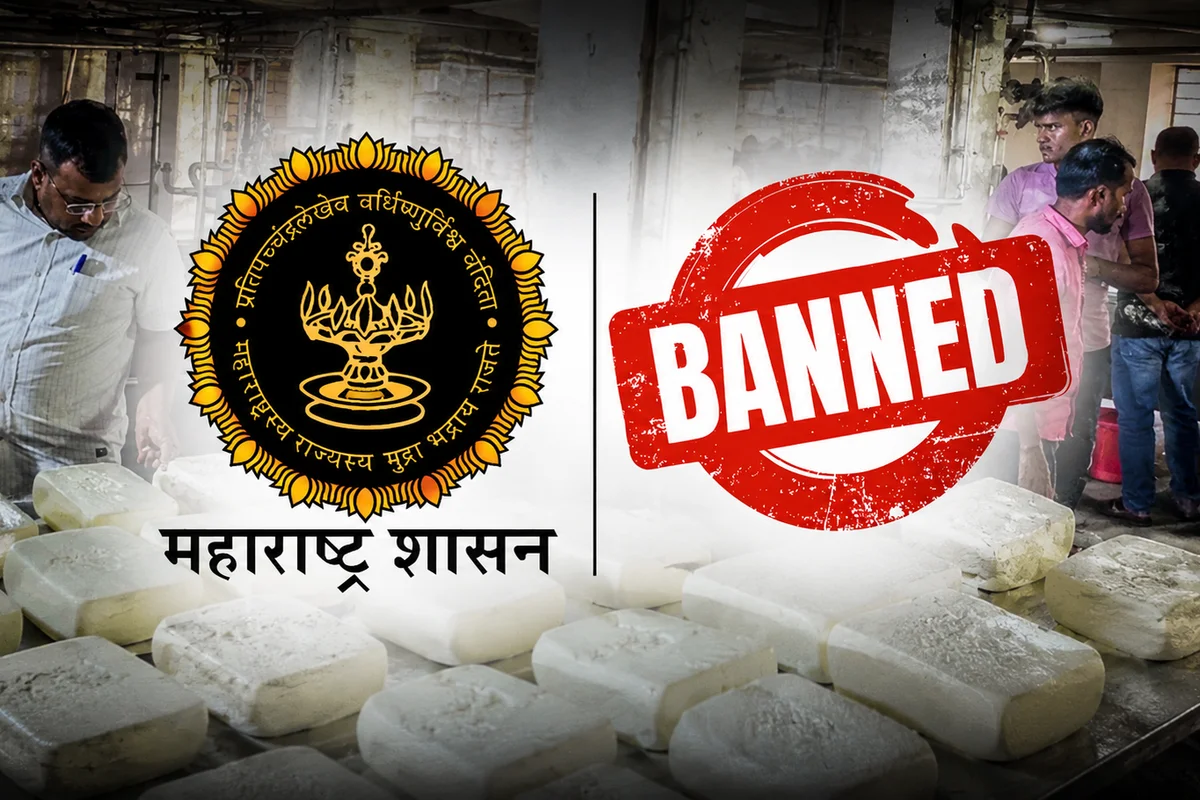
The Maharashtra government has announced a complete ban on analog paneer, widely known as fake paneer, in one of the country's strongest food safety actions aimed at protecting consumers from misleading dairy products. The new order prohibits the manufacturing, processing, storage, transportation, distribution and sale of analog paneer throughout the state, making Maharashtra the second Indian state to introduce such a comprehensive restriction. The directive has been issued by Food Safety Commissioner Tukaram Mundhe under the Food Safety and Standards Act, 2006, after increasing concerns over non-dairy products allegedly being sold as traditional paneer without proper disclosure. Officials said the move is intended to improve transparency in the food industry and prevent consumers from unknowingly purchasing imitation dairy products made from vegetable fats and other non-dairy ingredients.
The government stated that several products available in the market closely resemble conventional paneer in appearance and texture despite containing little or no dairy content. Authorities believe many consumers are unable to distinguish between genuine dairy paneer and analog alternatives because of inadequate labeling and misleading product claims. By imposing restrictions across the entire supply chain instead of only banning retail sales, Maharashtra aims to strengthen enforcement while improving food quality standards and consumer confidence. The order also forms part of the state's broader campaign against food adulteration and misleading food products being sold in the market.
| Activity | Status in Maharashtra |
|---|---|
| Manufacturing of Analog Paneer | Banned |
| Processing | Banned |
| Storage | Banned |
| Transportation | Banned |
| Distribution | Banned |
| Sale | Banned |
Analog paneer is a non-dairy substitute developed to resemble traditional paneer in both appearance and texture. Instead of using milk fat, manufacturers often prepare these products using vegetable fats, palm oil and other non-dairy ingredients, making production significantly cheaper than conventional dairy paneer. Although these products may look similar to regular paneer, food safety authorities have expressed concerns that consumers are frequently unaware of the difference because the products are not always marketed with sufficiently clear labeling or disclosures.
Officials believe such practices have the potential to mislead consumers who expect to purchase authentic dairy products. The Maharashtra government has therefore taken the view that stricter regulation is necessary to improve transparency across the dairy sector while ensuring consumers receive accurate information about the food they purchase. Authorities also expect the new restrictions to discourage the manufacture and circulation of imitation dairy products that could undermine confidence in genuine dairy brands.
Businesses found violating the ban will face legal action under the Food Safety and Standards Act, 2006. According to the government, individuals involved in the manufacture, storage, transportation or sale of prohibited analog paneer may face up to six months of imprisonment along with a fine of up to ₹1 lakh. These penalties are intended to discourage illegal production and strengthen compliance with food safety regulations across Maharashtra.
Authorities have also highlighted that far stricter punishments apply if unsafe food products result in serious health consequences. In cases where contaminated or unsafe food causes death, offenders may face life imprisonment along with a minimum fine of ₹10 lakh under applicable provisions of food safety law. The government has made it clear that enforcement agencies will closely monitor compliance and take strict action against violators.
| Violation | Possible Penalty |
|---|---|
| Manufacturing or selling banned analog paneer | Up to 6 months imprisonment |
| Monetary Fine | Up to ₹1 lakh |
| Unsafe food causing death | Life imprisonment |
| Fine in serious cases | Minimum ₹10 lakh |
The decision follows growing concern over the circulation of adulterated dairy products and imitation paneer being sold as genuine dairy products across the state. The issue had previously been raised in the Maharashtra Legislative Assembly, where lawmakers called for stricter regulation and stronger enforcement against fake dairy products. Following consultations and regulatory review, the Food Safety Commissioner issued the order on July 30, after which the restrictions came into effect across Maharashtra.
Officials said the objective extends beyond banning a single product category. The government wants to improve consumer protection, strengthen food labeling standards and ensure greater accountability throughout the dairy supply chain. Authorities believe that clear regulations combined with strict enforcement will help reduce misleading practices while encouraging manufacturers to maintain higher standards of quality and transparency.
The ban is part of Maharashtra's wider food safety enforcement drive, which has been underway for several months. Since May, the Food and Drug Administration (FDA) has carried out multiple inspections and raids targeting suspected units involved in manufacturing synthetic milk and fake paneer. During one major operation at a warehouse in Manjari Khurd, Pune, officials reportedly seized around 1,400 kilograms of suspected fake paneer along with 1,800 kilograms of skimmed milk powder, 400 kilograms of GMS powder, 718 litres of palm oil, and other raw materials allegedly used to manufacture imitation dairy products.
The government has confirmed that inspections will continue across restaurants, hotels, food processing units and other food establishments as part of its statewide food safety campaign. Enforcement agencies are expected to increase surveillance, conduct surprise inspections and take legal action wherever violations are detected. Officials believe these measures will help improve hygiene standards, strengthen consumer confidence and ensure that only compliant dairy products reach the market.
The new regulations are expected to significantly improve transparency in Maharashtra's dairy market by ensuring that products sold as paneer comply with applicable food safety standards. Consumers are likely to benefit from better product labeling, stricter regulatory oversight and stronger enforcement against misleading or adulterated food products. The move also sends a clear message that food businesses must maintain higher standards of quality while providing accurate information about the products they sell.
For dairy manufacturers, wholesalers, retailers and food service businesses, the ban introduces stricter compliance requirements throughout the supply chain. Companies dealing in dairy products will need to ensure complete adherence to food safety regulations, while consumers can expect stronger monitoring and faster enforcement against violations. With one of India's toughest regulatory actions against fake paneer now in force, Maharashtra has taken a significant step toward strengthening food safety, improving consumer protection and promoting greater transparency across the dairy industry.
Analog paneer is a non-dairy alternative to traditional paneer that is typically made using vegetable fats, palm oil and other non-dairy ingredients instead of milk fat. It often resembles regular paneer in appearance and texture but is not genuine dairy paneer.
Yes. The Maharashtra government has imposed a complete ban on the manufacturing, processing, storage, transportation, distribution and sale of analog paneer across the state to protect consumers from misleading dairy products.
The state government introduced the ban to prevent consumers from being misled by products marketed as traditional paneer despite being made from non-dairy ingredients. The move is aimed at improving food safety, transparency and product labeling.
Violating the ban can attract up to six months of imprisonment and a fine of up to ₹1 lakh under the Food Safety and Standards Act, 2006. More severe penalties apply if unsafe food causes serious health consequences.
No. The order prohibits the manufacture, storage, transportation, distribution and sale of analog paneer, meaning restaurants, hotels and food establishments cannot legally use or sell the banned product in the state.
Traditional paneer is made from milk, whereas analog paneer is manufactured using vegetable fats, palm oil and other non-dairy ingredients. Although they may look similar, their composition and nutritional value are different.
The ban was introduced through an order issued by the Food Safety Commissioner on July 30, 2026, and is now applicable across Maharashtra.
During enforcement raids, authorities reportedly seized 1,400 kilograms of suspected fake paneer, along with 1,800 kilograms of skimmed milk powder, 400 kilograms of GMS powder, 718 litres of palm oil, and other materials allegedly used to manufacture imitation dairy products.
Financial journalist specializing in market analysis, stock research, and investment trends. Dedicated to providing accurate, timely insights for informed decision-making.
Credentials: Experienced financial journalist with expertise in equity markets and economic analysis
The information provided in this article is for educational and informational purposes only and should not be construed as financial, investment, or legal advice. welomoney does not provide personalized investment recommendations.
For detailed terms and conditions, please read our Disclaimer and Terms of Service.

Nifty briefly slid up to 2.2% and Bank Nifty lost 1,100 points on F&O expiry as CAS-driven price swings put SEBI’s settlement framework under review...
FIIs sold Rs 5,353 crore on Monday as the Nifty fell to 22,780, while DIIs bought Rs 5,189 crore amid broad market weakness and heavy selling.

India-France defence ties deepen as Lt Gen Dominique Tardif backs Atmanirbhar Bharat and outlines Tarang Shakti 2026, AI, space and defence industry...
Bank Nifty fell 1.9% as Brent crude reached $106.7, while Yes Bank, Union Bank and IDFC First Bank led banking stock losses.

Nifty 50 is about 2,900 points below its 26,340 peak. See how crude oil, Hormuz risks and easing energy costs could shape an Indian market rebound in...