Loading market data...
Fri, 18 Sept 2026
12:52:44 am
Fri, 18 Sept 2026
12:52:44 am

Rudransh Sangwan
Published at: August 3, 2026, 7:50 PM
Synopsis
Learn what Grey Market Premium (GMP) is, how it is calculated, what Kostak Rate and Subject to Sauda mean, factors affecting IPO GMP, its advantages, risks, and why investors should not rely solely on GMP before investing in an IPO.
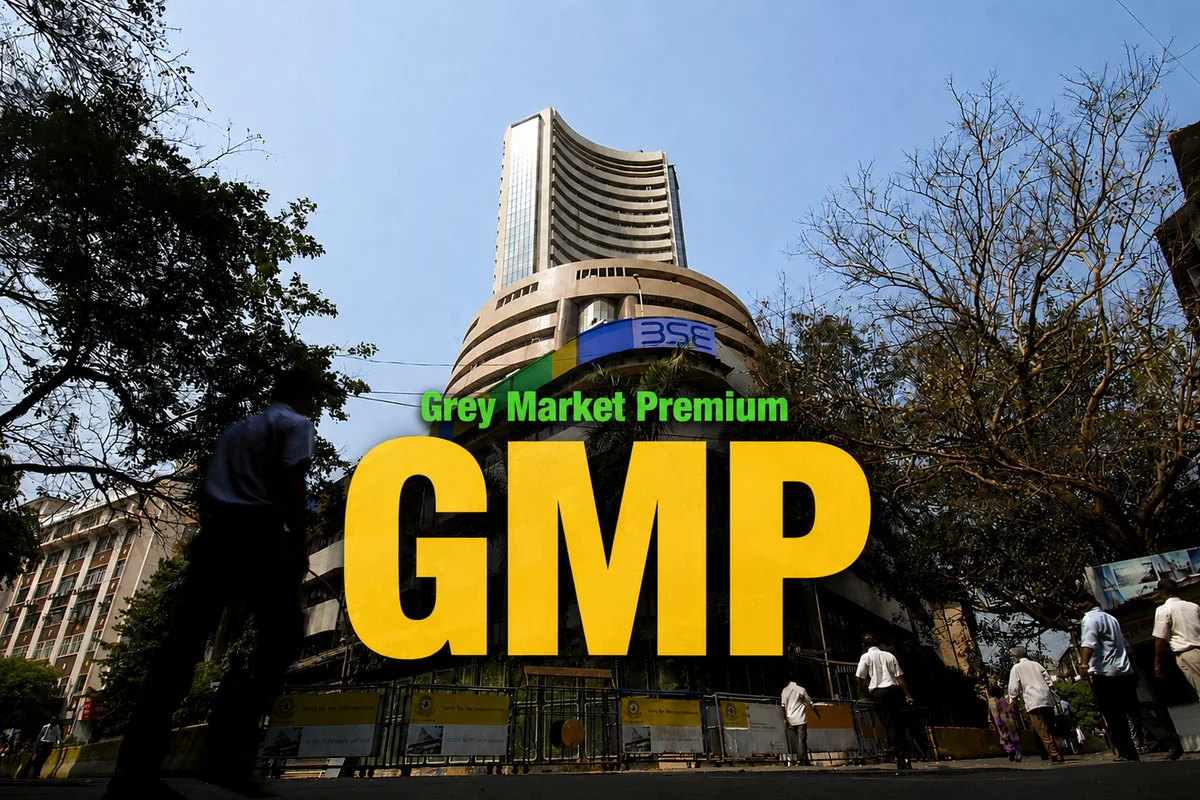
Every IPO season brings one term that dominates investor discussions even before share allotment begins: Grey Market Premium (GMP). Whether an IPO belongs to a large company or a small SME, investors often check the GMP first to estimate how the stock could perform on its listing day. A strong GMP is generally viewed as a sign of healthy demand, while a weak or negative GMP may indicate cautious market sentiment.
However, Grey Market Premium is not an official indicator and should never be treated as a guarantee of listing gains. The grey market operates outside recognised stock exchanges and remains completely unregulated. While GMP can provide an early indication of investor interest, successful IPO investing should always be based on the company's financial performance, valuation, business model, competitive position and long term growth prospects rather than unofficial market speculation.
The Grey Market is an unofficial marketplace where investors buy and sell IPO shares or IPO applications before the shares are listed on recognised stock exchanges like the NSE or BSE. Unlike the stock market, these transactions do not take place through regulated exchanges and are not supervised by SEBI.
Instead, grey market transactions are conducted privately through dealers and brokers based on mutual trust. Since there is no legal framework governing these trades, neither buyers nor sellers receive regulatory protection if a transaction fails.
| Particulars | Details |
|---|---|
| Market Type | Unofficial OTC Market |
| Regulator | None |
| Trading Period | Before IPO Listing |
| Exchange Platform | Not Available |
| Settlement | Mutual Trust Between Parties |
| Legal Protection | No |
Grey Market Premium (GMP) refers to the amount investors are willing to pay above the official IPO issue price in the grey market before listing. It reflects current market sentiment and indicates how strongly investors expect the IPO to perform when it debuts on the stock exchange.
For example, if an IPO has an issue price of ₹500 and its GMP is ₹80, investors in the grey market are willing to pay ₹580 for the share. A higher GMP generally suggests stronger demand, while a lower or negative GMP points to weaker investor sentiment.
It is important to remember that GMP changes daily based on demand, subscription data and overall market conditions. It is an indicator of sentiment rather than a guaranteed prediction of listing performance.
Investors generally use two simple calculations to estimate expected listing prices and potential listing gains based on the prevailing grey market premium.
| Formula | Calculation |
|---|---|
| Expected Listing Price | IPO Issue Price + GMP |
Example
| IPO Issue Price | GMP | Expected Listing Price |
|---|---|---|
| ₹500 | ₹80 | ₹580 |
| Formula | Calculation |
|---|---|
| Estimated Gain (%) | (GMP ÷ IPO Issue Price) × 100 |
Example
| IPO Issue Price | GMP | Estimated Listing Gain |
|---|---|---|
| ₹500 | ₹80 | 16% |
These calculations provide only an estimate based on prevailing grey market sentiment. The actual listing price may differ significantly depending on market conditions on listing day.
Understanding whether GMP is positive, zero or negative helps investors interpret current market expectations.
| GMP Level | Market Interpretation | Example |
|---|---|---|
| Positive GMP | Strong demand and positive sentiment | Issue Price ₹100 + GMP ₹35 = Expected ₹135 |
| Zero GMP | Neutral demand with limited listing expectations | Expected Listing around ₹100 |
| Negative GMP | Weak demand and cautious sentiment | Issue Price ₹100 + GMP -₹15 = Expected ₹85 |
Although positive GMP often indicates strong interest, it does not guarantee listing gains. Similarly, several IPOs with low GMP have delivered strong long term returns after listing.
Along with GMP, investors often come across two additional terms that are commonly used in the grey market.
| Term | Meaning |
|---|---|
| Kostak Rate | Fixed amount paid for selling an IPO application before allotment, irrespective of whether shares are allotted. |
| Subject to Sauda (SS) | Payment is made only if the IPO allotment is received. If no shares are allotted, the transaction is cancelled. |
The Kostak Rate helps investors lock in a fixed return before allotment, while Subject to Sauda depends entirely on receiving an allotment.
Grey Market Premium is highly dynamic and can move sharply within a single day depending on market developments.
| Factor | Impact on GMP |
|---|---|
| IPO Subscription Numbers | Higher demand generally increases GMP |
| QIB Participation | Strong institutional buying improves sentiment |
| Overall Stock Market Trend | Bullish markets support higher GMP |
| Company Financials | Strong fundamentals attract buyers |
| Industry Valuation | Higher peer valuations often improve GMP |
| News Flow | Positive developments increase investor confidence |
Because these factors continue changing throughout the IPO subscription period, GMP also fluctuates frequently until listing.
Grey Market Premium can be useful when used correctly, but relying on it alone can expose investors to unnecessary risks.
| Advantages | Risks |
|---|---|
| Indicates current investor sentiment | Completely unregulated market |
| Provides an early indication of listing demand | Prices can be artificially manipulated |
| Helps estimate possible listing direction | GMP changes rapidly before listing |
| Useful for short term listing strategies | No legal protection for participants |
| Tracks retail demand | Does not guarantee listing gains |
Experienced investors generally consider GMP as only one of several indicators while evaluating an IPO.
The simple answer is No.
A high GMP can indicate strong market enthusiasm, but it should never replace detailed fundamental analysis. Investors should carefully evaluate the company's revenue growth, profitability, debt levels, valuation, management quality, competitive position and future expansion plans before making an investment decision.
Many IPOs with exceptionally high GMP have listed below expectations, while several IPOs that initially attracted limited grey market interest have generated strong long term returns for shareholders.
| Factor | Importance |
|---|---|
| Company Financials | Very High |
| Revenue & Profit Growth | Very High |
| Valuation | Very High |
| Industry Outlook | High |
| Management Quality | High |
| Debt Levels | High |
| Grey Market Premium | Medium |
| Subscription Data | Medium |
Grey Market Premium (GMP) has become one of the most closely watched indicators during every IPO, offering investors an early glimpse into market sentiment before listing. While it can help estimate possible listing performance, it should never be treated as a guarantee of profits or used as the sole basis for an investment decision.
The most successful IPO investors combine GMP, subscription data, company fundamentals, financial statements, industry outlook and valuation analysis before applying for an IPO. Using GMP as a supporting indicator rather than the primary decision making tool helps investors make more informed and balanced investment choices.
Grey Market Premium (GMP) is the extra amount investors are willing to pay for IPO shares in the unofficial grey market before the stock is listed on the NSE or BSE. It reflects current investor sentiment but does not guarantee listing gains.
The expected listing price is calculated by adding the IPO issue price and the Grey Market Premium (GMP).
Formula: Expected Listing Price = IPO Issue Price + GMP
A positive GMP generally indicates strong investor demand and suggests that the market expects the IPO to list above its issue price. However, the final listing price may differ depending on market conditions.
A negative GMP suggests weak investor interest or cautious market sentiment. It may indicate expectations of the IPO listing below its issue price, although this is not always the outcome.
No. The grey market operates outside recognised stock exchanges and is not regulated by SEBI. Transactions are conducted privately between buyers and sellers, making them riskier than exchange traded transactions.
GMP represents the premium at which IPO shares trade in the grey market, while the Kostak Rate is the fixed amount paid for selling an IPO application before allotment, regardless of whether shares are allotted.
Subject to Sauda (SS) is a grey market agreement where payment is made only if the seller receives an IPO allotment. If no shares are allotted, the transaction is cancelled.
No. A high GMP only reflects positive market sentiment before listing. Factors such as market volatility, subscription demand, valuation and investor sentiment on listing day can influence the actual listing price.
No. Investors should use GMP only as a secondary indicator. A complete IPO analysis should include the company's financial performance, valuation, business model, industry outlook, management quality and subscription data before making an investment decision.
GMP changes based on several factors, including IPO subscription levels, institutional investor demand, overall stock market sentiment, company fundamentals, peer valuations and major market news. Since these factors change frequently, the grey market premium also fluctuates until the listing date.
Financial journalist specializing in market analysis, stock research, and investment trends. Dedicated to providing accurate, timely insights for informed decision-making.
Credentials: Experienced financial journalist with expertise in equity markets and economic analysis
The information provided in this article is for educational and informational purposes only and should not be construed as financial, investment, or legal advice. welomoney does not provide personalized investment recommendations.
For detailed terms and conditions, please read our Disclaimer and Terms of Service.

Check the latest Hero Motors IPO GMP, subscription status, price band, lot size, listing details, financial performance and key IPO information.

Manika Plastech IPO details, including GMP, price band, lot size, subscription, listing information, financials and valuation for investors...

Hero Motors IPO GMP, price band, lot size, listing details, financials, valuation and key insights for investors.
SS Retail IPO GMP is ₹145 ahead of the September 16 opening. Check the price band, lot size, investment amount, IPO dates, listing details and...
NSE IPO GMP stands at ₹180 ahead of the September 17 opening. Check the price band, lot size, investment amount, IPO dates, listing details and...