Loading market data...
Tue, 29 Sept 2026
07:41:45 pm
Tue, 29 Sept 2026
07:41:45 pm
Synopsis
NSE IPO could value the National Stock Exchange at ₹5 lakh crore, making it one of India's most valuable listed financial institutions. Explore valuation scenarios, financial projections, key risks, market share, and what investors should watch before investing.
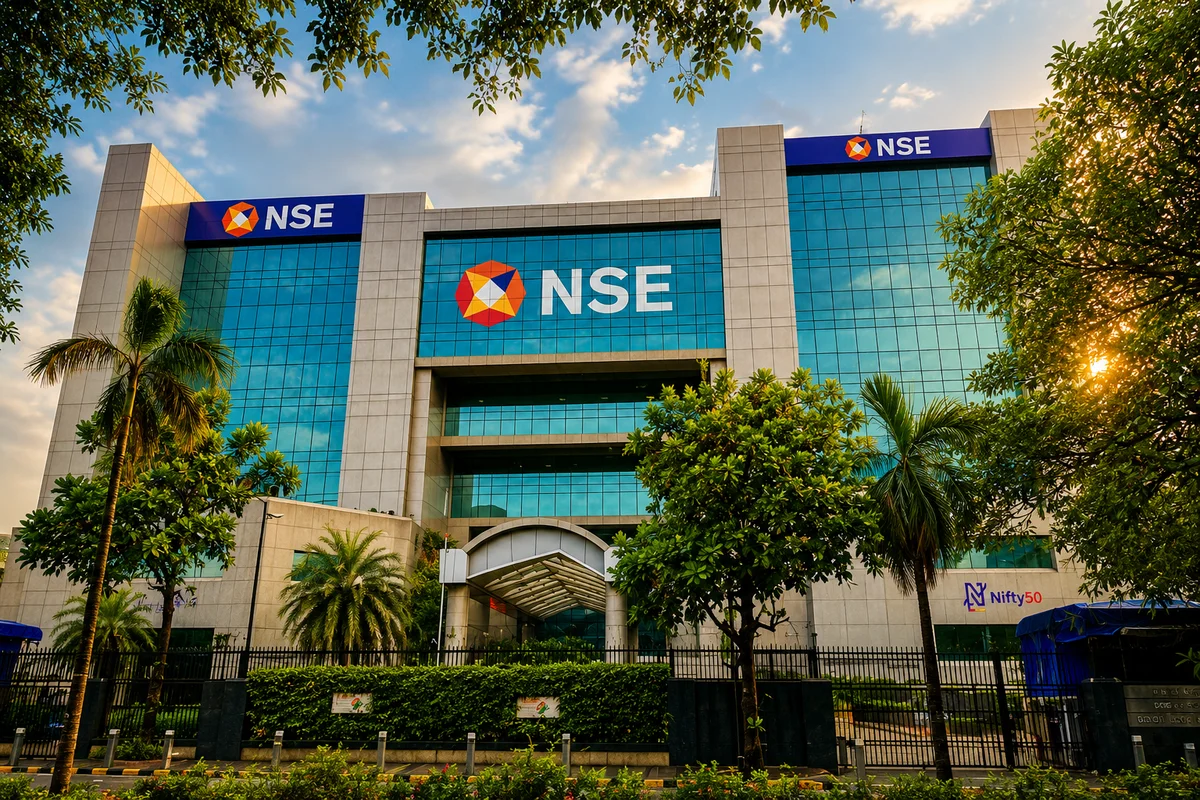
The National Stock Exchange (NSE) has officially filed its Draft Red Herring Prospectus (DRHP) for what could become India's biggest-ever IPO, with analysts estimating the exchange could command a valuation of around ₹5 lakh crore upon listing.
The public issue is structured entirely as an Offer for Sale (OFS), with up to 148.9 million equity shares, representing nearly 6% of NSE's outstanding equity, being sold by existing shareholders. If listed at the expected valuation, NSE would rank among India's most valuable listed financial institutions.
According to Centrum Institutional Research, investors should closely monitor two possible post-listing scenarios that could significantly influence the exchange's valuation and long-term stock performance.
| Particulars | Details |
|---|---|
| Company | National Stock Exchange (NSE) |
| IPO Type | Offer for Sale (OFS) |
| Shares on Offer | 148.9 Million |
| Stake Being Sold | Around 6% |
| Expected Valuation | ₹5 Lakh Crore |
| Potential Valuation (Bull Case) | ₹5.5 Lakh Crore |
| Key Sellers | SBI, Bank of Baroda, CPPIB, MS Strategic, Aranda Investments |
NSE dominates India's capital markets with an unmatched presence across multiple trading segments.
| Segment | FY26 Market Share |
|---|---|
| Cash Equity Trading | 93% |
| Equity Futures | Nearly 100% |
| Equity Index Options | 72% |
| Currency Derivatives | Near Monopoly |
| Corporate Bond Clearing | More than 85% |
The exchange currently serves over 129 million registered investors and facilitates trading across more than 3,200 securities and financial instruments, making it one of the world's largest stock exchanges by trading activity.
The optimistic scenario assumes that investors continue assigning a premium valuation to NSE because of its dominant market position and India's long-term financialisation story.
Centrum expects earnings growth to recover from FY27 onward, supported by rising investor participation and increasing trading activity.
| Metric | FY26 | FY28E |
|---|---|---|
| Operating Revenue | ₹16,600 Crore | ₹21,800 Crore |
| EBITDA | ₹13,300 Crore | ₹19,200 Crore |
| Net Profit Growth | ~16% CAGR | FY26–FY28E |
| EBITDA Margin | Above 70% | Expected to Remain Strong |
| Return on Equity (ROE) | Above 30% | High-30% Range |
At an estimated market capitalisation of ₹5 lakh crore, the exchange would trade at approximately 35–36 times FY28 estimated earnings, reflecting its strong profitability and cash-generating ability.
Several structural factors continue to support the exchange's long-term growth.
Over the past decade, India's cash market turnover has increased nearly six-fold, highlighting the rapid deepening of domestic financial markets.
While the long-term outlook remains positive, Centrum believes investors should also monitor regulatory developments that could impact trading activity.
Nearly 80% of NSE's operating revenue comes from trading-related income.
| Revenue Source | Contribution |
|---|---|
| Options Trading | Around 60% |
| Futures Trading | Around 9% |
| Other Trading Activities | Remaining Share |
Because derivatives contribute the majority of revenue, any slowdown in options trading could directly affect earnings growth.
Several policy changes could influence trading volumes over the coming years.
According to Centrum, if derivatives activity slows more than expected, sustaining valuations above ₹5 lakh crore may become challenging.
Despite regulatory uncertainties, NSE continues to deliver exceptional profitability.
| Financial Metric | FY21–FY26 CAGR |
|---|---|
| Revenue Growth | 24% |
| EBITDA Growth | 23% |
| Net Profit Growth | 23% |
| EBITDA Margin | Above 70% |
| Return on Equity | Above 30% |
These financial metrics position NSE among India's most profitable financial services companies.
Unlike many businesses that depend on cyclical demand, NSE benefits from structural growth in India's capital markets.
Its earnings are driven by:
This asset-light, high-margin business model has led many market experts to describe NSE as one of India's strongest cash-generating businesses.
The market will closely monitor several factors following the IPO.
| Key Monitor | Why It Matters |
|---|---|
| Trading Volume Growth | Drives transaction revenue |
| Retail Investor Addition | Supports long-term earnings |
| Derivatives Market Growth | Largest revenue contributor |
| Regulatory Changes | Could impact valuations |
| Quarterly Earnings | Indicates growth sustainability |
| Market Share | Reflects competitive strength |
NSE's upcoming IPO represents one of the most significant milestones in India's capital market history. Its dominant market position, exceptional profitability, and long-term exposure to India's financialisation trend make it one of the most closely watched public offerings in recent years. However, investors should balance the exchange's strong fundamentals against evolving regulatory policies and its heavy reliance on derivatives trading. Whether the market comfortably supports a valuation above ₹5 lakh crore will ultimately depend on NSE's ability to sustain earnings growth while navigating changes in the regulatory landscape.
Analysts estimate that NSE could be valued at around ₹5 lakh crore, with some bullish scenarios projecting a valuation of ₹5.5 lakh crore.
No. The IPO is structured entirely as an Offer for Sale (OFS), with existing shareholders selling around 6% of the company's equity.
Key sellers include State Bank of India (SBI), Bank of Baroda, Canada Pension Plan Investment Board (CPPIB), MS Strategic (Mauritius), and Aranda Investments (Mauritius).
NSE enjoys dominant market share across multiple trading segments, generates high operating margins above 70%, maintains strong return on equity, and benefits from India's growing capital markets.
The primary risks include regulatory changes affecting derivatives trading, higher Securities Transaction Tax (STT), tighter RBI norms, slower trading volumes, and increased compliance costs for market participants.

Financial journalist specializing in market analysis, stock research, and investment trends. Dedicated to providing accurate, timely insights for informed decision-making.
Credentials: Experienced financial journalist with expertise in equity markets and economic analysis
The information provided in this article is for educational and informational purposes only and should not be construed as financial, investment, or legal advice. welomoney does not provide personalized investment recommendations.
For detailed terms and conditions, please read our Disclaimer and Terms of Service.

Moneyview IPO opens on September 24, 2026, with a ₹1,091.68 crore issue. Check the price band, lot size, financials, business model, valuation and...

Moneyview IPO 2026 opens on September 24 with a ₹750 crore fresh issue and ₹341.68 crore OFS. Check price band, lot size, financials and key details.

Moneyview IPO 2026 opens on September 24 with a ₹750 crore fresh issue and ₹341.68 crore OFS. Check price band, lot size, financials and key details.

Vardaan Biotech has filed its DRHP for an IPO featuring a fresh issue of up to 3.50 crore shares. Explore its seed business and listing plans.

Cotton yarn maker Rudra Cottex filed its DRHP on September 17. Here’s a look at its proposed IPO size, financial performance and listing plans.