Loading market data...
Sun, 20 Sept 2026
12:55:08 pm
Sun, 20 Sept 2026
12:55:08 pm

Rudransh Sangwan
Published at: May 6, 2026, 11:32 AM
Synopsis
The upcoming IPO of National Stock Exchange is expected to become one of India’s biggest public offerings, with several major institutional investors preparing to offload stakes through the offer-for-sale route. Key shareholders including Life Insurance Corporation of India, Stock Holding Corporation of India, GIC Re, New India Assurance, ChrysCapital, and Temasek Holdings are likely to partially dilute their holdings. The IPO will not raise fresh capital for NSE but will provide liquidity to existing investors as the exchange moves toward public listing after years of delay.

India’s largest stock exchange, National Stock Exchange, is moving closer to what could become one of the country’s biggest IPOs ever. The long-awaited public issue is expected to attract massive institutional and retail attention, not just because of NSE’s dominant position in India’s financial ecosystem, but also due to the scale of shareholders likely to participate in the offer-for-sale route.
Unlike traditional IPOs where companies raise fresh capital, the NSE IPO will be entirely structured as an Offer for Sale. This means the exchange itself will not receive funds from the issue. Instead, existing shareholders will partially offload their holdings to public investors.
The structure creates a unique situation where large financial institutions, insurers, sovereign-linked investors, and private equity firms could unlock billions of rupees in value through stake sales.
NSE dominates India’s derivatives market with a market share exceeding 90 percent and remains one of the world’s largest exchanges by trading volume. Its strong profitability, high operating margins, and strategic importance to India’s capital markets have made its IPO highly anticipated for years.
At an estimated valuation of nearly ₹5 lakh crore, the IPO could become one of the biggest listings in Indian market history.
| Metric | Details |
|---|---|
| Estimated Valuation | ₹5 lakh crore |
| IPO Type | Offer for Sale |
| Fresh Issue | None |
| Proposed Stake Sale | Around 4.5% |
| Expected DRHP Timeline | 2026 |
| Sector | Financial Market Infrastructure |
Data suggests exchange businesses command premium valuations globally This leads to strong institutional interest in NSE shares Which results in expectations of heavy IPO oversubscription
Several high-profile shareholders are expected to monetize part of their holdings during the IPO.
| Investor | Current Stake | Likely Sale |
|---|---|---|
| LIC | 10.7% | Over 1% |
| Stock Holding Corporation of India | 4.4% | Around 0.44% |
| New India Assurance | Undisclosed | Partial Stake |
| GIC Re | Undisclosed | Partial Stake |
| ChrysCapital | Undisclosed | Likely Participant |
| Temasek Holdings | Undisclosed | Likely Participant |
The participation of these investors is expected to significantly increase the size of the OFS component.
Life Insurance Corporation of India is currently the single largest shareholder in NSE with a 10.7 percent holding.
Reports suggest LIC may offload more than 1 percent stake through the IPO.
| Item | Details |
|---|---|
| Current NSE Stake | 10.7% |
| Likely Stake Sale | 1%+ |
| Estimated Value at ₹5 Lakh Cr Valuation | ₹5,000 crore+ |
LIC’s participation is considered crucial because of both the size of its holding and the confidence signal it sends to institutional investors.
Stock Holding Corporation of India is another major shareholder likely to participate in the OFS.
The institution reportedly plans to sell about 0.44 percent stake.
| Item | Details |
|---|---|
| Current NSE Stake | 4.4% |
| Expected Stake Sale | 0.44% |
| Estimated Sale Value | ₹2,200 crore |
The company itself has significant government-linked ownership, with IFCI holding over 52 percent stake.
One under-discussed factor is the sharp rise in NSE’s unlisted market valuation over recent years.
Many institutional investors accumulated NSE shares years ago at significantly lower valuations. The IPO offers them a rare liquidity opportunity at potentially record valuations.
This is not necessarily a negative signal about the business.
Instead, it reflects normal portfolio monetisation by long-term investors.
Many investors assume large shareholder exits indicate weakening confidence in the company.
This is often incorrect in OFS-driven IPOs.
Institutional investors frequently reduce partial stakes simply to unlock gains, rebalance portfolios, or comply with investment mandates.
In NSE’s case, most major shareholders are expected to retain meaningful ownership even after the IPO.
Despite the large IPO size, actual free float after listing may still remain relatively limited because many strategic investors are unlikely to exit completely.
This creates a potential scarcity effect.
If institutional demand remains strong post-listing, NSE shares could witness sustained accumulation in secondary markets.
| Exchange | Region | Business Focus |
|---|---|---|
| NSE | India | Equities & Derivatives |
| CME Group | US | Derivatives |
| London Stock Exchange | UK | Multi-Asset |
| Nasdaq | US | Technology & Equities |
Like global peers, NSE benefits from network effects, high operating leverage, and recurring transaction-driven revenue streams.
| Trigger | Potential Impact |
|---|---|
| SEBI approval progress | IPO timeline clarity |
| Retail participation | Higher oversubscription |
| Global market conditions | Institutional demand |
| Derivatives volume growth | Valuation premium |
The final pricing and investor response will depend heavily on market conditions closer to the launch date.
The NSE IPO is shaping up to be more than just another market listing. It represents the public market debut of India’s most important financial infrastructure institution. While major investors like LIC and Stock Holding Corporation are expected to partially dilute their holdings, the broader story remains centered around NSE’s dominance in Indian capital markets and its long-term growth potential. If priced reasonably, the IPO could become one of the most closely watched investment opportunities in India’s financial history.
NSE is India’s largest stock exchange and one of the world’s biggest derivatives exchanges, making its public listing highly significant for Indian capital markets.
No. The IPO is expected to be entirely an Offer for Sale, meaning existing shareholders will sell shares while the exchange itself will not receive fresh funds.
Major investors likely to participate include LIC, Stock Holding Corporation of India, New India Assurance, GIC Re, ChrysCapital, and Temasek Holdings.
Financial journalist specializing in market analysis, stock research, and investment trends. Dedicated to providing accurate, timely insights for informed decision-making.
Credentials: Experienced financial journalist with expertise in equity markets and economic analysis
The information provided in this article is for educational and informational purposes only and should not be construed as financial, investment, or legal advice. welomoney does not provide personalized investment recommendations.
For detailed terms and conditions, please read our Disclaimer and Terms of Service.

ArMee Infotech IPO details include the price band, issue size, subscription dates, minimum investment, IPO proceeds, business profile and financial...
Sonaselection India IPO subscription status shows category-wise bidding from retail investors, NIIs and QIBs.

Kheria Autocomp IPO subscription status shows category-wise bidding from retail investors, NIIs and QIBs.
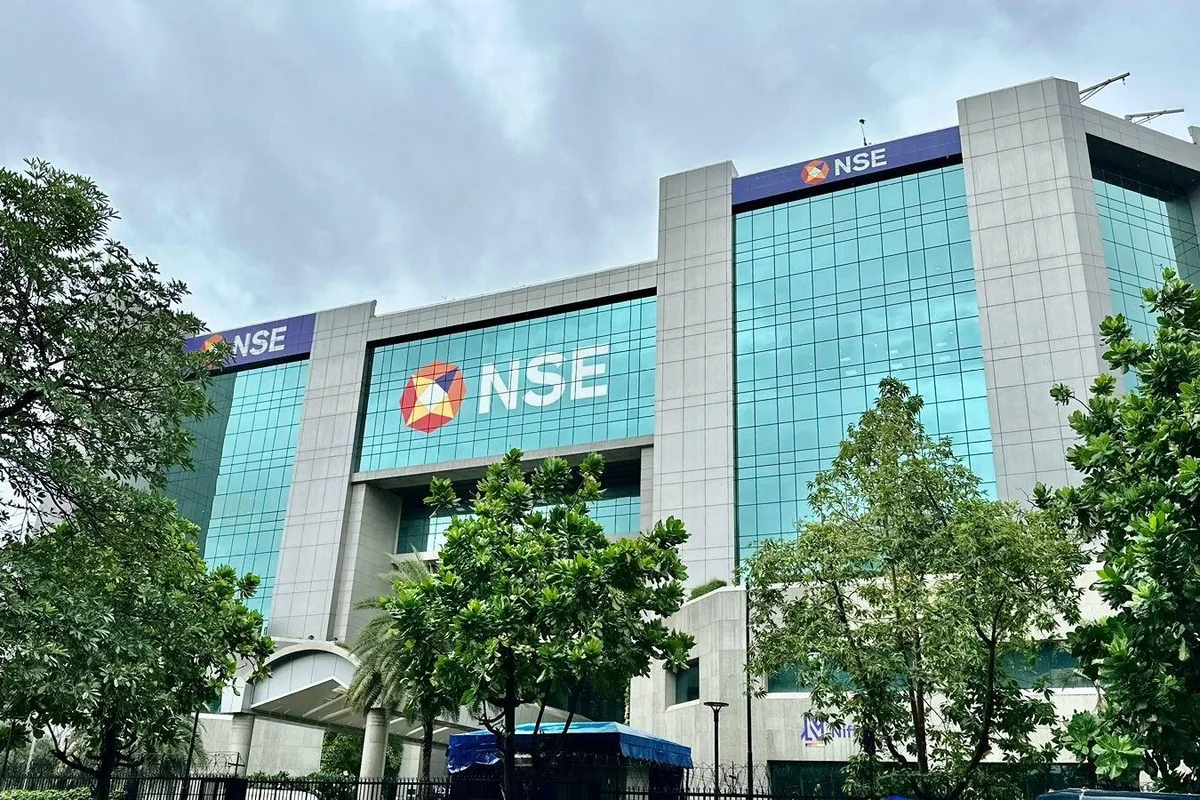
NSE IPO subscription status shows category-wise bidding from QIBs, NIIs, retail investors and employees.

Check the latest Hero Motors IPO GMP, subscription status, price band, lot size, listing details, financial performance and key IPO information.