Loading market data...
Fri, 25 Sept 2026
11:43:41 pm
Fri, 25 Sept 2026
11:43:41 pm

Rudransh Sangwan
Published at: September 25, 2026, 7:04 AM
Synopsis
NVIDIA's RTX 50 Super launch faces GDDR7 cost and supply issues, while Micron ends 2GB GDDR7 production for the current RTX 50 lineup.
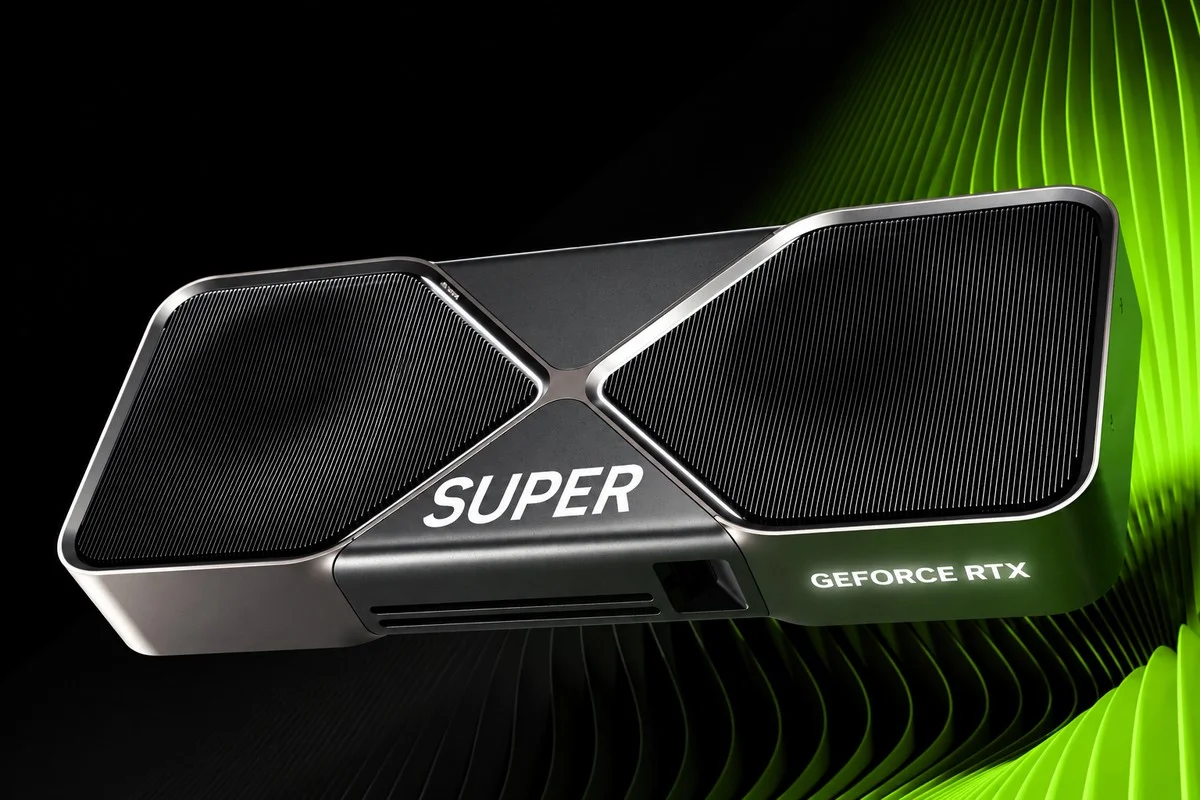
NVIDIA's planned RTX 50 Super graphics card refresh is facing another delay as the cost and supply of higher density GDDR7 memory create problems for the new lineup. Physical RTX 50 Super cards have reportedly reached at least one board partner, but the launch is currently on hold.
The issue centers on 3GB GDDR7 memory chips, which are needed for the higher VRAM configurations planned for the Super series. These chips are reported to cost $60 to $70 each, compared with about $20 for a standard 2GB GDDR7 chip.
At the same time, Micron has reportedly ended production of its 2GB GDDR7 chips, leaving Samsung and SK hynix as the remaining suppliers for the 2GB memory used across the current RTX 50 lineup.
The RTX 50 Super series depends heavily on 3GB GDDR7 modules because they allow NVIDIA to increase VRAM capacity without increasing the number of memory chips or widening the memory bus.
The planned configurations include the RTX 5070 Super with 18GB of VRAM, the RTX 5070 Ti Super with 24GB and the RTX 5080 Super with 24GB. The RTX 5050 with 9GB is also reportedly affected by the same memory cost issue.
The problem is that the 3GB chips cost much more than the 2GB parts. A graphics card using six or eight memory modules could therefore face a large increase in memory costs before other components, manufacturing and distribution costs are considered.
The higher price is especially important because the RTX 5070 Ti Super and RTX 5080 Super reportedly have the same CUDA core counts as their standard versions. The RTX 5070 Super is expected to have only a 4% increase in CUDA cores. This means the additional VRAM is a major part of what differentiates the Super models.
The reported configurations show why 3GB GDDR7 is important to the planned refresh.
| GPU | Reported VRAM | Memory type | Reported status |
|---|---|---|---|
| RTX 5070 Super | 18GB | 3GB GDDR7 modules | Launch on hold |
| RTX 5070 Ti Super | 24GB | 3GB GDDR7 modules | Launch on hold |
| RTX 5080 Super | 24GB | 3GB GDDR7 modules | Launch on hold |
| RTX 5050 | 9GB | 3GB GDDR7 modules | Launch on hold |
The 3GB configuration gives NVIDIA a way to reach these capacities using fewer physical memory chips. Without those modules, the planned Super specifications would be difficult to maintain.
The situation also creates a pricing problem. A 3GB GDDR7 chip is reported to cost roughly three times as much as a 2GB chip, despite providing only 50% more memory capacity.
Another factor is demand from NVIDIA's AI and enterprise products. The same 3GB GDDR7 memory modules are reportedly being used in products including the RTX Pro 6000 Blackwell and Rubin CPX.
This creates competition between consumer GeForce products and higher margin AI products for the same type of memory.
NVIDIA's AI business has become a major part of its product portfolio, while the wider memory market is also facing supply pressure. The combination makes it harder for NVIDIA and its board partners to secure 3GB GDDR7 at a price that works for consumer graphics cards.
The issue is relevant to NVIDIA's broader GPU business because memory costs have already contributed to price increases across the RTX 50 series. The company has also faced pressure from board partners as component costs have moved higher.
NVIDIA's position in AI hardware has been discussed in its investments across AI infrastructure companies, while its consumer graphics business continues to depend on the availability of advanced memory components.
Micron's latest move adds another issue for NVIDIA's existing RTX 50 lineup. Its product catalog reportedly lists both of its 2GB GDDR7 chips as end of life.
The affected parts are the 28 Gbps MT68A512M32DF 28:A and the 32 Gbps MT68A512M32DF 32:A. Micron had only recently entered NVIDIA's GDDR7 supply chain in meaningful volumes.
Micron's 2GB GDDR7 was first seen on an RTX 50 laptop GPU in February 2026, according to the supplied material. The company had joined the wider GDDR7 supply chain after Samsung and SK hynix.
The change does not necessarily mean an immediate shortage of RTX 50 graphics cards. Micron was not the primary supplier of 2GB GDDR7 for the RTX 50 family, and Samsung and SK hynix continue to provide most of the supply.
However, losing another supplier reduces the number of sources available to NVIDIA at a time when memory supply remains tight.
Micron is not leaving GDDR7 production completely. The company continues to make 3GB GDDR7 modules, which are the same higher density chips creating the cost problem for the RTX 50 Super lineup.
The supplied material indicates that 3GB modules remain concentrated in products such as the GeForce RTX 5090 Laptop GPU and RTX Pro Blackwell. Wider use across the existing RTX 50 consumer range remains difficult because of the price difference.
Higher capacity 4GB and 6GB GDDR7 chips are expected later, but the supplied material puts their arrival at least two years away.
That leaves NVIDIA with fewer practical options for expanding VRAM on current consumer GPUs without accepting a substantial increase in memory costs.
The memory situation could also affect expectations around NVIDIA's next gaming generation. Recent market chatter cited in the supplied material suggests that the GR20x family, expected to underpin a Rubin based RTX 60 series, could move from the second half of 2027 to 2028.
This remains unconfirmed and should be treated as market speculation rather than an established launch schedule.
For now, the more immediate issue is the RTX 50 Super refresh. The physical cards reportedly exist, but NVIDIA has told board partners to hold the launch while memory supply and pricing conditions remain difficult.
NVIDIA's consumer GPU developments are also part of a broader product cycle, with the company recently pushing new software and gaming features for RTX 50 series cards, including DLSS 5 and RTX 50 series updates.
Several developments could determine when the RTX 50 Super cards reach consumers:
The immediate pressure is therefore not the availability of finished RTX 50 Super boards. The reported cards already exist at board partners. The problem is whether NVIDIA can secure the memory needed to launch them at commercially workable costs.
The NVIDIA RTX 50 Super launch is reportedly delayed because 3GB GDDR7 memory chips are too expensive and supply is tight. These chips are needed for the planned higher VRAM configurations of the Super series.
A 3GB GDDR7 chip is reported to cost about $60 to $70, while a standard 2GB GDDR7 chip costs around $20. The 3GB version therefore costs roughly three times as much while providing 50% more memory capacity.
The reported affected models are the RTX 5070 Super with 18GB, RTX 5070 Ti Super with 24GB, RTX 5080 Super with 24GB and RTX 5050 with 9GB. All are tied to the higher density 3GB GDDR7 memory configuration.
Micron's product catalog reportedly lists its two 2GB GDDR7 chips as end of life, but the supplied material does not provide a public explanation from Micron for the decision. Micron continues to produce 3GB GDDR7.
The memory supply changes could add pressure to RTX 50 pricing, although the supplied material does not establish a specific future price increase. Samsung and SK hynix remain major suppliers of 2GB GDDR7 for the current RTX 50 lineup.
The supplied material cites market speculation that NVIDIA's next gaming generation could move from the second half of 2027 to 2028. This has not been confirmed as an official launch schedule.
Financial journalist specializing in market analysis, stock research, and investment trends. Dedicated to providing accurate, timely insights for informed decision-making.
Credentials: Experienced financial journalist with expertise in equity markets and economic analysis
The information provided in this article is for educational and informational purposes only and should not be construed as financial, investment, or legal advice. welomoney does not provide personalized investment recommendations.
For detailed terms and conditions, please read our Disclaimer and Terms of Service.
No additional articles in this category yet.