Loading market data...
Tue, 28 Jul 2026
09:34:29 am
Tue, 28 Jul 2026
09:34:29 am

Rudransh Sangwan
Published at: April 25, 2026, 9:06 AM
Synopsis
Nvidia surpasses a $5 trillion market cap as booming AI demand fuels a broad rally in semiconductor stocks, lifting companies like Intel and AMD while reinforcing the sector’s central role in global market growth.
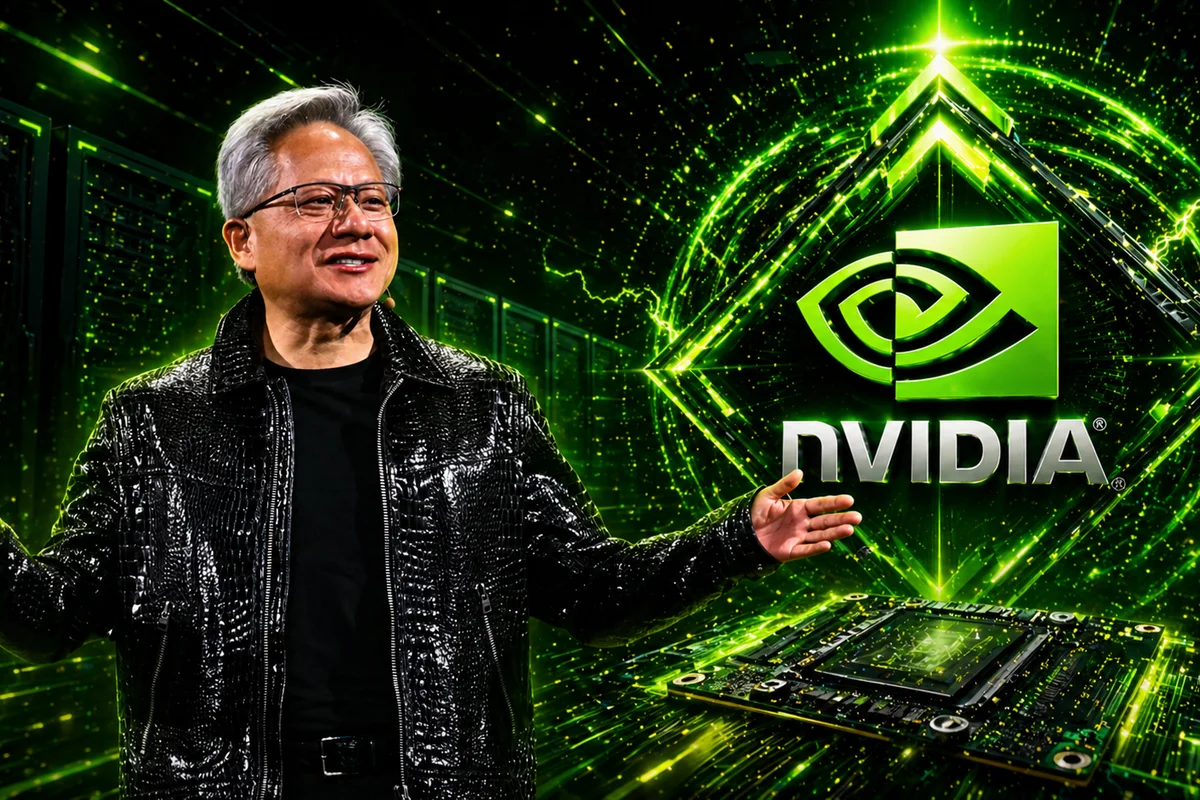
The surge in artificial intelligence investment has reached a defining milestone, with NVIDIA crossing a historic $5 trillion market capitalization. This is not just a valuation milestone but a signal of a deeper transformation in global markets, where AI infrastructure has become the new battleground for capital allocation. The rally reflects a shift in investor priorities toward companies that control computing power, positioning semiconductor leaders at the center of the next economic cycle.
The sharp rise in Nvidia’s valuation is directly tied to the explosive demand for AI computing. Its GPUs are now the backbone of AI systems used by companies like Microsoft, Amazon, Meta, and Alphabet.
This demand is not cyclical but structural. AI models require massive computational power, and Nvidia’s chips are currently the industry standard.
Data suggests rising AI adoption is increasing demand for high-performance chips This leads to strong revenue growth for semiconductor companies Which results in rapid market cap expansion and stock price rallies
Nvidia’s stock has gained nearly 96 percent over the past year, reflecting this structural shift.
The AI-driven momentum is not limited to Nvidia. The entire semiconductor ecosystem is benefiting from renewed investor confidence.
| Company | Stock Surge | Key Trigger |
|---|---|---|
| Nvidia | +95% (1 year) | AI demand |
| Intel | +23% (single session) | Strong earnings beat |
| AMD | +13.9% | AI chip demand |
| Qualcomm | +11.1% | AI ecosystem growth |
Intel’s better-than-expected earnings played a critical role in reigniting optimism. The company reported earnings far above estimates, signaling that even legacy chipmakers are benefiting from the AI wave.
The rally extended to semiconductor ETFs as well, indicating broad-based institutional participation.
Nvidia remains the undisputed leader in AI chips. Its GPUs power data centers, cloud platforms, and AI research globally. Its competitive advantage lies in both hardware and software ecosystems, making it difficult for competitors to replicate.
Intel is attempting a turnaround through its foundry business and AI partnerships. Its recent earnings surprise indicates improving execution and renewed relevance in the semiconductor space.
AMD is emerging as a strong competitor in AI accelerators. Its chips are gaining traction among enterprises looking for alternatives to Nvidia, especially in high-performance computing.
Qualcomm is leveraging AI in mobile and edge computing. Its growth is tied to on-device AI applications, which represent the next phase of AI adoption.
Companies like Alphabet are developing their own AI chips to reduce dependence on Nvidia. This could reshape the competitive landscape over time.
One under-discussed factor behind the rally is capital rotation. After a period of macro-driven volatility due to oil prices and geopolitical tensions, investors are returning to high-growth technology sectors.
AI remains one of the few areas with clear visibility on future demand, making it a preferred destination for capital despite broader market uncertainty.
Many investors believe this rally is purely speculative. In reality, it is backed by strong earnings growth and real demand for AI infrastructure.
Another misconception is that the opportunity is limited to one company. While Nvidia leads, the broader semiconductor ecosystem is also benefiting, creating multiple investment opportunities.
While Nvidia dominates today, competition is intensifying. Large tech companies are investing heavily in custom chip development to reduce costs and improve efficiency.
This could eventually limit Nvidia’s pricing power and margins. The current dominance may not remain absolute over the long term.
The AI boom is far from over. As adoption expands across industries, demand for chips will continue to grow.
Key future drivers include
• Expansion of AI data centers
• Growth in generative AI applications
• Increasing enterprise adoption
• Edge AI and mobile integration
However, valuation levels will be closely watched, as rapid price increases can lead to short-term corrections.
Investors should view semiconductor stocks as long-term structural plays rather than short-term trades.
A balanced approach could include
• Core exposure to leading AI chipmakers
• Diversification across the semiconductor supply chain
• Monitoring valuation and competition risks
Avoid chasing momentum without understanding underlying fundamentals.
Nvidia’s $5 trillion milestone is more than a headline number. It represents a shift in how global markets value technology, with AI infrastructure becoming the foundation of future economic growth. While risks such as competition and valuation remain, the structural demand for AI computing ensures that semiconductor companies will continue to play a central role in shaping market trends for years to come.
Nvidia’s valuation is driven by strong demand for AI chips, which are essential for data centers, cloud computing, and artificial intelligence applications.
Yes, companies like Intel, AMD, and Qualcomm are also seeing strong gains as AI demand boosts the entire semiconductor ecosystem.
The rally is supported by long-term demand for AI infrastructure, but investors should be cautious about high valuations and increasing competition in the sector.
Financial journalist specializing in market analysis, stock research, and investment trends. Dedicated to providing accurate, timely insights for informed decision-making.
Credentials: Experienced financial journalist with expertise in equity markets and economic analysis
The information provided in this article is for educational and informational purposes only and should not be construed as financial, investment, or legal advice. welomoney does not provide personalized investment recommendations.
For detailed terms and conditions, please read our Disclaimer and Terms of Service.