Loading market data...
Tue, 21 Apr 2026
11:01:47 pm
Tue, 21 Apr 2026
11:01:47 pm
Rudransh Sangwan
Published at: April 21, 2026, 4:31 PM
Gold and silver prices fall as US Iran talks and dollar strength impact markets. Understand the real reasons behind the decline and future outlook
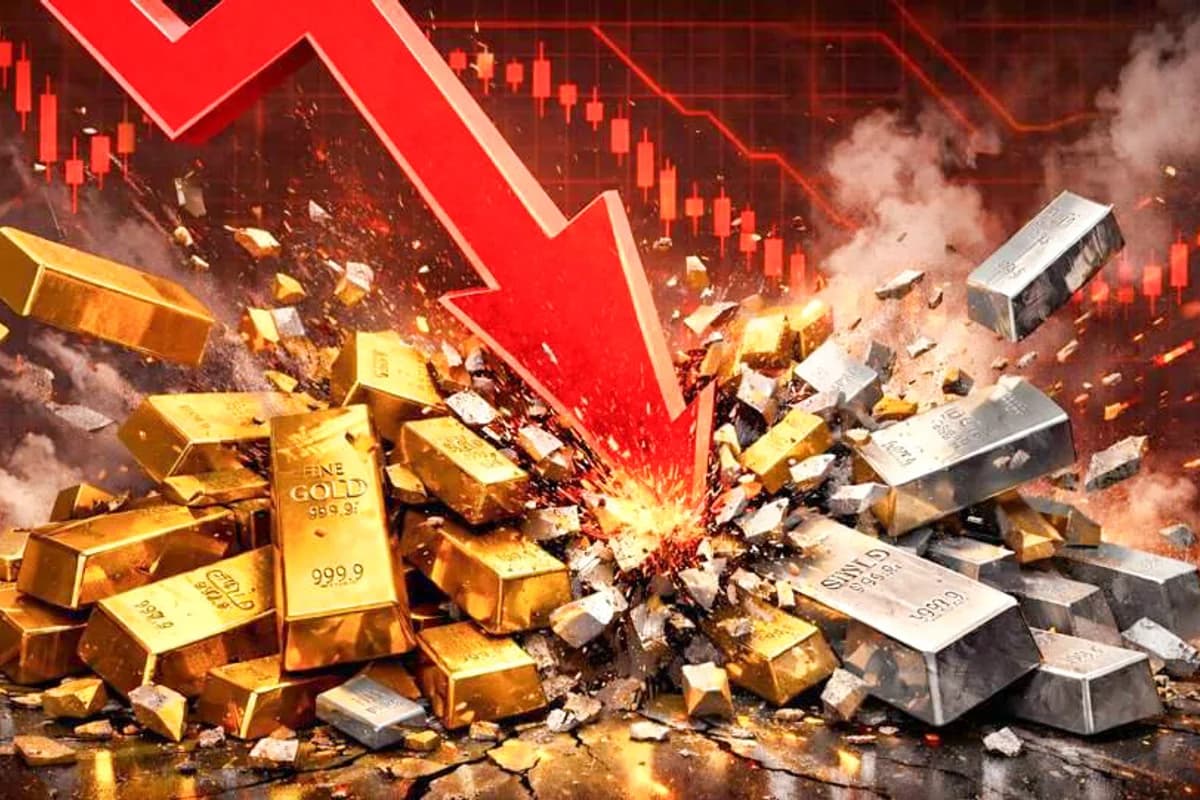
Gold and silver, traditionally seen as safe-haven assets, are witnessing a pullback at a time when global geopolitical tensions still remain elevated. This apparent contradiction is being driven by a shift in market expectations, where traders are now pricing in the possibility of de-escalation between the United States and Iran along with a strengthening US dollar. While prices have corrected in the short term, the broader structure of the bullion market remains influenced by macroeconomic variables that continue to evolve rapidly.
The recent decline in gold and silver prices is primarily linked to changing expectations around geopolitical risk and monetary conditions.
The possibility of renewed US Iran negotiations has reduced immediate safe-haven demand. At the same time, the US dollar has strengthened, making gold and silver more expensive for global investors.
Key triggers behind the fall include
COMEX gold has slipped by over 50 dollars per ounce, while silver has declined by around 2 dollars, reflecting a broad-based correction across precious metals.
Data suggests falling geopolitical risk reduces safe-haven demand This leads to lower buying interest in bullion Which results in short-term price corrections
The decline in bullion is not isolated but part of a broader macro-driven adjustment.
| Asset | Recent Move | Key Driver |
|---|---|---|
| Gold | Down $51/oz | Dollar strength, profit booking |
| Silver | Down $2/oz | Industrial demand uncertainty |
| MCX Gold | Down ₹900 | Global cues |
| MCX Silver | Down ₹3,500+ | Volatility and selling pressure |
Despite the fall, both metals remain significantly higher compared to their March lows, indicating that the broader uptrend has not been broken.
One of the most important drivers behind the fall is the rebound in the US dollar.
Gold and silver are priced in dollars globally. When the dollar strengthens
This inverse relationship is currently playing out strongly, limiting any upside in bullion despite geopolitical uncertainty.
The deeper insight here is that markets do not react to current events but to expected outcomes.
Even though tensions in the Middle East continue, investors are betting that a resolution is possible. This reduces the urgency to hold safe-haven assets like gold and silver.
If talks progress positively, the risk premium embedded in bullion prices will continue to decline.
A common mistake is assuming that geopolitical tension automatically leads to rising gold prices.
In reality, markets react to direction, not just the existence of tension. If tensions are expected to reduce, gold can fall even during uncertain times.
Another misconception is treating gold and silver as identical assets. Gold behaves more like a hedge, while silver is influenced heavily by industrial demand, making it more volatile.
The current correction is not necessarily a negative signal for long-term investors.
Gold has already rallied over ₹25,000 from its March lows, and silver has gained significantly as well. The recent fall is largely a consolidation phase rather than a trend reversal.
This means
Several key triggers will determine where gold and silver head next
If the dollar weakens or geopolitical tensions escalate again, bullion could resume its upward trend. However, sustained peace and stable macro conditions could keep prices range-bound in the near term.
For short-term traders
For medium-term investors
For long-term investors
Gold and silver are falling not because their fundamental story has weakened, but because market expectations are shifting toward stability and a stronger dollar. This correction reflects a temporary adjustment rather than a structural breakdown. Investors who understand this distinction and avoid reacting emotionally to short-term price moves are better positioned to benefit from the long-term potential of bullion.
Prices are falling due to expectations of US Iran peace talks reducing safe-haven demand and a stronger US dollar making bullion more expensive globally.
Corrections often provide better entry points. Long-term investors can consider gradual accumulation rather than investing all at once.
Yes, if inflation rises, the dollar weakens, or geopolitical tensions escalate again, both metals could resume their upward trend.
Gold Slips, Silver Crashes ₹5,000/kg - What Should Investors Do Now
Buy Gold & Silver on Dips, Says Motilal Oswal - Here’s Why
Gold, Silver Fall: MCX Gold Below ₹1.52 Lakh, Silver Slips 2% After US-Iran Talks Fail

Financial journalist specializing in market analysis, stock research, and investment trends. Dedicated to providing accurate, timely insights for informed decision-making.
Credentials: Experienced financial journalist with expertise in equity markets and economic analysis
The information provided in this article is for educational and informational purposes only and should not be construed as financial, investment, or legal advice. welomoney does not provide personalized investment recommendations.
For detailed terms and conditions, please read our Disclaimer and Terms of Service.
Motilal Oswal recommends buying gold and silver on dips in 2026 amid volatility, ETF demand, and macro uncertainty.
MCX gets Sebi approval to launch a coal exchange subsidiary. Here’s what it means for coal trading, price discovery, and India’s commodity markets.

Check latest petrol and diesel prices in Delhi, Mumbai, Chennai, Kolkata, and Bengaluru. Fuel rates remain stable despite global crude volatility.
Gold and silver prices dropped sharply as rising oil prices and a stronger dollar reduced demand for safe-haven assets.

India is set to import Iranian oil for the first time in seven years after temporary sanction relief, signaling a major shift in global energy...

