Loading market data...
Tue, 20 Oct 2026
04:55:54 pm
Tue, 20 Oct 2026
04:55:54 pm

Rudransh Sangwan
Published at: October 14, 2026, 6:15 PM
Synopsis
Crude oil prices have climbed above $100 a barrel, putting HPCL, IOC and BPCL under pressure. See supply risks and broker views on CPCL and MRPL.
The short version
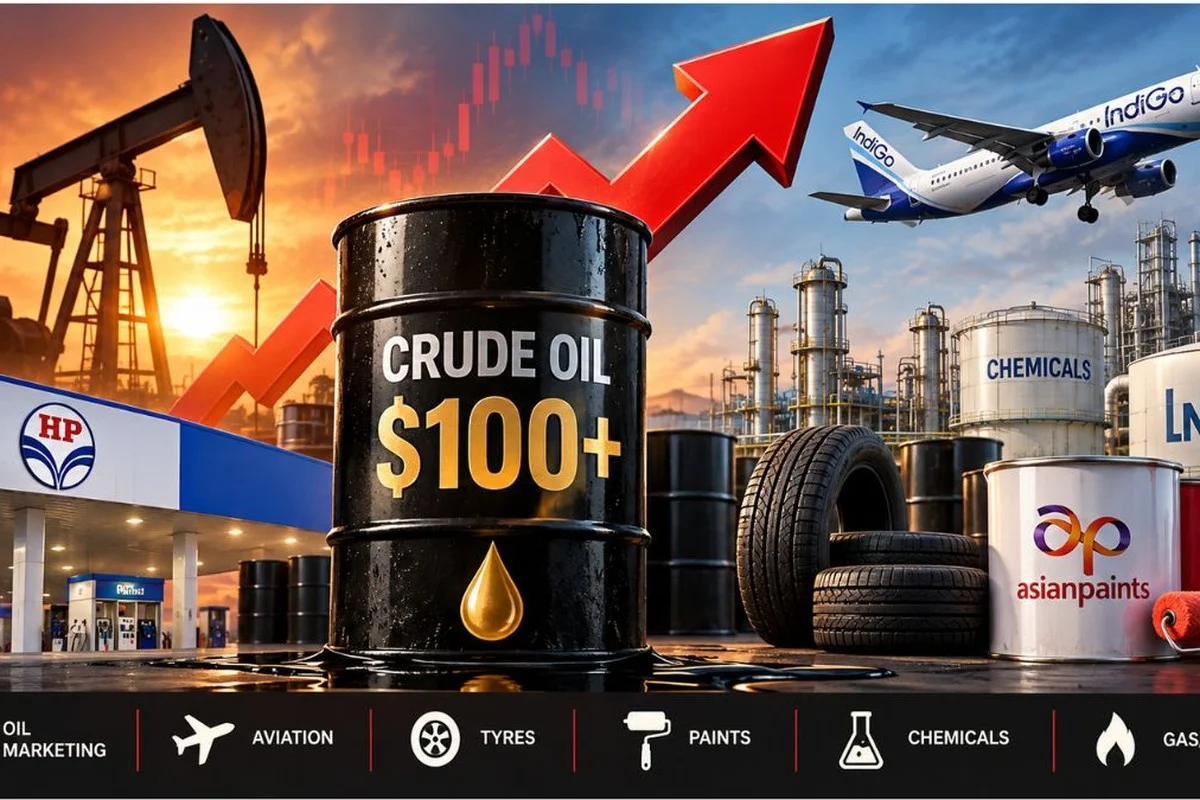
Crude oil prices above $100 a barrel could put pressure on the earnings of Hindustan Petroleum Corporation (HPCL), Indian Oil Corporation (IOC) and Bharat Petroleum Corporation (BPCL). The three state run oil marketing companies face the risk of higher input costs if retail fuel prices do not rise to match crude oil prices.
Dhaval Popat, energy analyst at Choice Institutional Equities, expects HPCL to face the greatest earnings pressure, followed by IOC and BPCL. Higher crude prices could reduce marketing margins, even if stronger refining margins provide some relief.
Brent crude rebounded towards $107 a barrel as concerns over attacks on shipping and energy infrastructure in the Middle East kept supply risks in focus. The outlook for oil prices now depends on geopolitical developments, available inventories and the extent to which additional supplies can reach global markets.
Oil marketing companies buy crude oil, process it into petroleum products and sell fuels such as petrol and diesel. Their profitability depends on refining margins and the margins earned from selling fuel to consumers.
When crude prices rise, the cost of procuring oil and producing fuel can increase. If retail petrol and diesel prices remain unchanged, companies may have to absorb part of the additional cost. That can reduce marketing margins and weigh on earnings.
Popat said sustained crude prices above $100 a barrel would leave state owned oil marketing companies particularly exposed. He expects HPCL to face the greatest pressure, followed by IOC and BPCL.
| Company | Earnings outlook |
|---|---|
| HPCL | Highest expected earnings pressure |
| IOC | Pressure expected after HPCL |
| BPCL | Pressure expected after IOC |
The ranking reflects Popat's assessment of the potential earnings impact. The source does not provide company specific earnings estimates or quantify the expected reduction in margins.
For investors tracking these companies, the relationship between crude prices and retail fuel prices is an important factor. A sustained increase in crude costs could weigh on profitability if companies cannot pass the additional expense on to consumers.
The pressure on marketing margins does not necessarily mean that every part of an oil marketing company's business will weaken. Refining profitability can improve when margins on processed petroleum products rise.
Popat noted that tight global markets for middle distillates could support refining margins. Middle distillates include products such as diesel and jet fuel. Their prices and refining margins can move differently from crude oil prices, depending on product demand and available supply.
This creates two different effects for oil marketing companies. Higher crude prices can increase input costs, while strong prices for refined products may support earnings from refining operations. The overall result depends on how these effects balance out.
The central risk remains the ability to recover higher costs through fuel prices. If marketing margins weaken faster than refining margins improve, the benefit from refining may not be enough to protect overall profitability.
Earlier market coverage has also tracked the relationship between crude prices and IOC, BPCL and HPCL shares. The latest price movement adds another factor for investors to monitor as companies report their financial performance.
Geopolitical concerns have supported oil prices as traders assess the risk of disruption to crude shipments and regional energy infrastructure.
Kaynat Chainwala, AVP of commodity research at Kotak Neo, said Brent crude had rebounded towards $107 a barrel. Concerns included reports that Tehran was planning to increase strikes on tankers near the Strait of Hormuz using new tactics.
A Houthi strike also caused a limited fire at an Aramco office building in Dhahran. The incident added to concerns about risks to energy infrastructure in the region.
The Strait of Hormuz is an important route for global energy shipments. Disruption to tanker movements through the area could affect the availability and cost of oil reaching international markets.
Recent market movements have also shown how quickly sentiment can change. Brent crude prices fell by just under 1% on Tuesday, while West Texas Intermediate crude rose 0.4%. Traders were assessing vessel attacks alongside developments involving Russian diesel supplies.
The supply outlook remains uncertain because additional flows from some producers may not fully offset disruption elsewhere. Thin inventories could also leave the market more sensitive to unexpected supply losses.
Saudi Arabia plans to increase the capacity of its East West pipeline to 10 million barrels per day over the next two to three years, Chainwala said. The expansion could provide a longer term alternative route for moving Saudi crude and reduce dependence on shipments through the Strait of Hormuz.
However, the planned expansion is a future supply measure. It does not remove the immediate risk posed by attacks on Gulf shipping or energy infrastructure.
The International Energy Agency has cautioned that limited Russian refining capacity means the Russian diesel arrangement is unlikely to materially change the global diesel balance. As a result, it may provide only limited relief from concerns about middle distillate supplies.
Meanwhile, OPEC cut its forecast for oil demand growth in 2026 for the sixth consecutive month but raised its outlook for 2027. Chainwala said the market would need to rebuild inventories depleted during the war.
These developments point to competing forces in the oil market. Additional pipeline capacity and Russian diesel flows could improve supply conditions, while geopolitical risks and low inventories could limit any sustained fall in prices.
Higher energy prices could affect companies beyond the three large oil marketing companies. City gas distribution businesses may face pressure if procurement costs rise faster than the prices they can charge customers.
Popat identified Indraprastha Gas (IGL), Mahanagar Gas (MGL), Gujarat Gas and Adani Total Gas as companies that could face margin pressure if they cannot pass higher gas costs on to consumers.
GAIL and Petronet LNG face different risks. Popat said these companies could be affected by weaker volumes and gas sourcing difficulties. However, regulated or contracted business arrangements may provide some protection against market volatility.
The impact will depend on each company's procurement arrangements, pricing structure and ability to pass on higher costs. These factors differ from the direct exposure of oil marketing companies to petrol and diesel marketing margins.
The broader energy sector has already seen share movements linked to crude prices. WeloMoney previously covered how crude oil price changes affected energy linked stocks. The current outlook remains tied to whether higher prices persist and how companies manage the resulting costs.
Despite the expected pressure on oil marketing margins, Popat identified Chennai Petroleum Corporation (CPCL) as Choice Institutional Equities' top pick in the sector, with a target price of Rs 1,885 per share. The brokerage also assigned Mangalore Refinery and Petrochemicals (MRPL) a target price of Rs 215 per share.
| Company | Brokerage view | Target price |
|---|---|---|
| Chennai Petroleum Corporation (CPCL) | Top pick at Choice Institutional Equities | Rs 1,885 |
| Mangalore Refinery and Petrochemicals (MRPL) | Target price assigned | Rs 215 |
These are brokerage assessments, not confirmed future share prices. The supplied information does not provide the assumptions behind the targets or quantify the expected earnings impact for either company.
CPCL and MRPL's inclusion also shows why the sector's outlook cannot be assessed from crude prices alone. Refining economics, product margins and company specific factors can affect how individual refiners perform when oil prices rise.
The next phase of the crude oil rally will depend on geopolitical developments and the balance between available supply and demand. For Indian energy stocks, the main factors to monitor are:
For HPCL, IOC and BPCL, the next earnings updates should help show how the balance between refining and marketing margins affects profitability. Developments in Saudi supply capacity, Russian diesel flows and OPEC's demand outlook will also help determine whether crude prices remain elevated.
Crude oil above $100 a barrel could hurt HPCL, IOC and BPCL if higher input costs reduce their fuel marketing margins. If petrol and diesel prices remain unchanged, the companies may be unable to pass on the full increase in costs to consumers. Choice Institutional Equities expects HPCL to face the greatest earnings pressure, followed by IOC and BPCL.
Brent crude rebounded towards $107 a barrel, according to Kaynat Chainwala of Kotak Neo. Geopolitical risks involving tanker attacks and energy infrastructure contributed to supply concerns. The price is a reported market level in the supplied analysis, not a guaranteed future price.
HPCL is expected to face the highest earnings pressure among HPCL, IOC and BPCL, according to Dhaval Popat of Choice Institutional Equities. IOC ranks second and BPCL third in his assessment. The supplied information does not quantify the expected earnings losses.
Choice Institutional Equities identified CPCL as its top pick, with a target price of Rs 1,885 per share. The brokerage also assigned MRPL a target price of Rs 215 per share. These figures are analyst targets rather than guaranteed market prices.
Saudi Arabia plans to expand the East West pipeline's capacity to 10 million barrels per day over the next two to three years. The expansion could reduce dependence on the Strait of Hormuz for moving Saudi crude. Its planned timeline means it does not eliminate immediate shipping risks.
Yes, higher gas procurement costs could pressure the margins of IGL, MGL, Gujarat Gas and Adani Total Gas if they cannot pass those costs on to consumers. GAIL and Petronet LNG could face volume weakness and gas sourcing risks, although regulated or contracted businesses may provide some protection.
Financial journalist specializing in market analysis, stock research, and investment trends. Dedicated to providing accurate, timely insights for informed decision-making.
Credentials: Experienced financial journalist with expertise in equity markets and economic analysis
The information provided in this article is for educational and informational purposes only and should not be construed as financial, investment, or legal advice. welomoney does not provide personalized investment recommendations.
For detailed terms and conditions, please read our Disclaimer and Terms of Service.
No additional articles in this category yet.