Loading market data...
Thu, 01 Oct 2026
03:07:56 pm
Thu, 01 Oct 2026
03:07:56 pm

Rudransh Sangwan
Published at: July 3, 2026, 8:17 AM
Synopsis
Sterlite Technologies raised ₹1,500 crore through a QIP by allotting 2.57 crore shares to institutional investors. Check the latest STL fundraising details, share price movement, market analysis, and growth outlook.
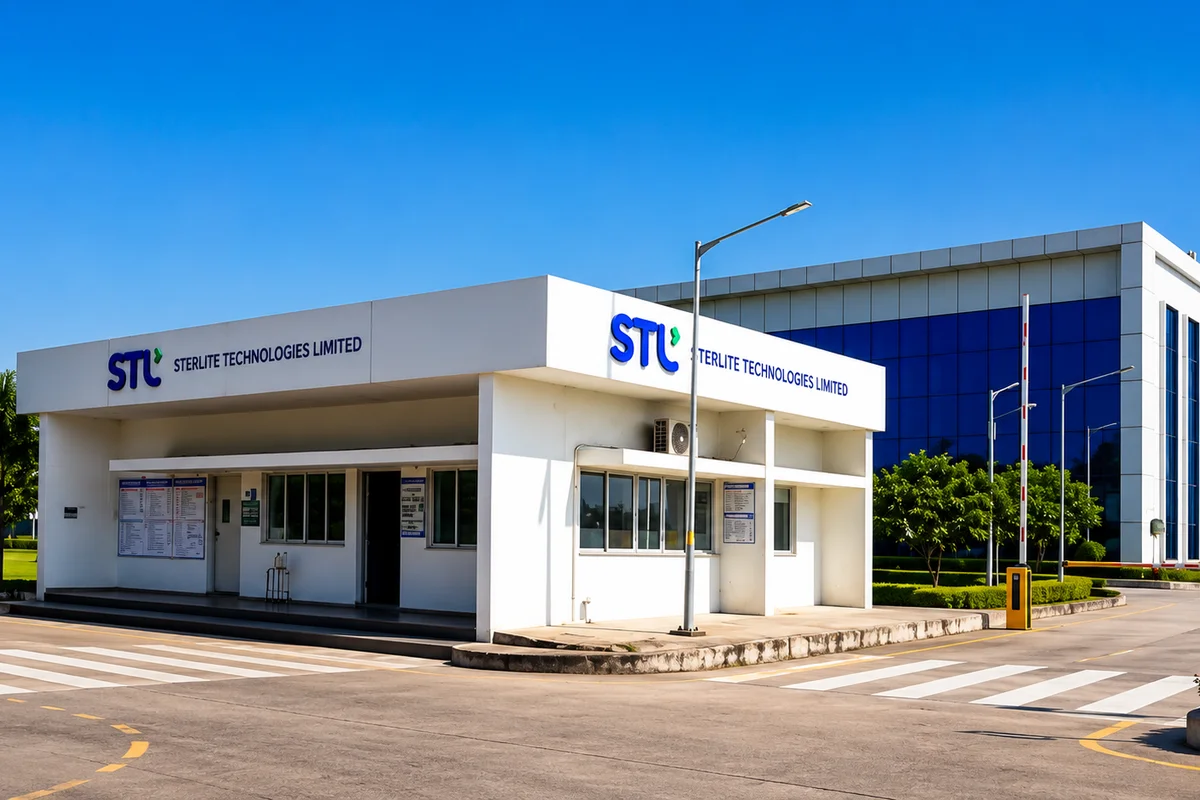
Sterlite Technologies Ltd (STL) has successfully raised ₹1,500 crore through a Qualified Institutional Placement (QIP), strengthening its balance sheet as the company prepares for its next phase of growth in digital infrastructure, fiber connectivity, enterprise networking, and data centre solutions.
The broadband technology company allotted 2.57 crore equity shares to qualified institutional buyers, increasing its paid-up equity capital to ₹102.78 crore, comprising 51.39 crore equity shares. According to the company, the capital will primarily be used to reduce debt, improve financial flexibility, and support long-term expansion opportunities.
The successful fundraising comes at a time when Sterlite Technologies has emerged as one of the strongest-performing technology infrastructure stocks in India. Despite a recent correction from its all-time highs, the stock has rallied nearly 470% in 2026, driven by strong optimism around India's expanding digital infrastructure, AI ecosystem, cloud adoption, and data centre investments.
| Highlights | Details |
|---|---|
| Fund Raised | ₹1,500 Crore |
| QIP Shares Issued | 2.57 Crore |
| Major Purpose | Debt Reduction |
| Major Investors | Nomura, HSBC, Motilal Oswal & Others |
| Stock Performance in 2026 | Up Nearly 470% |
| Key Growth Driver | Enterprise & Data Centre Business |
Loading chart...
| Particulars | Details |
|---|---|
| Fund Raised | ₹1,500 Crore |
| Fundraising Method | Qualified Institutional Placement (QIP) |
| Shares Allotted | 2.57 Crore Equity Shares |
| Primary Objective | Debt Reduction & Business Expansion |
The QIP witnessed participation from several prominent domestic and global institutional investors, including Nomura, HSBC, Motilal Oswal, Bank of India, Oxbow, Think Investments, Bandhan, and Manulife.
The strong response indicates growing investor confidence in Sterlite Technologies' long-term business strategy and its increasing focus on enterprise networking, optical fibre solutions, data centres, and next-generation digital infrastructure.
Large institutional participation is generally viewed positively by the market because it signals confidence from long-term investors rather than short-term traders.
According to the company, the majority of the proceeds will be utilised to substantially reduce debt and strengthen the balance sheet.
Lower debt provides multiple long-term advantages, including reduced interest expenses, stronger cash flows, improved profitability, and greater financial flexibility for expansion. It also enables the company to pursue larger infrastructure projects and capitalise on the growing demand for high-speed connectivity and AI-driven network infrastructure.
Managing Director Ankit Agarwal said the successful fundraising reflects investors' trust in STL's execution capabilities and long-term vision. He added that the company remains focused on connecting billions of people through advanced digital infrastructure while accelerating its next growth phase.
Brokerages continue to view Sterlite Technologies as one of the key beneficiaries of India's rapidly expanding digital infrastructure ecosystem.
The company's enterprise and data centre business has been gaining momentum, supported by increasing investments in AI infrastructure, cloud computing, hyperscale data centres, 5G deployment, and fibre network expansion.
According to earlier brokerage estimates, the Enterprise and Data Centre segment contributed nearly 19% of revenue in FY26, with its contribution expected to increase to around 30% during FY27 as more large-scale digital infrastructure projects move into execution.
This business mix shift could help improve margins while reducing dependence on traditional telecom infrastructure projects.
Despite the positive fundraising announcement, Sterlite Technologies shares closed 4.84% lower at ₹562.25 on Thursday as investors booked profits following the stock's exceptional rally over the past few months.
Even after the correction, STL remains one of the best-performing mid-cap technology infrastructure companies in 2026, having gained nearly 470% year-to-date.
The stock also continues to remain under Stage IV of the Long-Term Additional Surveillance Measures (ASM) framework, which requires 100% upfront margins and limits intraday trading.
The ₹1,500 crore QIP marks an important milestone for Sterlite Technologies as it transitions from a leveraged infrastructure company to a financially stronger digital technology player. A healthier balance sheet not only reduces borrowing costs but also gives the company greater flexibility to invest in high-growth opportunities across optical networking, enterprise connectivity, cloud infrastructure, AI-ready data centres, and global broadband projects.
The fundraising also arrives at a favourable time for the sector. Governments and enterprises worldwide continue to invest heavily in fibre connectivity, AI infrastructure, cloud computing, and hyperscale data centres. These structural trends could create sustained demand for STL's products and services over the coming years.
While short-term volatility may continue after the stock's massive rally in 2026, investors are likely to closely monitor debt reduction, execution of new projects, enterprise business growth, order inflows, and quarterly earnings. Successful execution across these areas could further strengthen the company's long-term growth outlook.
Instead of focusing solely on the share price, investors should monitor a few key business indicators over the coming quarters. These include the company's progress in reducing debt, growth in its enterprise and data centre business, fresh order wins, margin expansion, quarterly earnings performance, and execution of large infrastructure projects. Strong performance across these areas would reinforce confidence in Sterlite Technologies' long-term growth strategy.
The company raised funds through a Qualified Institutional Placement (QIP) to reduce debt, strengthen its balance sheet, and support future business expansion.
The fundraising attracted several institutional investors, including Nomura, HSBC, Motilal Oswal, Bank of India, Oxbow, Think Investments, Bandhan, and Manulife.
The decline was primarily due to profit booking after the stock's sharp rally in 2026. The fundraising itself is considered a positive long-term development.
Key factors include debt reduction, order inflows, enterprise business growth, margin improvement, quarterly earnings, and expansion into digital infrastructure and data centres.
Financial journalist specializing in market analysis, stock research, and investment trends. Dedicated to providing accurate, timely insights for informed decision-making.
Credentials: Experienced financial journalist with expertise in equity markets and economic analysis
The information provided in this article is for educational and informational purposes only and should not be construed as financial, investment, or legal advice. welomoney does not provide personalized investment recommendations.
For detailed terms and conditions, please read our Disclaimer and Terms of Service.
NSE shares fell after listing at Rs 1,800, dropping to 12th by market value. Experts identify Rs 1,760 support and Rs 1,795 resistance.
Goldman Sachs retains its Buy rating on IndiGo with a Rs 5,900 target, citing international growth, cost leadership and better FY28 profitability.
Kirloskar Oil Engines posted 16% Q1 FY27 revenue growth, while margins missed estimates. Motilal Oswal cut earnings estimates and raised its target...
Landmark Cars shares rose 12% to Rs 535.80 after adding BYD and M&M outlets, taking its network to 143 locations, with EV sales at 30% of Q1FY27 new...

Tata Motors’ subsidiary acquired 26,000 shares in Mateshwari E-Smart Mobility for ₹2.6 lakh.