Loading market data...
Wed, 02 Sept 2026
07:03:54 am
Wed, 02 Sept 2026
07:03:54 am
Synopsis
NBCC aims ₹18,000 crore revenue by FY27. Real estate monetisation, redevelopment push, and global expansion signal a structural shift.
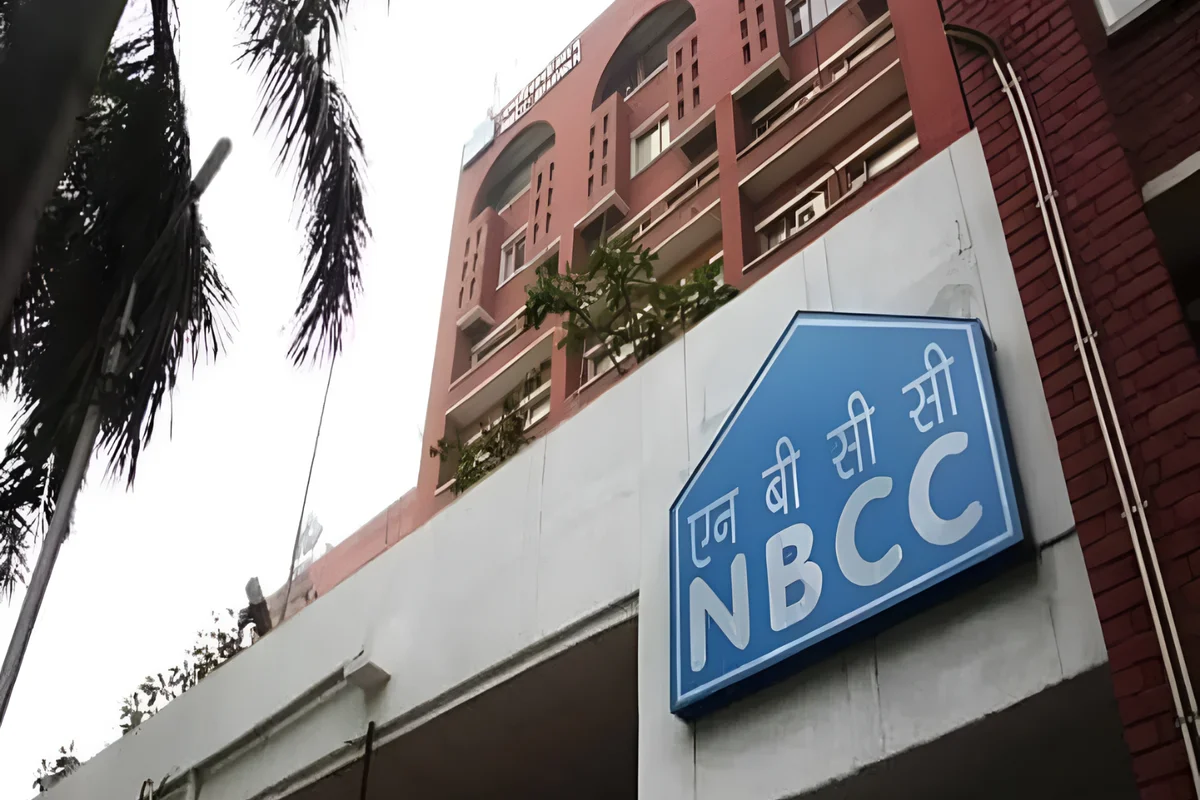
NBCC’s growth story looks straightforward on the surface. A government-backed developer scaling revenue from ₹14,000 crore to ₹18,000 crore sounds like steady expansion.
But the underlying reality is more nuanced. The real shift is not just in revenue growth. It is in how NBCC is fundamentally changing its business model.
What most people are missing is this: NBCC is quietly transforming from a traditional execution contractor into a self-financing urban redevelopment engine. That changes everything about its earnings quality, scalability, and valuation potential.
NBCC (India) Ltd has outlined a clear revenue trajectory:
At first glance, this appears like a clean, predictable growth curve. But in practice, this is not organic growth in the traditional sense.
A significant portion of the jump comes from project timing shifts, not just incremental demand. Delays in approvals pushed several high-value redevelopment projects into FY27. This creates a revenue bunching effect.
What consistently happens in such cases is that revenue visibility improves sharply, but execution risk also rises in parallel.
Approval bottlenecks are not just administrative issues. They directly impact:
When projects shift across financial years, companies like NBCC often experience lumpy earnings rather than smooth growth.
The implication is clear: FY27 may see a spike, but sustainability depends on execution speed and regulatory clearance efficiency.
NBCC’s biggest strategic advantage lies in its self-sustainable redevelopment model, first tested successfully in Delhi.
Instead of relying on government funding, NBCC:
This model has already delivered strong results.
NBCC sold 3.2 million sq ft of commercial space, generating approximately ₹14,800 crore from projects like Nauroji Nagar and Sarojini Nagar.
This is not just revenue. It is proof of concept.
Most government projects suffer from funding constraints and delayed payments. NBCC’s model bypasses that entirely.
The cause-effect chain is important here:
This creates a self-reinforcing cycle of growth.
In practice, this model reduces dependency on government budgets while improving capital efficiency.
The biggest overlooked factor in NBCC’s growth is not construction. It is land monetisation.
India is sitting on massive underutilised government land assets. NBCC is emerging as a key execution arm to unlock this value.
Key projects include:
These numbers indicate something deeper. NBCC is not just building infrastructure. It is converting idle land into revenue-generating assets.
Most market participants treat NBCC like a low-margin EPC contractor. That assumption is outdated.
NBCC’s model increasingly resembles:
This shift impacts how the company should be valued.
Traditional EPC companies trade on execution margins. NBCC’s future growth is linked to asset value unlocking, which carries higher upside potential.
NBCC is now replicating its Delhi redevelopment success across multiple regions:
The Goa government alone has awarded projects worth ₹10,000 crore.
This expansion is critical. It validates that the model is not location-specific.
NBCC is also stepping into global markets:
This signals a strategic shift toward exporting its redevelopment expertise.
In practice, international projects serve two purposes:
However, execution complexity increases significantly outside India.
While revenue visibility is improving, the real debate should be around profitability quality.
Here is where things get interesting.
NBCC operates in a segment where:
Even with higher revenue, margin expansion is not guaranteed.
Data suggests that construction-led growth often leads to:
This leads to a key insight:
Higher revenue does not automatically translate into higher shareholder returns.
The real metric to watch is:
NBCC’s trajectory depends on three critical variables:
If regulatory approvals improve, NBCC can maintain growth momentum. If delays persist, revenue volatility will continue.
NBCC’s model depends heavily on selling commercial and residential units.
Strong demand leads to faster monetisation. Weak demand slows down the entire cycle.
The ability to complete projects on time will determine:
The data suggests a mixed but promising scenario:
For investors and market observers, the approach needs to shift.
In practice, the market often reacts to revenue headlines. But smart positioning requires tracking underlying monetisation efficiency.
If NBCC consistently converts land assets into cash-generating projects, the growth story remains intact.
If monetisation slows, the entire model weakens.
India’s urban landscape is entering a redevelopment phase.
Old government housing, unused land parcels, and inefficient infrastructure are being reimagined.
NBCC is positioned at the center of this transition.
The real opportunity is not in construction. It is in urban asset transformation at scale.
This is a long-term theme, not a one-year story.
NBCC’s ₹18,000 crore revenue target is not just a growth milestone. It reflects a deeper transformation in how infrastructure projects are funded and executed in India.
What consistently happens in such structural shifts is that early movers capture disproportionate value.
NBCC has already proven its model in Delhi. The next phase will determine whether it can scale this success across India and globally.
If it succeeds, the company stops being just another PSU contractor. It becomes a key player in India’s urban redevelopment economy.
That changes the narrative entirely.
Yes, based on current project pipelines and delayed approvals shifting into FY27, the target looks realistic. However, execution speed and timely monetisation of real estate assets will be critical. Revenue visibility is strong, but delivery remains the key variable.
The biggest driver is land monetisation through redevelopment projects. By selling commercial and residential units, NBCC funds its own projects. This reduces dependency on government budgets and creates a scalable growth model.
The main risks include approval delays, slower real estate demand, and execution inefficiencies. These factors can impact cash flows and revenue timing. Investors should focus on monetisation efficiency rather than just headline revenue growth.

Financial journalist specializing in market analysis, stock research, and investment trends. Dedicated to providing accurate, timely insights for informed decision-making.
Credentials: Experienced financial journalist with expertise in equity markets and economic analysis
The information provided in this article is for educational and informational purposes only and should not be construed as financial, investment, or legal advice. welomoney does not provide personalized investment recommendations.
For detailed terms and conditions, please read our Disclaimer and Terms of Service.

Reliance Consumer Products has entered India's ice cream market with Bombay Creamery, priced from Rs 10 and set for a pan India rollout and...

ITC is consolidating its technology businesses as BlazeClan and CloudyLytics move into ITC Infotech under a proposed group restructuring.

Happiest Minds Technologies shares came under pressure as investors assessed the proposed ITC Infotech merger and its implications for shareholders.

Welspun Corp shares are in focus as investors track the latest developments around the company and its stock.

Tata Motors records strong August growth with domestic PV sales up 59% and EV volumes reaching 16,549 units, despite missing estimates.