Loading market data...
Sat, 03 Oct 2026
04:57:35 am
Sat, 03 Oct 2026
04:57:35 am

Rudransh Sangwan
Published at: May 19, 2026, 12:55 AM
Synopsis
India’s railway PSU sector is witnessing massive growth driven by government capex, railway modernization, freight corridors, and Vande Bharat expansion. This detailed comparison of IRFC, RVNL, and IRCTC breaks down their business models, growth opportunities, risk profiles, monopoly strengths, dividend potential, and long-term investment outlook to help investors understand which railway PSU stock may offer the strongest long-term potential.
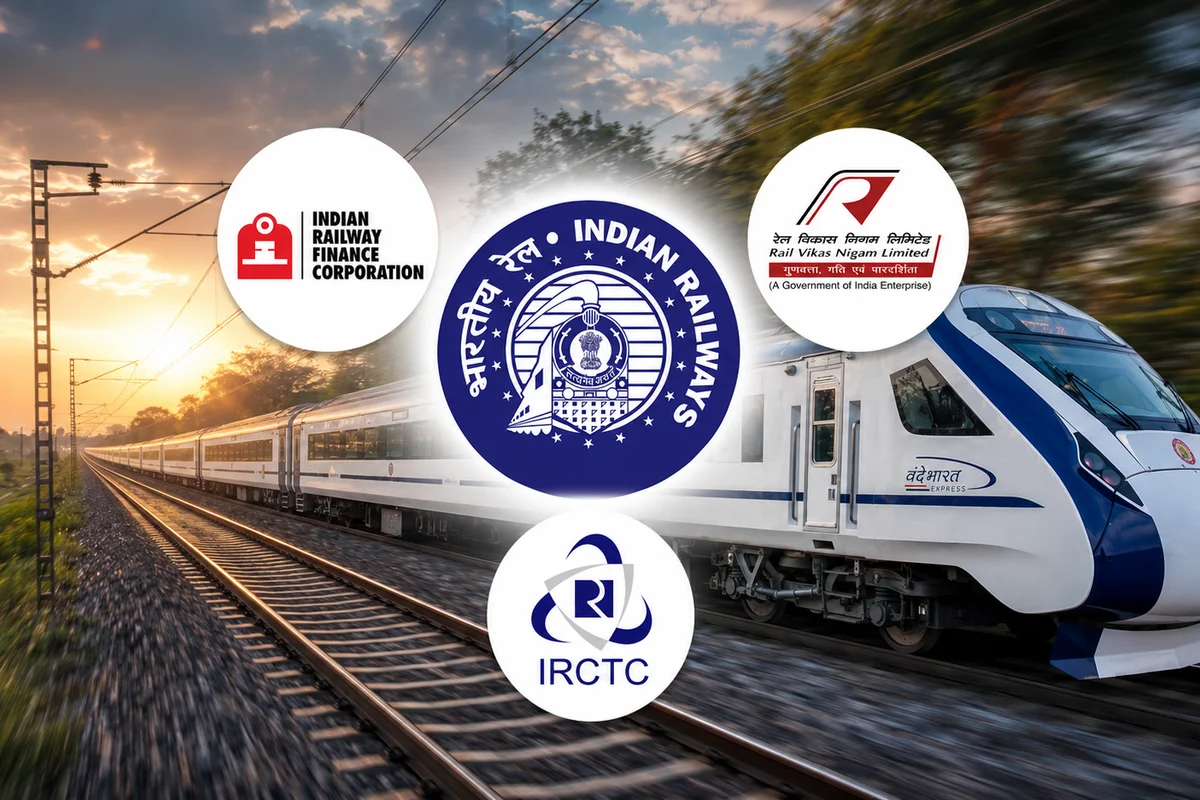
India’s railway sector is going through one of the biggest transformation phases in its history. Massive government spending, railway modernization, electrification, freight corridor development, station redevelopment, and the expansion of Vande Bharat trains have completely changed the outlook for railway-related Public Sector Undertakings (PSUs).
Because most of these projects are executed through railway PSUs, investors have increasingly shifted focus toward companies like Indian Railway Finance Corporation (IRFC), Rail Vikas Nigam Limited (RVNL), and Indian Railway Catering and Tourism Corporation (IRCTC).
Each of these companies plays a completely different role in the railway ecosystem.
That is why comparing these railway PSU stocks is not just about revenue or profit growth. It is about understanding:
The biggest question for long-term investors now is:
Which railway PSU stock has the strongest long-term wealth creation potential?
Railway stocks have become one of the biggest themes in the Indian stock market because of the government’s aggressive infrastructure push.
India is investing heavily in:
This multi-year capex cycle is creating strong long-term revenue visibility for railway PSUs.
Unlike many private infrastructure companies, railway PSUs enjoy:
That combination has made railway stocks one of the strongest infrastructure themes in the market.
Most investors assume railway PSUs compete with each other.
In reality, they function like a connected ecosystem where each company has a separate specialization.
| Company | Core Role | Business Type |
|---|---|---|
| IRFC | Financing Railway Assets | Financial PSU |
| RVNL | Railway Infrastructure Execution | EPC & Infrastructure |
| IRCTC | Ticketing, Catering & Tourism | Consumer Monopoly |
| IRCON | Heavy Railway Engineering | Infrastructure Engineering |
| RITES | Consultancy & Exports | Asset-Light Consultancy |
Each company benefits from railway growth in different ways.
Loading chart...
Indian Railway Finance Corporation operates as the dedicated financing arm of Indian Railways.
Its business model is simple but extremely powerful.
IRFC:
Because its client is effectively the Government of India, IRFC carries extremely low credit risk.
This is why the company is widely considered one of the safest PSU stocks in the railway sector.
| Strength | Explanation |
|---|---|
| Sovereign Backing | Very Low Default Risk |
| Zero NPAs | Strong Financial Stability |
| Predictable Earnings | Stable Cost-Plus Margin Model |
| High Dividend Potential | Consistent Cash Flow |
| Low Volatility | Defensive PSU Profile |
IRFC is especially attractive for:
The company benefits whenever railway capex rises because Indian Railways requires more financing for expansion projects.
IRFC’s stability also limits explosive growth.
Unlike infrastructure companies, IRFC cannot suddenly increase profits through massive project wins.
Its growth mainly depends on:
This makes IRFC more of a stable compounder rather than a high-growth infrastructure stock.
Loading chart...
Rail Vikas Nigam Limited is completely different from IRFC.
RVNL is the execution engine behind railway modernization.
The company handles:
Whenever the government increases railway infrastructure spending, RVNL becomes one of the biggest beneficiaries.
RVNL has emerged as one of the market’s favorite railway PSU stocks because of its huge order book and direct exposure to railway infrastructure expansion.
| Strength | Explanation |
|---|---|
| Massive Order Book | Strong Revenue Visibility |
| Infrastructure Boom Exposure | Direct Railway Capex Benefit |
| Asset-Light Model | Better Scalability |
| Strong Government Pipeline | Multi-Year Growth Opportunity |
| Execution Capability | Major Railway Project Presence |
RVNL is often viewed as the high-growth railway PSU because its business directly scales with infrastructure spending.
Infrastructure companies naturally carry higher risk than financing businesses.
RVNL faces:
Quarterly earnings can also remain volatile because project execution timelines vary significantly.
That is why RVNL is more suitable for:
Loading chart...
Indian Railway Catering and Tourism Corporation operates one of the strongest monopoly businesses in India’s railway ecosystem.
The company dominates:
Unlike IRFC and RVNL, IRCTC is consumer-facing.
Its business benefits from:
IRCTC combines:
| Strength | Explanation |
|---|---|
| Monopoly Business | No Major Ticketing Competitor |
| Zero Debt | Strong Balance Sheet |
| High ROE & ROCE | Efficient Capital Usage |
| Digital Platform Advantage | Scalable Consumer Model |
| Tourism Expansion | Additional Revenue Streams |
Many investors view IRCTC as a monopoly consumer-tech railway stock rather than a traditional PSU.
Despite its monopoly position, IRCTC faces policy-related risks.
The government controls railway pricing structures and convenience fees.
This means:
can directly impact profitability.
That policy risk has historically caused sharp corrections in the stock.
| Company | Segment | Risk Profile | Growth Potential | Business Nature |
|---|---|---|---|---|
| IRFC | Railway Financing | Low | Moderate | Stable & Defensive |
| RVNL | Infrastructure Execution | Medium-High | Very High | Growth-Oriented |
| IRCTC | Consumer Monopoly | Medium | High | Scalable Monopoly |
Why?
IRFC is ideal for investors looking for:
Why?
RVNL is better suited for investors seeking:
Why?
IRCTC is attractive for:
The long-term railway story remains strong because India is still in the early phase of railway modernization.
| Growth Driver | Impact |
|---|---|
| Railway Electrification | Higher Infrastructure Demand |
| Freight Corridors | Logistics Expansion |
| Vande Bharat Expansion | Manufacturing & Engineering Growth |
| Station Redevelopment | Infra Spending Increase |
| Railway Safety Upgrades | Technology Demand |
| Government Capex Push | Long-Term Revenue Visibility |
Railway modernization is expected to continue over multiple years, supporting sustained business opportunities for railway PSUs.
Despite strong momentum, railway PSU stocks are not risk-free.
| Risk | Impact |
|---|---|
| Government Dependency | Revenue Concentration Risk |
| Policy Changes | Profitability Impact |
| Budget Slowdown | Lower Capex Growth |
| Execution Delays | Infrastructure Project Pressure |
| Margin Compression | EPC Business Challenges |
Because these companies are government-linked entities, strategic decisions may sometimes prioritize national infrastructure goals over maximum shareholder returns.
| Investor Type | Suitable Stock |
|---|---|
| Conservative Investors | IRFC |
| Aggressive Growth Investors | RVNL |
| Monopoly Business Investors | IRCTC |
| Infrastructure Exposure Seekers | RVNL & IRCON |
| Dividend-Focused Investors | IRFC & RITES |
Each railway PSU stock offers a completely different investment opportunity.
Best suited for stability, predictable earnings, and dividend-focused investing.
Offers the strongest infrastructure growth opportunity due to railway capex expansion.
Remains one of the strongest monopoly businesses in the railway ecosystem with scalable long-term consumer potential.
For long-term investors, the railway sector itself remains one of India’s most powerful infrastructure themes.
The strongest strategy may not be choosing only one stock.
Instead, diversified exposure across:
could provide the best way to benefit from India’s multi-year railway transformation story.
Indian Railway Finance Corporation (IRFC) is generally considered one of the safest railway PSU stocks because of its sovereign backing, stable earnings model, predictable cash flows, and zero NPA profile.
Rail Vikas Nigam Limited (RVNL) is often viewed as the highest-growth railway PSU because it directly benefits from railway infrastructure expansion, electrification, freight corridors, and station redevelopment projects.
Indian Railway Catering and Tourism Corporation (IRCTC) operates a monopoly in online railway ticket booking, railway catering services, Rail Neer packaged drinking water, and several railway tourism operations.
Yes, IRFC is generally more suitable for conservative investors because it has lower business risk, predictable earnings, and stronger dividend visibility compared to infrastructure-focused companies like RVNL.
RVNL directly executes major railway infrastructure projects such as track doubling, electrification, signaling, bridges, and freight corridor development. Rising government railway capex directly supports its order book growth.
IRFC and RITES Limited are often preferred by dividend-focused investors because of their stable business models and strong cash flow generation.
Many investors consider IRCTC a strong long-term compounding stock because of its monopoly business model, high margins, digital platform scalability, and zero-debt balance sheet.
Major risks include:
RVNL and Ircon International benefit significantly from railway modernization because they execute large-scale railway infrastructure and engineering projects.
Railway PSU stocks are considered attractive long-term infrastructure plays because India’s railway modernization, electrification, freight expansion, and logistics development are expected to continue for many years.
RVNL is generally considered more suitable for aggressive investors due to its infrastructure execution exposure and higher growth potential linked to railway capex expansion.
Railway PSU stocks are gaining investor attention because of:
Financial journalist specializing in market analysis, stock research, and investment trends. Dedicated to providing accurate, timely insights for informed decision-making.
Credentials: Experienced financial journalist with expertise in equity markets and economic analysis
The information provided in this article is for educational and informational purposes only and should not be construed as financial, investment, or legal advice. welomoney does not provide personalized investment recommendations.
For detailed terms and conditions, please read our Disclaimer and Terms of Service.
NSE shares fell after listing at Rs 1,800, dropping to 12th by market value. Experts identify Rs 1,760 support and Rs 1,795 resistance.
Goldman Sachs retains its Buy rating on IndiGo with a Rs 5,900 target, citing international growth, cost leadership and better FY28 profitability.
Kirloskar Oil Engines posted 16% Q1 FY27 revenue growth, while margins missed estimates. Motilal Oswal cut earnings estimates and raised its target...
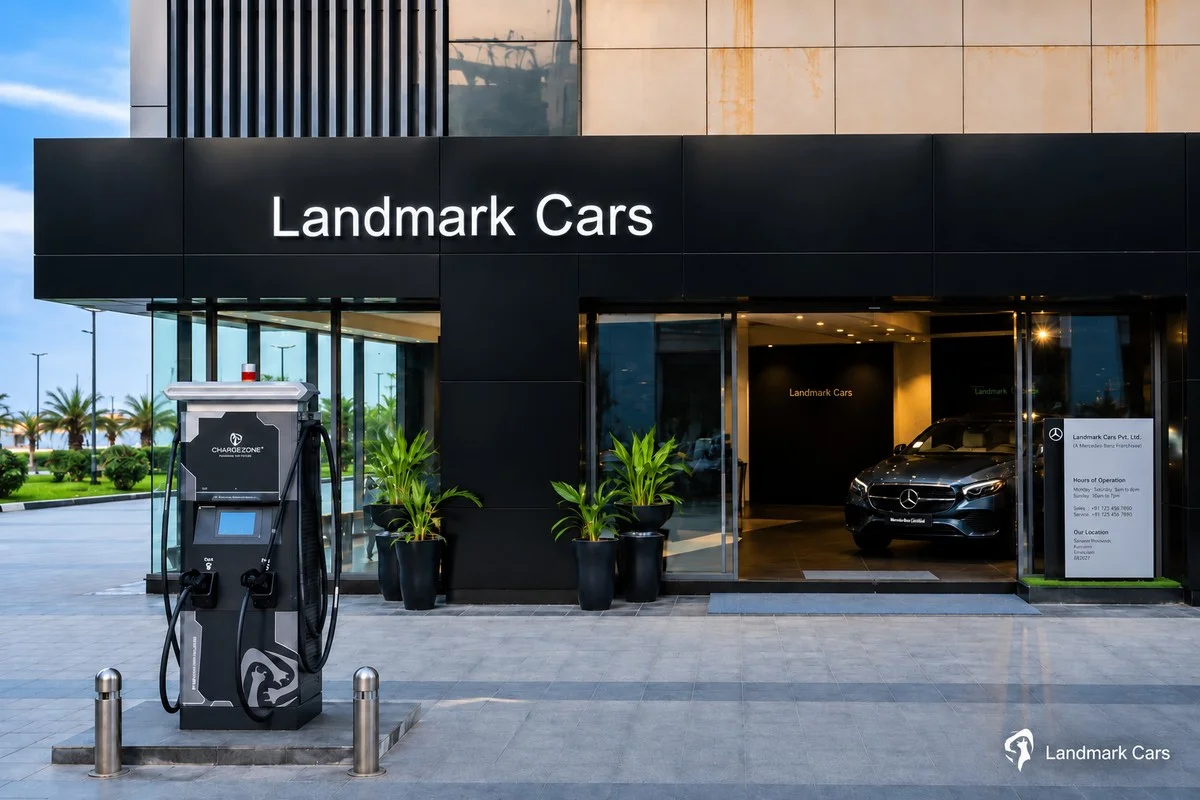
Landmark Cars shares rose 12% to Rs 535.80 after adding BYD and M&M outlets, taking its network to 143 locations, with EV sales at 30% of Q1FY27 new...

Tata Motors’ subsidiary acquired 26,000 shares in Mateshwari E-Smart Mobility for ₹2.6 lakh.