Loading market data...
Sun, 06 Sept 2026
05:08:15 am
Sun, 06 Sept 2026
05:08:15 am

Rudransh Sangwan
Published at: April 23, 2026, 5:57 AM
Synopsis
Strong quarterly earnings with a sharp profit jump and attractive dividend payout signal improving financial strength, but hidden factors behind the growth raise key questions for investors tracking sustainability and future momentum.
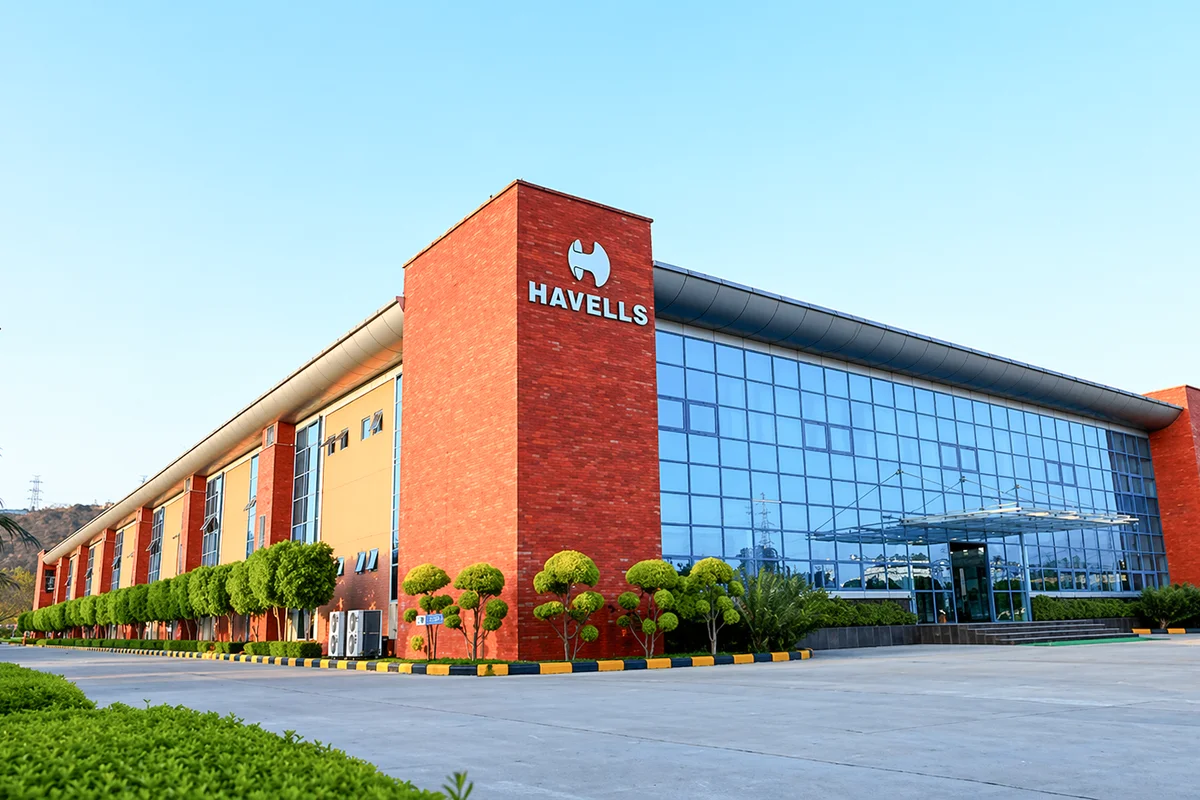
The latest quarterly performance of Havells India Limited highlights a deeper trend playing out in India’s consumer electrical and infrastructure-linked sectors, where profitability is increasingly being driven not just by revenue growth but by operational efficiency and financial optimisation. The company’s nearly 40 percent jump in net profit in Q4 FY26, coupled with a ₹6 final dividend, signals a phase where earnings quality and shareholder returns are becoming central to valuation narratives. However, the underlying composition of this growth raises important questions about sustainability and future trajectory.
Havells reported a consolidated net profit of approximately ₹723 crore for Q4 FY26, marking a sharp year-on-year increase of around 39.6 percent. In contrast, revenue growth remained relatively modest at about 2.5 percent, with total revenue reaching roughly ₹6,705 crore.
This divergence between profit and revenue is critical. It indicates that the surge in profitability was not purely demand-driven but supported significantly by non-operational factors, particularly a sharp increase in other income, which stood at over ₹300 crore during the quarter.
Data suggests limited top-line growth This leads to reliance on margin expansion and non-core income Which results in strong but potentially less sustainable profit growth
This distinction becomes important when evaluating whether the performance reflects structural strength or a short-term boost.
| Metric | Q4 FY26 Value | YoY Change |
|---|---|---|
| Revenue | ₹6,705 crore | +2.47% |
| Net Profit | ₹723 crore | +39.6% |
| Other Income | ₹326 crore | Significant increase |
| Market Cap | ₹84,700+ crore | — |
| Share Price (Approx) | ₹1,348 | +1.5% intraday |
Loading chart...
These numbers highlight a company that is maintaining stable revenue while significantly improving profitability, albeit with support from non-core income streams.
Havells operates across a diversified portfolio that includes cables and wires, lighting, electrical appliances, and consumer durables. The company has built a strong brand presence in both retail and institutional segments, with a focus on premiumisation and distribution expansion.
Its core strengths lie in:
• Strong brand recall in consumer electricals
• Wide distribution network across India
• Exposure to both infrastructure and consumption cycles
This positioning allows Havells to benefit from both urban consumption trends and government-led infrastructure spending.
Historically, the cables and wires segment has been a key contributor to Havells’ revenue stability. In Q3 FY26, the company reported contribution margins close to 20 percent, indicating relatively strong operating efficiency.
However, the Q4 performance suggests that incremental profitability was not driven by core segment expansion alone. Instead, the spike in other income played a decisive role, which could include treasury gains, investments, or one-time financial adjustments.
This creates a nuanced picture where operational strength exists, but headline growth is amplified by external factors.
One of the most important but less discussed aspects of this result is the role of other income. A jump to over ₹300 crore in a single quarter is substantial and can significantly alter profit margins.
This indicates that:
• Financial income contributed meaningfully to bottom line
• Core operating margins may not have expanded proportionally
• Earnings quality needs closer tracking in future quarters
Investors often overlook this layer, focusing only on headline profit growth.
A common misunderstanding is equating high profit growth with strong business momentum. In this case, the modest revenue increase suggests that demand conditions remain stable rather than accelerating sharply.
Another misconception is that dividend announcements automatically signal sustained earnings strength. While Havells has proposed a total dividend of ₹10 per share for FY26, including ₹6 final dividend, payouts can sometimes be supported by temporary earnings boosts.
While the current quarter appears strong, the reliance on other income suggests that profit growth may normalize in upcoming quarters if such income does not repeat at similar levels.
This implies that:
• Future growth will depend more on volume and pricing power
• Margins may stabilize rather than expand sharply
• Valuations may adjust to reflect core earnings trajectory
This is where market expectations and actual performance may diverge.
Several factors will shape Havells’ performance going forward. The demand outlook for consumer electricals remains linked to urban consumption and housing activity, while infrastructure spending continues to support the cables and wires segment.
Key forward triggers include:
• Growth in real estate and construction activity
• Expansion in premium product categories
• Stability in raw material costs
• Sustained distribution expansion
If these factors align positively, Havells can deliver steady, if not explosive, growth.
For investors evaluating Havells, the focus should shift from headline profit growth to underlying business fundamentals. Monitoring revenue growth consistency and margin sustainability will be critical.
A practical approach involves tracking quarterly revenue trends, segment performance, and the proportion of income coming from core operations versus other income. Investors should also watch how effectively the company converts demand growth into earnings without relying heavily on non-operational gains.
Havells India Limited has delivered an impressive Q4 performance on the surface, with strong profit growth and a generous dividend payout. However, the quality of earnings suggests a more balanced interpretation, where operational stability is strong but headline growth is partially supported by financial income. The company remains fundamentally solid, but the next phase of growth will depend on its ability to drive revenue expansion and sustain margins through core business operations rather than external boosts.
The profit surge was driven by a combination of stable operating performance and a significant increase in other income, which boosted overall earnings beyond what revenue growth alone would suggest.
The dividend reflects strong profitability for the year, but sustainability will depend on consistent earnings growth from core operations rather than one-time financial gains.
Investors should look beyond headline numbers and focus on revenue growth, margin trends, and earnings quality to assess long-term investment potential.
Financial journalist specializing in market analysis, stock research, and investment trends. Dedicated to providing accurate, timely insights for informed decision-making.
Credentials: Experienced financial journalist with expertise in equity markets and economic analysis
The information provided in this article is for educational and informational purposes only and should not be construed as financial, investment, or legal advice. welomoney does not provide personalized investment recommendations.
For detailed terms and conditions, please read our Disclaimer and Terms of Service.

Kenya's President William Ruto has ordered Tata Chemicals to halt its Magadi soda ash operations, citing lack of local benefit.
ICICI Bank FCNR(B) deposits, NRI banking, foreign currency deposits, RBI forex scheme, ICICI Bank stock and latest banking market updates.

Check Jindal Worldwide shares, Jindal Mobilitric electric scooters, showroom expansion, EV business plans, stock price and latest company updates.

India Glycols completes its demerger into three entities, separating its chemicals, spirits, bio pharma and bio polymers businesses.

Stocks to buy, brokerage recommendations, share price targets and market picks investors are watching today across Indian equities.