Loading market data...
Mon, 26 Oct 2026
09:06:57 am
Mon, 26 Oct 2026
09:06:57 am

Rudransh Sangwan
Published at: October 26, 2026, 6:03 AM
Synopsis
Blinkit recorded Rs 19,152 crore in quarterly sales, nearly matching DMart at Rs 19,206 crore, as quick commerce sales grew 94% year on year.
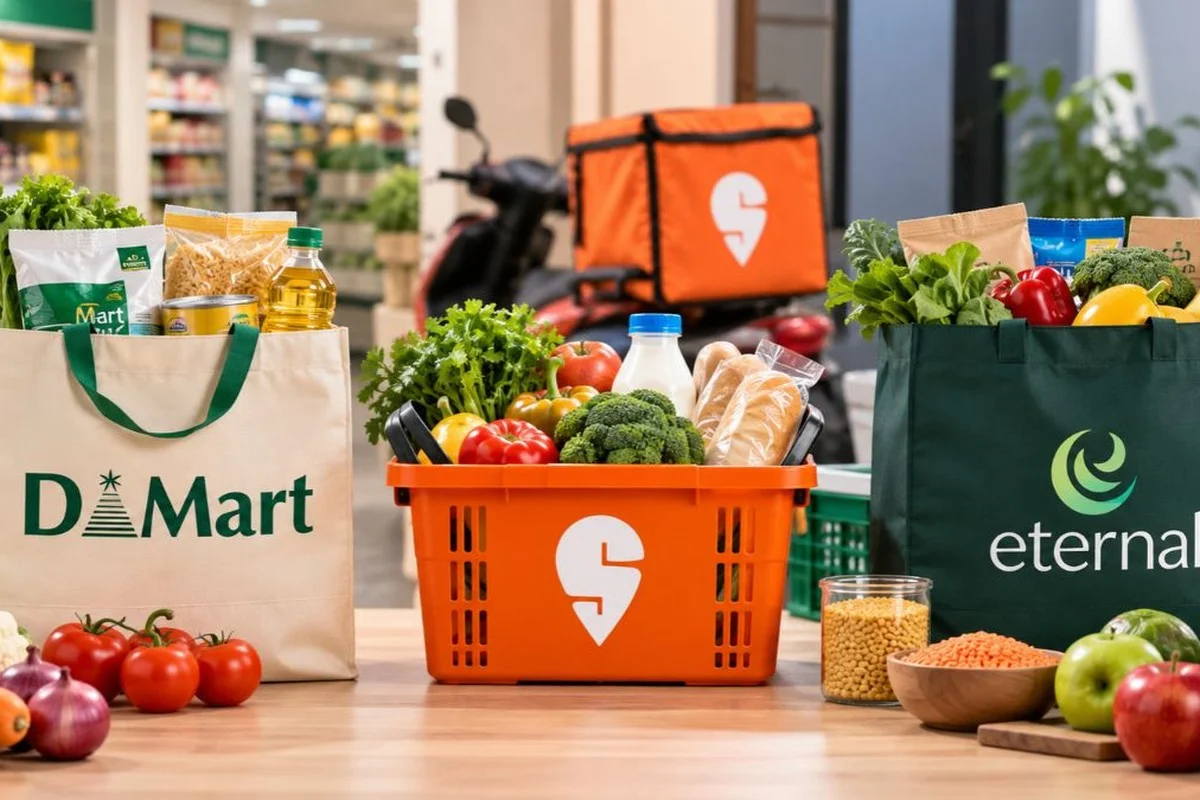
The short version
Blinkit's July to September 2026 sales came within Rs 54 crore of DMart's quarterly sales, bringing the quick commerce platform close to the scale of India's large value supermarket chain. Blinkit recorded sales of Rs 19,152 crore, compared with DMart's Rs 19,206 crore.
A year earlier, Blinkit's sales stood at Rs 9,891 crore, about 61% of DMart's estimated quarterly sales of Rs 16,300 crore. The gap has narrowed sharply as Blinkit's business expanded at a much faster rate over the past year.
The comparison also reveals a difference between sales scale and profitability. DMart generates more sales per store and retains a larger share of its revenue, while Blinkit relies on a much wider network of small warehouses to serve online orders.
Blinkit's sales grew by 94% year on year, adding roughly Rs 9,260 crore to its quarterly sales base. DMart recorded 18% growth and added about Rs 2,930 crore over the same period. These figures put the two businesses close in quarterly sales, although their operating models and location economics remain different.
| Metric | DMart | Blinkit |
|---|---|---|
| Quarterly sales | Rs 19,206 crore | Rs 19,152 crore |
| Sales a year earlier | About Rs 16,300 crore | Rs 9,891 crore |
| Year on year growth | 18% | 94% |
| Number of locations | 518 stores | 2,751 dark stores |
| Sales per location per quarter | About Rs 37 crore | About Rs 7 crore |
| Estimated amount retained per Rs 100 of sales | Rs 7.30 | Rs 1 |
DMart's previous year sales figure is an estimate derived from the reported growth rate. Per location sales and amounts retained are also approximate calculations, not audited comparisons of individual outlets. The two businesses may measure sales on different bases, so their figures should be read with that limitation in mind.
DMart has built its business through large physical supermarkets. It has 518 stores, developed over 24 years since its first store opened in Powai, Mumbai. Customers travel to these stores to buy groceries and other household products, allowing the retailer to serve shoppers through a conventional supermarket model.
Blinkit uses dark stores, which are small warehouses that customers cannot enter. Orders are placed online and delivered to customers, with the network designed around fast fulfilment. Blinkit had 2,751 dark stores in the September 2026 quarter and added 308 locations in just three months.
The difference in network size helps explain how Blinkit has approached DMart's quarterly sales. Each DMart store generates about Rs 37 crore in quarterly sales, compared with around Rs 7 crore for a Blinkit dark store. DMart therefore generates roughly five times as much sales per location, but Blinkit has more than five times as many locations.
These figures describe the average sales associated with each location. They do not establish that every store or dark store performs at the same level. Location size, operating costs and the way sales are recorded can differ between the two businesses.
The sales comparison does not mean that DMart and Blinkit earn similar amounts from their businesses. The supplied estimates indicate that DMart retains about Rs 7.30 for every Rs 100 of sales, while Blinkit retains around Rs 1.
Applied to their reported quarterly sales, those figures imply about Rs 1,400 crore for DMart and Rs 190 crore for Blinkit. These are illustrative estimates based on the stated retention rates, not confirmed quarterly net profits. The precise meaning of the retention measure is not specified, so it should not be treated as a direct comparison of audited profit margins.
The difference is consistent with the broad distinction between the two operating models. DMart's customers travel to its stores, while Blinkit must manage the infrastructure and delivery process needed to bring orders to customers. Blinkit's network requires warehouses, order processing and delivery operations. Those activities have costs that affect how much revenue remains after expenses.
Store maturity may also matter. Blinkit added hundreds of dark stores during the quarter, and newer locations may need time to build order volumes. However, the supplied figures do not establish how quickly those stores reach a steady level of sales or how their profitability changes as they mature.
For readers following the business, the distinction is important: quarterly sales show the scale of activity, while profit and cash generation help explain the financial return from that activity. A close sales comparison alone cannot establish which business has stronger overall economics.
Blinkit's 94% annual sales growth shows how quickly its reported business has expanded. DMart's 18% growth is slower by comparison, although its estimated quarterly sales remain slightly higher. The figures suggest that quick commerce is becoming a much larger part of the retail market covered by this comparison.
The expansion also has a physical footprint. Opening 308 dark stores in one quarter requires a growing network of locations to handle online orders. The pace of expansion raises questions about how quickly new outlets attract customers and whether higher order volumes can cover the cost of running them.
Consumers choosing between traditional supermarkets and rapid delivery services are weighing different forms of convenience. DMart's model depends on customers visiting a store, while Blinkit's model brings orders to them. The growing overlap in quarterly sales shows that the two formats can reach similar sales levels through very different networks.
Readers interested in the consumer side of this change can also compare the practical differences between JioMart and Blinkit for grocery delivery. For the supply side, Zappfresh's revenue growth and Blinkit sales provide another example of how online distribution can form part of a consumer business's growth strategy.
However, the available figures do not establish how much grocery spending has shifted from physical supermarkets to quick commerce. They compare the reported sales of two businesses, not the total market share of each retail format across India.
The October to December 2026 quarter includes the festive period, making the next set of sales figures an important comparison point. The reported data does not provide a forecast for either business, so the next quarter's results will show whether the near tie persists.
Several measures will help explain the direction of the comparison:
For Blinkit, the relationship between new store openings, sales growth and profitability will matter alongside its headline revenue figure. Rapid expansion can increase total sales, but the economics of each location remain important.
For DMart, the focus will be on maintaining growth across its physical store network as quick commerce expands. Its current sales lead is narrow, but the figures supplied here do not establish how either business will perform in the next quarter.
DMart is a value focused retail chain built around physical stores. Blinkit is a quick commerce platform that fulfils online orders through dark stores and delivery operations. Their latest quarterly sales figures put them almost level in scale, but their location productivity and estimated revenue retention differ sharply.
The December quarter will provide the next comparison of their reported sales. Store productivity and profitability will help show whether Blinkit's rapid expansion can translate into stronger financial returns, while DMart's growth will indicate how its store based model is performing alongside quick commerce.
Blinkit's reported sales for July to September 2026 were Rs 19,152 crore. This was Rs 54 crore below DMart's quarterly sales of Rs 19,206 crore. Blinkit's sales had been Rs 9,891 crore in the comparable period a year earlier.
Blinkit's sales grew 94% year on year, while DMart recorded 18% growth. Blinkit added about Rs 9,260 crore in quarterly sales over the year, compared with an estimated addition of Rs 2,930 crore for DMart.
DMart had 518 physical stores, while Blinkit had 2,751 dark stores in the September 2026 comparison. Blinkit opened 308 dark stores during the quarter, while DMart's store count reflects a network built over 24 years since its first outlet opened in Powai, Mumbai.
The supplied estimates suggest DMart retains about Rs 7.30 per Rs 100 of sales, compared with around Rs 1 for Blinkit. Applying these rates to quarterly sales implies about Rs 1,400 crore for DMart and Rs 190 crore for Blinkit, but these figures are estimates and should not be treated as confirmed net profit.
DMart generates about Rs 37 crore in quarterly sales per physical store, compared with about Rs 7 crore per Blinkit dark store. The comparison reflects different location formats and operating models, with DMart relying on customer visits and Blinkit fulfilling online orders through smaller warehouses.
Investors can compare the businesses' quarterly sales growth, store expansion and profitability in the October to December 2026 period. For Blinkit, sales per dark store and the estimated amount retained from each Rs 100 of sales will help assess the economics of its expanding network.
Financial journalist specializing in market analysis, stock research, and investment trends. Dedicated to providing accurate, timely insights for informed decision-making.
Credentials: Experienced financial journalist with expertise in equity markets and economic analysis
The information provided in this article is for educational and informational purposes only and should not be construed as financial, investment, or legal advice. welomoney does not provide personalized investment recommendations.
For detailed terms and conditions, please read our Disclaimer and Terms of Service.

Nifty 50 and Sensex recover from opening losses as market breadth improves. Track technical levels, September quarter earnings and the October Fed...
Bharat Coking Coal shares rose 6.3% after Q2 profit reached Rs 123.7 crore. Revenue grew 39% and EBITDA margins returned to positive territory.
The short version - BSE shares rose as much as 5% after Motilal Oswal upgraded its rating to "Buy".

Indian stock market fell as Nifty slipped below 22,500 and Sensex lost nearly 600 points. Higher crude oil prices and metal stock losses weighed on...

The Nifty IT index climbed 3.3% as Q2 results eased fears over AI disruption and weak demand. See broker views, stock moves and sector risks.