Loading market data...
Tue, 20 Oct 2026
03:26:51 pm
Tue, 20 Oct 2026
03:26:51 pm

Rudransh Sangwan
Published at: October 15, 2026, 10:16 AM
Synopsis
Reliance shares could have 15% to 20% upside as Jio Platforms' IPO unlocks value. The estimate factors in debt reduction and future growth.

The short version
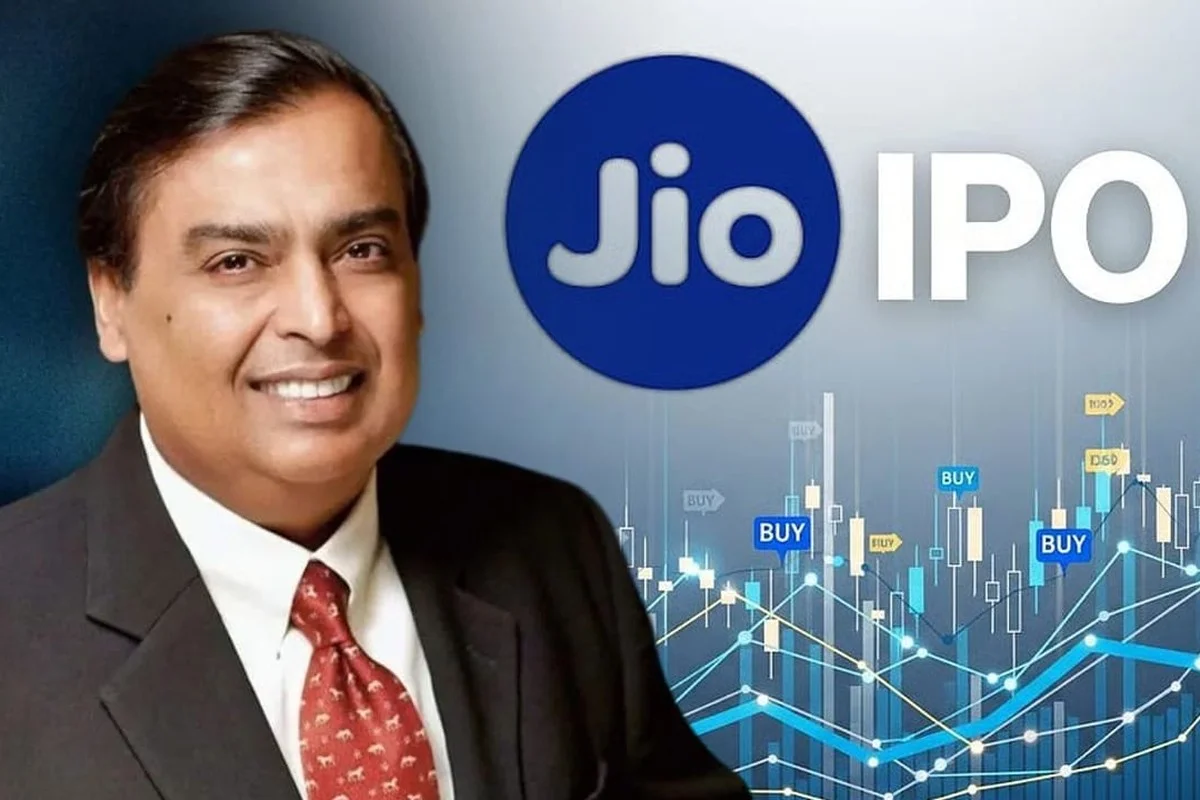
Reliance Industries could see its estimated fair value rise by 15% to 20% following the proposed initial public offering of Jio Platforms, according to Gurmeet Chadha, Managing Partner and CIO of Complete Circle. The potential listing could give investors a clearer view of Jio's value within the Reliance group.
Loading chart...
Chadha estimates Reliance Industries' fair value at $260 billion to $280 billion using a sum of the parts valuation. His assessment considers Reliance's stakes in Jio Platforms and Reliance Retail, alongside the oil to chemicals business. The proposed IPO could also help reduce the group's debt, giving investors another factor to consider when assessing the stock.
Jio Platforms is a major part of Reliance Industries' digital business. A separate public listing could give the market a more direct way to value the telecom and digital services business instead of assessing it only as part of the larger conglomerate.
Chadha said Reliance Industries' market capitalisation reflects a discount of around 35% to 40% to his estimated intrinsic value. He attributed the gap partly to sustained foreign institutional investor selling and selling pressure on large companies. In his assessment, the Jio IPO could help investors reassess the value of Reliance's underlying businesses.
However, the estimated upside is a valuation view, not a guaranteed share price gain. The stock's response will depend on market sentiment and how investors assess the IPO. Chadha expects the listing to be reasonably good, although he noted that a strong debut would depend partly on broader market conditions.
Reliance has already drawn attention from investors tracking the proposed issue. WeloMoney has covered Reliance Industries shares and Jio IPO expectations, as well as the company's record FY26 profit and Jio IPO progress.
Chadha's valuation uses a sum of the parts approach. This method estimates the value of separate businesses within a group and combines them to arrive at an overall valuation. It can help investors assess whether a diversified company trades below or above the estimated value of its individual businesses.
His assessment uses the following components:
| Valuation component | Figure cited |
|---|---|
| Reliance's stake in Jio Platforms | 66% |
| Reliance's stake in retail | 83% |
| Estimated value assigned to the oil to chemicals business | $60 billion to $70 billion |
| Estimated fair value of Reliance Industries | $260 billion to $280 billion |
| Estimated discount to intrinsic value | 35% to 40% |
| Potential fair value upside | 15% to 20% |
These estimates depend on the assumptions used to value each business. The proposed IPO could provide additional information about how public market investors value Jio Platforms. The final outcome will also depend on the issue's terms, investor demand and the valuation at which the shares are offered.
The proposed Jio Platforms IPO could have a direct effect on Reliance Industries' consolidated balance sheet. Fitch Ratings Director Girish Madan said the rating agency had upgraded Reliance Industries' local currency rating to A minus from BBB plus, citing expectations of lower capital expenditure intensity across its oil and gas, telecom and retail businesses.
The proposed issue is expected to generate around Rs 30,000 crore, with the proceeds primarily intended for debt reduction. The source estimates that the fresh issue could reduce Reliance Industries' consolidated debt by approximately Rs 27,000 crore.
Fitch's FY27 estimates indicate that Reliance's net debt could fall from Rs 1,30,000 crore to around Rs 1,00,000 crore after the issue. The expected improvement would reduce the amount of debt the group carries relative to its earnings.
| Debt metric | Estimate |
|---|---|
| Proposed IPO proceeds | Around Rs 30,000 crore |
| Estimated reduction in consolidated debt | Approximately Rs 27,000 crore |
| FY27 net debt before the issue | Rs 1,30,000 crore |
| FY27 net debt after the issue | Around Rs 1,00,000 crore |
| Average net debt to EBITDA estimate before improvement | 0.7 times |
| Expected FY27 net debt to EBITDA ratio | 0.55 times |
| Expected improvement in the ratio | 0.15 times |
Net debt to EBITDA compares a company's net debt with its earnings before interest, taxes, depreciation and amortisation. A lower ratio generally indicates a smaller debt burden relative to operating earnings, although the ratio must be assessed alongside cash flow, capital expenditure and other financial commitments.
Fitch does not maintain a public rating for Jio Platforms, but the source states that Jio's standalone net debt to EBITDA ratio is already below one time. The ratio is expected to fall further following the proposed transaction.
Jio's subscriber numbers and broadband presence are important parts of the valuation discussion. Chadha noted that Jio has more than 53 crore users, compared with around 48 crore to 49 crore for Bharti Airtel. Jio's quarterly revenue run rate is around Rs 40,000 crore, although the source places it slightly below Airtel's.
Bharti Airtel generates more average revenue per user, or ARPU. This measures the average revenue a telecom operator earns from each user over a given period. The difference suggests that Jio may have room to increase revenue per user through tariff changes, subject to customer demand and competitive conditions.
| Telecom metric | Jio Platforms | Bharti Airtel |
|---|---|---|
| User base | More than 53 crore | 48 crore to 49 crore |
| Quarterly revenue run rate | Around Rs 40,000 crore | Slightly higher than Jio |
| Average revenue per user | Rs 218 | Rs 260 |
| Broadband penetration | Nearly twice Airtel's level | Lower than Jio's |
Despite Jio's larger user base, Chadha said the quarterly difference in profit after tax between the two businesses remains around Rs 400 crore to Rs 500 crore. That gap makes revenue per user, profitability and cash generation important measures for investors evaluating Jio's business.
Jio's future valuation will depend partly on its ability to generate cash and expand beyond traditional telecom services. Chadha pointed to enterprise automation using artificial intelligence and satellite internet as areas to watch.
Cash generation is another consideration. Bharti Airtel's free cash flow was cited at around Rs 40,000 crore to Rs 50,000 crore. Jio's ability to produce comparable cash flow could influence how investors assess its financial strength and capacity to fund future growth.
Tariff increases may also affect revenue. Chadha expects younger consumers, including Gen Z, to allocate a larger share of their income to mobile connectivity over the next five to ten years. That is an expectation, and actual pricing decisions will depend on competition, customer behaviour and the value consumers place on telecom services.
Reliance Industries shareholders will have several factors to track as the Jio Platforms IPO progresses.
The proposed IPO could provide a clearer valuation reference for Jio Platforms while reducing debt at the parent company. The eventual effect on Reliance Industries' share price will depend on the issue's valuation, the use of proceeds and how the market values the group's remaining businesses.
Gurmeet Chadha estimates that Reliance Industries' fair value could rise by 15% to 20% following the Jio Platforms IPO. His valuation puts Reliance's estimated fair value at $260 billion to $280 billion. This is an analyst's assessment, not a guaranteed share price return.
The proposed Jio Platforms IPO is expected to raise around Rs 30,000 crore. The proceeds are intended primarily for debt reduction at Reliance Industries. The source estimates that consolidated debt could fall by approximately Rs 27,000 crore.
Gurmeet Chadha estimates Reliance Industries' fair value at $260 billion to $280 billion using a sum of the parts valuation. The calculation considers Reliance's 66% stake in Jio Platforms, its 83% stake in retail and an estimated $60 billion to $70 billion value for the oil to chemicals business.
The proposed issue could reduce Reliance Industries' consolidated debt by approximately Rs 27,000 crore. Fitch's FY27 estimate puts net debt at around Rs 1,30,000 crore before the issue and around Rs 1,00,000 crore afterward.
Jio's average revenue per user is Rs 218, compared with Rs 260 for Bharti Airtel. Jio has more than 53 crore users, while Airtel has around 48 crore to 49 crore. The difference in ARPU is one factor investors may consider when assessing Jio's revenue growth.
Investors can monitor the final IPO valuation, the reduction in Reliance Industries' debt and Jio's financial performance. Changes in ARPU, free cash flow and the development of AI and satellite internet services could also influence how the market values Jio Platforms.
Financial journalist specializing in market analysis, stock research, and investment trends. Dedicated to providing accurate, timely insights for informed decision-making.
Credentials: Experienced financial journalist with expertise in equity markets and economic analysis
The information provided in this article is for educational and informational purposes only and should not be construed as financial, investment, or legal advice. welomoney does not provide personalized investment recommendations.
For detailed terms and conditions, please read our Disclaimer and Terms of Service.
Jio Platforms IPO draws nearly Rs 2.5 lakh crore in reported investor demand. LIC, global funds and top mutual fund houses are among interested...

Jio Platforms IPO may value the company at Rs 10.3 lakh crore, with 2.9% equity on offer. See why fund managers view Jio alongside Airtel.

6 IPOs are open or available for subscription in India on October 15, 2026. Check issue sizes, price bands, GMP, lot sizes and listing dates.

Jio Platforms IPO has a price band of Rs 1,065 to Rs 1,119 per share and may raise Rs 30,213 crore. See issue dates, lot size and shareholder quota.
Jio Platforms IPO reserves up to Rs 2,500 crore for eligible Reliance Industries shareholders.