Loading market data...
Tue, 20 Oct 2026
05:41:35 pm
Tue, 20 Oct 2026
05:41:35 pm

Rudransh Sangwan
Published at: April 2, 2026, 2:30 PM
Synopsis
Over $777 billion erased at US market open. Understand causes, risks, and what investors should do next.
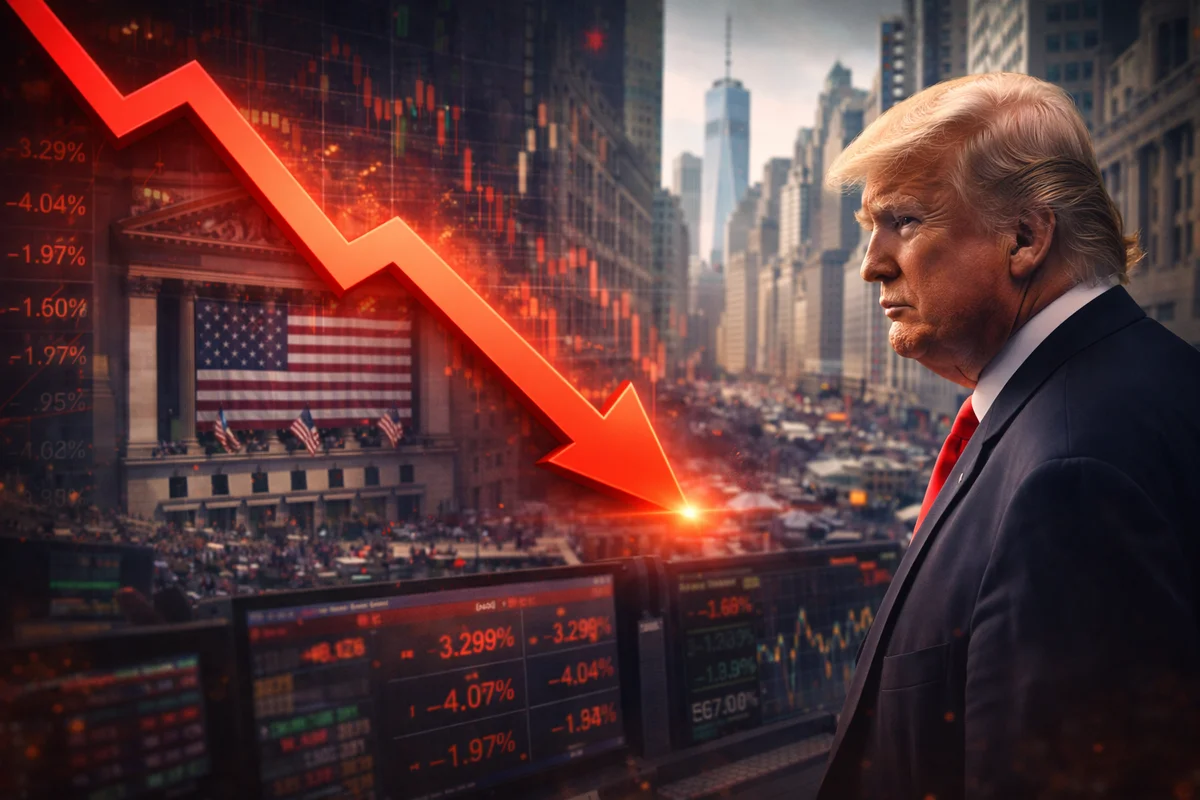
Over $777 billion vanished from the US stock market within minutes of the opening bell. That’s not just volatility. That’s a signal of stress building beneath the surface.
And here’s the critical point most investors miss: markets don’t collapse randomly. They react to pressure that has already been building quietly for weeks.
This selloff is not just about one event. It’s a collision of geopolitics, oil shock, interest rates, and overvalued markets finally facing reality.
The sharp selloff wiped out hundreds of billions in market capitalization almost instantly as Wall Street reacted to rising global uncertainty and macro shocks.
The immediate trigger was a surge in crude oil prices above $110 along with escalating geopolitical tensions. At the same time:
Example: When oil spikes rapidly, markets don’t just worry about energy costs. They price in inflation, rate hikes, and slower growth all at once.
Practical takeaway: This was not a random crash. It was a reaction to multiple risks hitting simultaneously.
Markets don’t fall because of bad news. They fall when expectations break.
There are three core reasons behind this sharp reaction:
Oil above $110 signals rising inflation globally. That means central banks may delay rate cuts or even tighten further.
War-related uncertainty pushes investors toward safe assets. Equity markets hate uncertainty more than bad news.
Tech stocks and AI-driven companies were already trading at stretched valuations. Any negative trigger accelerates selling.
Example: The Nasdaq had already entered correction territory before this event, showing underlying weakness.
Practical takeaway: Markets were fragile. The oil shock and geopolitical tension simply exposed that fragility.
The biggest mistake investors make is blaming one headline.
This crash is the result of stacked macro pressures:
Even large institutional players had been reducing risk before this event, signaling caution among smart money.
Example: When liquidity tightens and risks rise together, markets don’t correct slowly. They drop fast.
Practical takeaway: This is a system-level reaction, not a single-event panic.
Everyone is focusing on the $777 billion number. That’s the wrong focus.
Here’s the deeper insight:
Market cap losses are not actual cash losses. They reflect changes in valuation based on sentiment and expectations.
Prices fall because buyers step back, not because money disappears.
Another overlooked factor is positioning. When markets are crowded with bullish bets, even a small shock forces rapid unwinding.
Key insight:
Practical takeaway: Focus on liquidity and positioning, not just headlines.
This is the question everyone is asking. The answer depends on what happens next.
Right now:
Historically, similar events during geopolitical shocks have triggered short-term crashes but not always long-term bear markets.
Example: During past war-driven selloffs, markets initially crashed but later stabilized once uncertainty reduced.
Practical takeaway: This could still be a correction unless macro conditions worsen.
Markets from here will depend on a few key triggers.
If oil falls below $90:
If geopolitical tensions worsen:
If central banks keep rates high:
Practical takeaway: Think in scenarios, not predictions. Markets move based on triggers, not opinions.
In volatile conditions like this, strategy matters more than timing.
What to do:
What to avoid:
Example: Investors who blindly buy every dip during macro stress often face multiple drawdowns.
Practical takeaway: Discipline beats speed in volatile markets.
Several risks could turn this into a deeper crash:
These factors can combine and create cascading selloffs.
Practical takeaway: Always track risk clusters, not isolated factors.
The $777 billion wipeout is not the story. It’s the symptom.
The real story is this: global markets are entering a phase where macro forces dominate everything. Oil, interest rates, and geopolitics now matter more than company earnings.
This is where smart investors separate from reactive ones.
The question is not whether markets will fall again. The real question is: are you positioned for what comes next?
The selloff was driven by a combination of rising oil prices, geopolitical tensions, and investor risk aversion. When multiple macro risks hit together, markets react sharply at the open.
Not necessarily. It could remain a correction unless oil prices stay high or geopolitical tensions escalate further. Future movement depends on macro conditions.
Cautiously. Instead of aggressive buying, investors should stagger investments, focus on strong companies, and avoid overexposure to risky sectors during high volatility.
Financial journalist specializing in market analysis, stock research, and investment trends. Dedicated to providing accurate, timely insights for informed decision-making.
Credentials: Experienced financial journalist with expertise in equity markets and economic analysis
The information provided in this article is for educational and informational purposes only and should not be construed as financial, investment, or legal advice. welomoney does not provide personalized investment recommendations.
For detailed terms and conditions, please read our Disclaimer and Terms of Service.

Zerodha launches US stock investing on Kite beta, with access to 2,000 companies and fractional shares from $1. See brokerage, fees and eligibility.
Indonesia’s stock market faces a potential MSCI downgrade over transparency concerns, triggering a sharp selloff and fears of foreign investor...