Loading market data...
Sun, 19 Jul 2026
03:19:40 am
Sun, 19 Jul 2026
03:19:40 am

Rudransh Sangwan
Published at: March 29, 2026, 9:15 AM
Synopsis
Iran’s IRGC warns American universities in West Asia could be targets amid escalating conflict. Understand what triggered this move and its global impact.
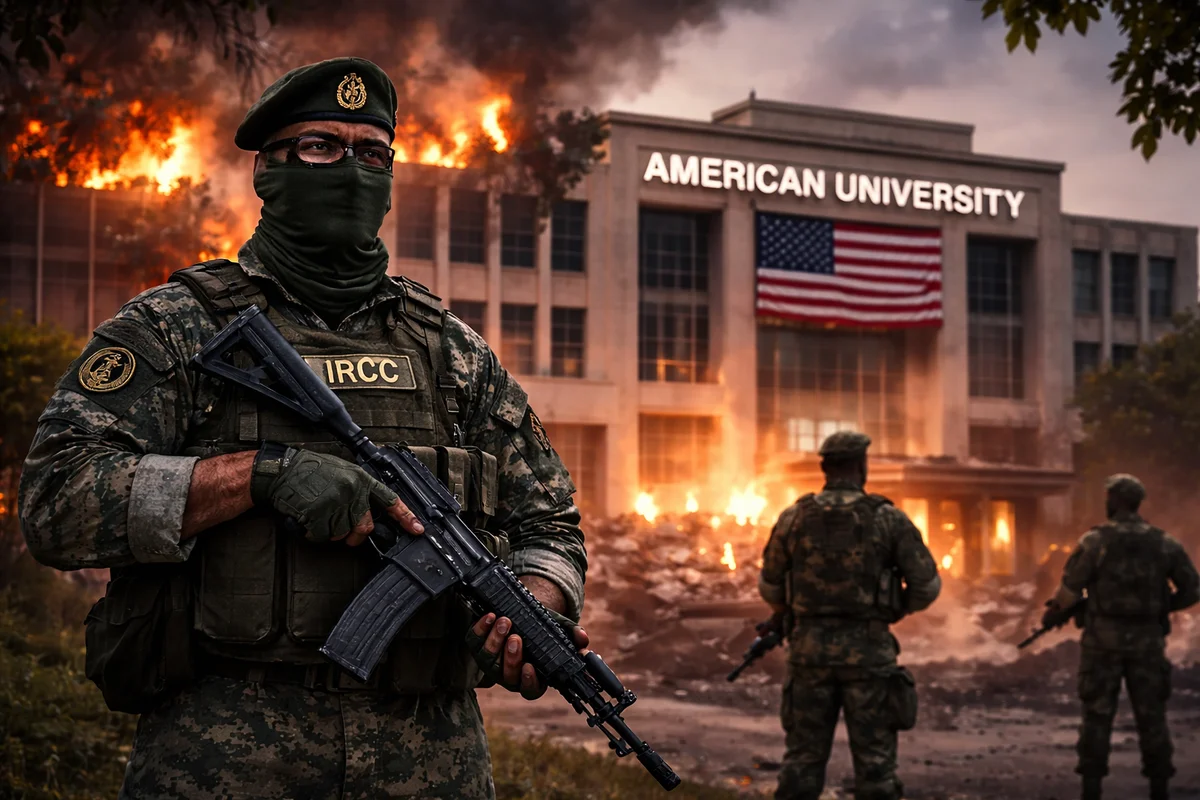
Iran’s Islamic Revolutionary Guard Corps has issued a strong warning that American-affiliated universities in West Asia could be considered “legitimate targets.” This marks a significant escalation in the ongoing conflict involving the US, Israel, and Iran.
The warning comes after Iran accused the US and Israel of targeting its academic institutions, including strikes on major universities in Tehran. In response, the IRGC has framed universities linked to Western countries as part of the broader conflict landscape.
This is a notable shift. Traditionally, educational institutions are considered civilian spaces, but this development signals how the conflict is expanding into unconventional domains.
The key takeaway is clear. The conflict is no longer limited to military targets and is now affecting civilian and institutional spaces.
The IRGC declared that American and Israeli universities operating in the Middle East could face retaliation if attacks on Iranian institutions continue.
According to the warning:
This raises serious concerns about the safety of thousands of international students and academic professionals in the region.
Targeting universities represents a dangerous shift in conflict dynamics:
The takeaway is serious. This move blurs the line between civilian and military zones.
The warning did not come in isolation. It is part of a chain of escalating actions in the ongoing Middle East conflict.
Iran claims that recent US and Israeli strikes targeted:
These actions were interpreted by Iran as attempts to weaken its intellectual and technological capabilities.
In response, Iran has adopted a broader retaliation strategy:
The takeaway is escalation cycle. Each action is triggering a stronger counter-response.
This development has raised concerns internationally, as it affects more than just the countries directly involved.
Thousands of students from around the world study in American-affiliated universities in the Middle East.
Potential risks include:
This could impact global education networks and mobility.
Targeting universities can:
It may also push countries to reassess their presence in the region.
The takeaway is global ripple effect. The consequences extend far beyond the immediate conflict zone.
The IRGC warning is part of a larger pattern of escalation in the region.
Recent developments show the conflict spreading across:
Now, even educational institutions are being drawn into the conflict.
The conflict is evolving beyond traditional warfare:
This reflects a broader shift in modern conflict strategies.
The takeaway is evolving warfare. Modern conflicts are no longer limited to battlefields.
The situation remains highly volatile, with multiple possible outcomes.
If tensions continue:
This could further destabilize the region.
At the same time, diplomatic efforts are ongoing:
However, the path forward remains uncertain.
The takeaway is uncertainty. The situation can change rapidly based on geopolitical developments.
The IRGC’s threat against American universities marks a serious escalation in the Middle East conflict.
By extending potential targets to educational institutions, the conflict is entering a new and more complex phase. This raises concerns not just for regional stability, but for global safety and diplomacy.
For now, the focus remains on how governments, institutions, and international bodies respond to this evolving situation.
Financial journalist specializing in market analysis, stock research, and investment trends. Dedicated to providing accurate, timely insights for informed decision-making.
Credentials: Experienced financial journalist with expertise in equity markets and economic analysis
The information provided in this article is for educational and informational purposes only and should not be construed as financial, investment, or legal advice. welomoney does not provide personalized investment recommendations.
For detailed terms and conditions, please read our Disclaimer and Terms of Service.
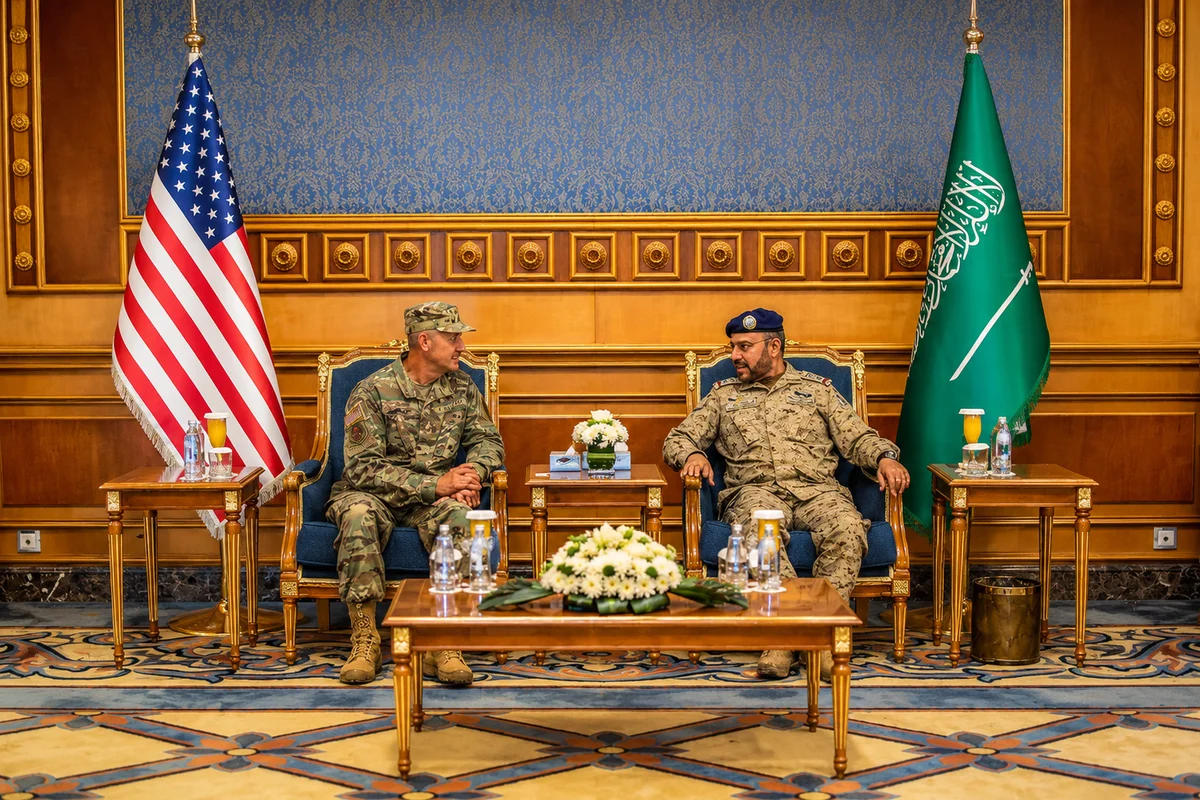
The United States has approved a $1.96 billion weapons package for Saudi Arabia, strengthening the kingdom's air defence capabilities as geopolitical...
OnePlus has announced the end of OxygenOS, replacing it with Oppo's ColorOS 17 on future devices.
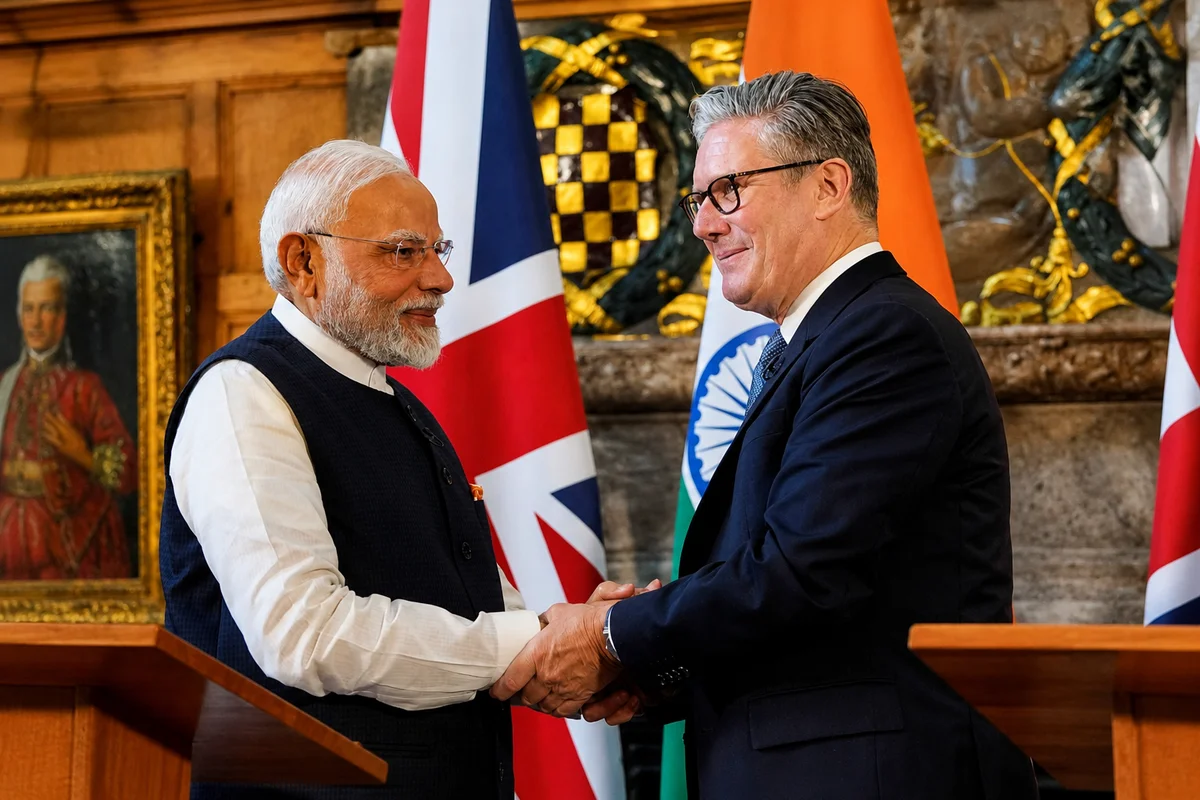
The Comprehensive Economic and Trade Agreement (CETA) between India and the United Kingdom officially came into effect on July 15, 2026, marking one...
Coalition of the Willing Summit: Zelensky launches the FREYJA missile defence programme as France pledges Rafale jets, the UK expands military...

Xiaomi SkyNomad N90 debuts as the company's first hybrid SUV featuring swivel seats, fold-out coffee table, sleeping space, 370 km EV range, 420 bhp...