Loading market data...
Wed, 07 Oct 2026
03:34:02 am
Wed, 07 Oct 2026
03:34:02 am

Rudransh Sangwan
Published at: May 24, 2026, 4:53 PM
Synopsis
Crypto markets in 2026 are being reshaped by Bitcoin ETFs, AI crypto tokens, stablecoins, tokenization, and institutional adoption as digital assets increasingly evolve into global financial infrastructure.
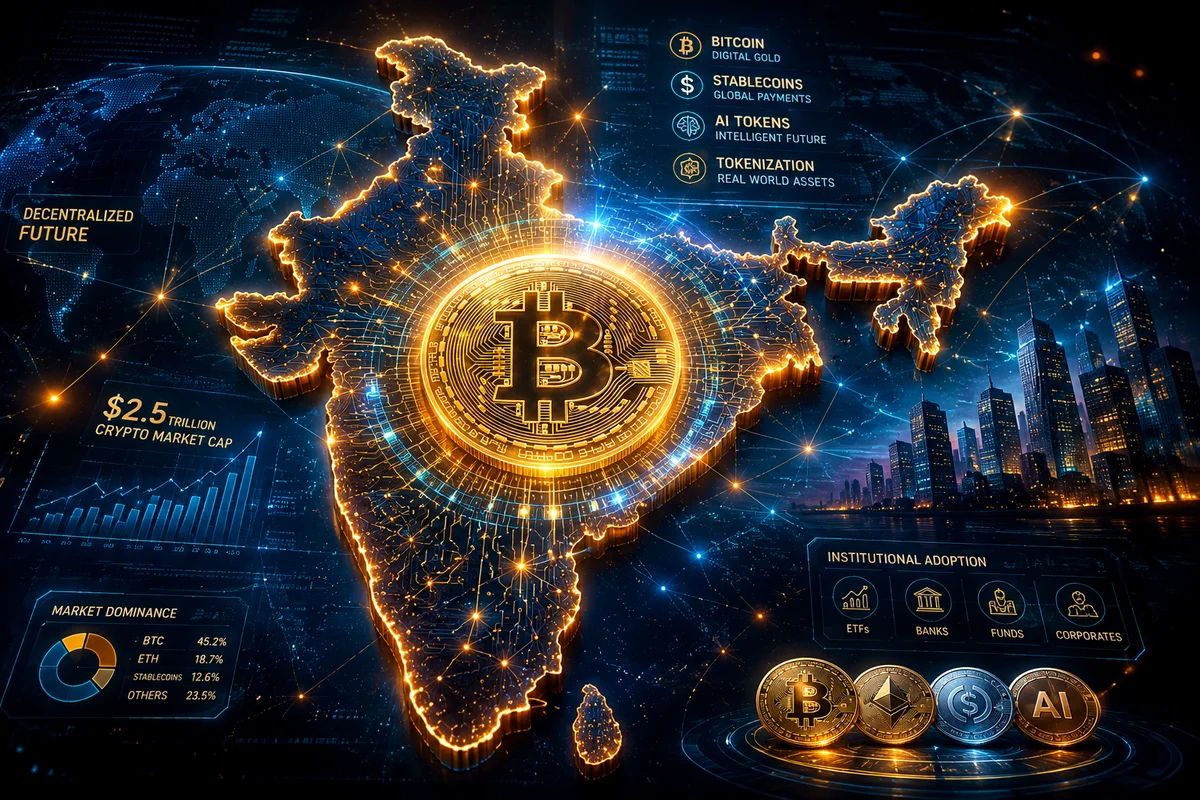
The global cryptocurrency market is entering a completely different phase in 2026 as digital assets rapidly evolve from speculative trading instruments into institutional financial infrastructure.
What was once dominated by meme coins, retail speculation, and high-risk leverage is now increasingly driven by:
With the total crypto market capitalization hovering near $2.5 trillion, the digital asset ecosystem is undergoing one of the biggest structural transformations in financial history.
Bitcoin, Ethereum, stablecoins, AI-linked crypto projects, and tokenized finance platforms are now reshaping global conversations around money, payments, capital markets, and financial sovereignty.
| Asset / Sector | Market Positioning | Structural Narrative |
|---|---|---|
| Bitcoin (BTC) | Macro Reserve Asset | “Digital Gold” thesis strengthening |
| Ethereum (ETH) | Financial Infrastructure Layer | Smart contracts & tokenization backbone |
| Stablecoins | Explosive Adoption Phase | Cross-border payments & settlements |
| AI Crypto Tokens | Early-Stage Growth | AI + decentralized infrastructure |
| Bitcoin ETFs | Major Capital Driver | Institutional integration |
| Tokenized Assets | Emerging Institutional Theme | Real-world asset digitization |
The crypto industry is increasingly being integrated into:
One of the biggest shifts in crypto markets is Bitcoin’s transformation into a macroeconomic reserve asset.
Institutional investors are increasingly evaluating Bitcoin alongside:
This transition accelerated following:
The “Digital Gold” narrative has become one of the strongest institutional investment themes in crypto markets.
The approval of spot Bitcoin ETFs fundamentally changed crypto accessibility for traditional investors.
Bitcoin ETFs now enable:
| Metric | Estimate |
|---|---|
| Global Bitcoin ETF Assets | $128+ Billion |
| Estimated Net Inflows | $65+ Billion |
| Institutional Participation | Rapidly Expanding |
The ETF ecosystem is helping integrate crypto into mainstream capital markets faster than previous market cycles.
While Bitcoin dominates headlines, stablecoins may become one of the most transformational parts of the crypto economy.
Stablecoins are digital currencies pegged to fiat assets like:
They are increasingly being used for:
| Use Case | Impact |
|---|---|
| Cross-Border Payments | Faster global transactions |
| Remittances | Lower transaction costs |
| Treasury Operations | Instant settlement infrastructure |
| AI Payments | Automated financial execution |
| Global Commerce | Reduced banking friction |
Many analysts believe stablecoins are quietly becoming one of the most important innovations in global finance.
One of the fastest-growing sectors in crypto markets is the convergence between:
AI-focused crypto projects are now positioning themselves around:
| AI Crypto Segment | Focus Area |
|---|---|
| Decentralized Compute | AI processing infrastructure |
| AI Agents | Autonomous digital transactions |
| AI Data Markets | Decentralized datasets |
| AI Stablecoin Systems | Automated settlement systems |
| Web3 AI Infrastructure | Blockchain-integrated AI systems |
The AI + crypto convergence is increasingly viewed as one of the biggest long-term investment narratives in digital finance.
Ethereum remains one of the most critical infrastructure layers in crypto markets.
The blockchain continues dominating:
Ethereum’s importance increasingly lies in infrastructure rather than speculation.
Many institutional tokenization projects are being built on Ethereum-compatible ecosystems.
Tokenization is rapidly becoming one of the most important institutional blockchain trends.
Real-world assets being tokenized include:
| Advantage | Impact |
|---|---|
| Fractional Ownership | Increased accessibility |
| Faster Settlement | Reduced transaction delays |
| Global Liquidity | Broader investor participation |
| Programmable Compliance | Automated regulations |
| Lower Friction | More efficient markets |
Institutional finance increasingly views tokenization as a long-term infrastructure evolution.
Despite regulatory caution and high taxation, India remains one of the world’s fastest-growing crypto markets.
India’s crypto ecosystem is being driven by:
| Factor | Strategic Importance |
|---|---|
| Demographics | Large Gen Z investor base |
| Digital Payments | Advanced fintech ecosystem |
| Developer Talent | Strong blockchain engineering base |
| Retail Participation | Rapid crypto adoption |
| Startup Ecosystem | Expanding Web3 innovation |
Cities like:
are becoming major blockchain and Web3 development hubs.
India currently imposes:
While these rules reduced speculative excess, they also impacted exchange liquidity and trading volumes.
However, institutional discussions around crypto regulation continue evolving.
The long-term question for India is whether it chooses to become:
Despite strong growth, crypto markets remain highly volatile and structurally risky.
| Risk Factor | Potential Impact |
|---|---|
| Regulatory Crackdowns | Liquidity contraction |
| Cybersecurity Breaches | Institutional trust erosion |
| Stablecoin Failures | Payment system disruption |
| Excessive Leverage | Liquidation cascades |
| Global Rate Hikes | Risk asset repricing |
| Geopolitical Fragmentation | Regulatory divergence |
Institutional adoption will depend heavily on risk management, custody infrastructure, and regulatory clarity.
Unlike previous crypto cycles dominated by speculation, the next phase increasingly appears driven by:
The market is slowly transitioning from speculative enthusiasm toward infrastructure-led adoption.
The long-term trajectory of digital assets increasingly depends on:
| Sector | Long-Term Outlook |
|---|---|
| Bitcoin | Institutional reserve asset growth |
| Ethereum | Infrastructure expansion |
| Stablecoins | Payment system disruption |
| AI Tokens | High-growth speculative infrastructure |
| Tokenization | Institutional adoption acceleration |
The crypto market is no longer operating purely as a speculative technology experiment.
It is gradually evolving into a parallel layer of global financial infrastructure.
Several structural trends are becoming increasingly difficult to ignore:
While volatility will remain a defining characteristic of crypto markets, 2026 could ultimately be remembered as the year digital assets transitioned from speculative markets into institutional financial infrastructure.
Bitcoin is increasingly viewed as a hedge against inflation, currency debasement, and macroeconomic uncertainty, similar to gold.
Stablecoins are cryptocurrencies pegged to fiat currencies like the US Dollar or Euro to reduce price volatility.
Bitcoin ETFs allow institutional and retail investors to gain regulated exposure to Bitcoin through traditional financial markets.
AI crypto tokens are blockchain-based projects focused on artificial intelligence infrastructure, decentralized compute systems, and autonomous payment networks.
Tokenization refers to converting real-world assets like real estate, bonds, or commodities into blockchain-based digital tokens.
India has a large young digital population, strong developer ecosystem, and advanced fintech infrastructure supporting crypto adoption.
Major risks include regulation, cybersecurity breaches, stablecoin instability, leverage-driven crashes, and macroeconomic tightening.
Many analysts believe crypto infrastructure, stablecoins, tokenization, and blockchain systems could become deeply integrated into global finance over the next decade.
Financial journalist specializing in market analysis, stock research, and investment trends. Dedicated to providing accurate, timely insights for informed decision-making.
Credentials: Experienced financial journalist with expertise in equity markets and economic analysis
The information provided in this article is for educational and informational purposes only and should not be construed as financial, investment, or legal advice. welomoney does not provide personalized investment recommendations.
For detailed terms and conditions, please read our Disclaimer and Terms of Service.
No additional articles in this category yet.