Loading market data...
Fri, 23 Oct 2026
09:58:37 am
Fri, 23 Oct 2026
09:58:37 am

Rudransh Sangwan
Published at: October 23, 2026, 6:01 AM
Synopsis
Gold and silver prices fell, with silver down 10% in October and at a seven month low. Rising crude and US rate uncertainty added pressure.
The short version
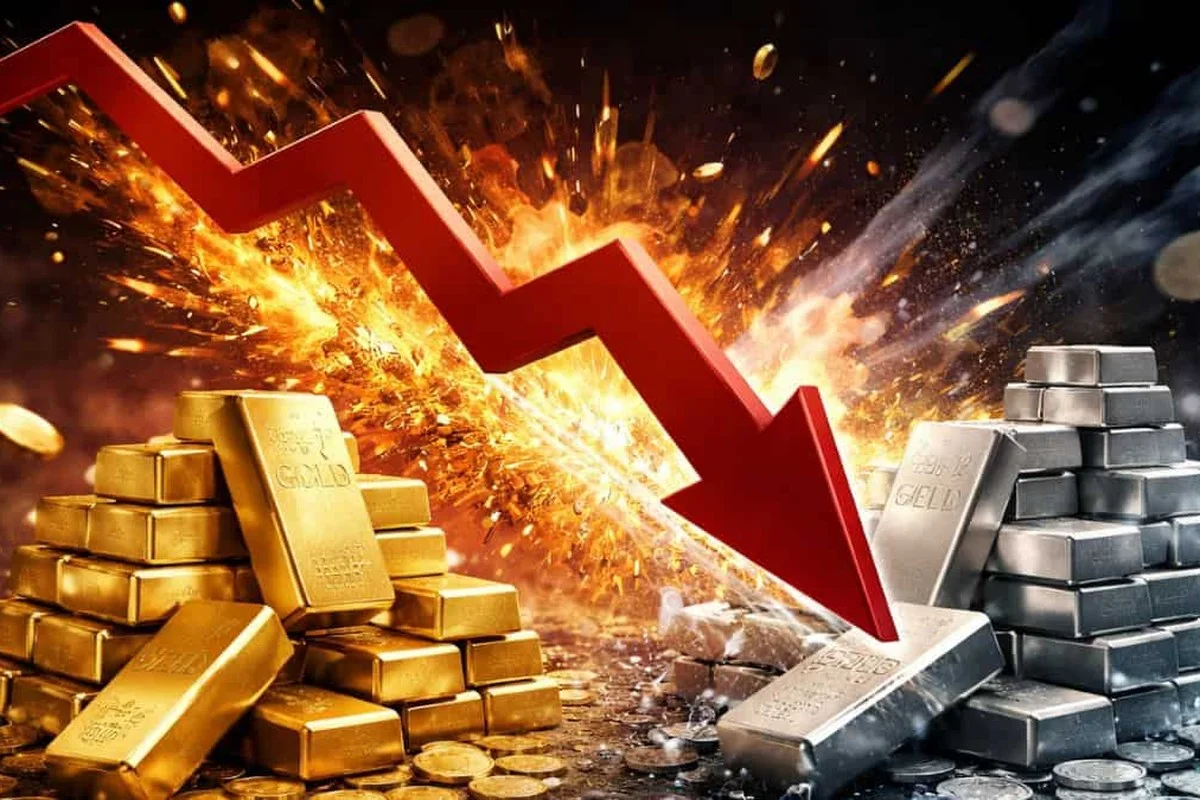
Silver prices fell sharply on Thursday, October 22, as the December futures contract on the Multi Commodity Exchange (MCX) dropped Rs 8,593 per kg to Rs 2,00,575. The contract touched its lowest level in seven months amid renewed pressure on precious metals.
Gold prices also weakened. MCX gold fell Rs 2,300 per 10 grams to Rs 1,43,600, its lowest level in two months. Silver has lost 10% so far in October, while gold is down 3.3%.
The selloff came as crude oil prices rose following deadly attacks in Saudi Arabia and growing concerns about energy supplies from the Middle East. Higher oil prices can add to inflation pressures, making it harder for the US Federal Reserve to reduce borrowing costs or potentially increasing expectations of further rate hikes.
Both precious metals recorded significant losses during Thursday's trading session. Silver faced the sharper monthly correction, while gold also moved to a two month low.
| Commodity | Price on October 22 | Daily fall | Monthly performance |
|---|---|---|---|
| MCX silver, December contract | Rs 2,00,575 per kg | Rs 8,593 per kg | Down 10% |
| MCX gold | Rs 1,43,600 per 10 grams | Rs 2,300 per 10 grams | Down 3.3% |
The price levels show the extent of the recent pressure on precious metals. Silver's monthly decline has been steeper than gold's, while both contracts have moved lower amid changing expectations for US monetary policy.
For Indian buyers, MCX futures prices provide a reference for domestic commodity trading. Retail gold and silver prices can differ because of factors such as purity, local taxes, dealer margins and other charges.
Readers tracking domestic rates can also follow WeloMoney's coverage of gold and silver prices in India for information on commodity prices across markets.
The latest decline has coincided with higher crude oil prices and uncertainty over the course of the conflict involving Iran and other countries in the Middle East. Deadly attacks in Saudi Arabia have raised concerns about energy flows from the region, adding to uncertainty in oil markets.
Brent crude rose 3.3% to $112.38 a barrel after touching its highest level in five months. During October, the benchmark has traded within a range of $97 to $112 a barrel, with prices supported by concerns about when the war with Iran will allow the global energy industry to return to normal.
Higher oil prices can feed into transportation, manufacturing and other business costs. If these increases keep inflation above central bank targets, policymakers may have less room to ease monetary policy. Expectations of higher interest rates can weigh on gold and silver because precious metals do not pay interest.
Gold and silver can respond differently to market conditions, but both are sensitive to changes in interest rate expectations, currency movements and investor demand. The latest price action shows that concerns about inflation and monetary policy are influencing precious metals alongside geopolitical uncertainty.
The rise in oil prices has added another variable for traders assessing the global economic outlook. Goldman Sachs recently raised its December Brent crude price forecast to $90 a barrel from $85, citing a risk premium of just over $20 a barrel.
That forecast is below Brent's October 22 market price of $112.38 a barrel. The difference highlights the uncertainty surrounding future oil prices and the extent to which geopolitical risks may be affecting current trading levels.
US President Donald Trump had played down concerns about the conflict and oil prices in September, saying the war would end after the midterm elections. However, hostilities have shown little sign of easing.
Earlier in October, Trump waived sanctions and tariffs on Russia amid concerns about supply shortages. Continued tensions in the Middle East have nevertheless kept attention focused on the availability of energy supplies and the risk of further price increases.
For precious metals, the direction of crude oil matters partly because of its effect on inflation expectations. A sustained rise in energy costs could complicate the Federal Reserve's efforts to bring inflation back to its 2% target.
Traders are assessing whether the Federal Reserve will keep interest rates unchanged at its October 27 to 28 meeting. Recent remarks by Fed Chair Kevin Warsh have offered few fresh clues about the central bank's next decision.
US consumer and producer inflation data released last week came in hotter than expected. That has strengthened expectations that borrowing costs could remain elevated for longer, even as officials are expected to hold rates steady at the October meeting.
The market is already looking beyond October to the December policy decision. Data from CME's FedWatch Tool showed that traders were pricing in an 86% probability of a rate increase in December.
The latest expectations can be summarised as follows:
These expectations remain market probabilities, not confirmed policy decisions. The Federal Reserve's actual decisions will depend on incoming economic data and policymakers' assessment of inflation and economic conditions.
The US Personal Consumption Expenditures (PCE) report due on October 29 is the next important data release for traders assessing the interest rate outlook. PCE inflation is closely watched as a measure of price pressures in the US economy.
If inflation remains high, expectations of tighter monetary policy could persist. That may continue to affect gold and silver through changes in interest rate expectations and the attractiveness of interest bearing assets.
A softer inflation reading could change those expectations, although the direction of precious metals would also depend on oil prices and geopolitical developments. The October PCE release will arrive shortly after the Federal Reserve's scheduled policy meeting, giving markets fresh information to assess.
The relationship between oil, inflation and interest rates also matters for wider financial markets. WeloMoney has previously covered sessions in which gold, silver and crude oil moved together, showing how commodity prices can feature in broader market movements.
Gold and silver traders will have several developments to track over the coming days. The immediate focus is on whether crude oil remains near recent highs and whether the latest inflation data changes expectations for Federal Reserve policy.
The main factors to monitor are:
The next major event on the calendar is the Federal Reserve meeting, followed by the US PCE inflation release. Together with developments in the Middle East, these events could shape expectations for interest rates and the near term direction of precious metals.
Silver prices fell amid rising crude oil prices, Middle East tensions and expectations of tighter US monetary policy. On October 22, the MCX December silver contract dropped Rs 8,593 per kg to Rs 2,00,575, its lowest level in seven months.
MCX gold fell Rs 2,300 per 10 grams to Rs 1,43,600 on October 22. This was its lowest level in two months, while gold prices were down 3.3% for October.
Silver prices have fallen 10% in October, while gold prices have declined 3.3%. These figures reflect the monthly performance cited for the precious metals as of October 22.
Higher crude oil prices can increase inflation pressures by raising energy and transportation costs. If inflation stays elevated, central banks may keep interest rates higher or consider further increases, which can weigh on precious metals that do not pay interest.
A December rate increase is a possibility priced in by traders, not a confirmed decision. CME's FedWatch Tool showed an 86% probability of a rate hike, while the Federal Reserve was expected to hold rates steady at its October 27 to 28 meeting.
US Personal Consumption Expenditures inflation data is due on October 29, 2026. Traders will assess the figures for fresh clues about inflation pressures and the Federal Reserve's possible December policy decision.
Financial journalist specializing in market analysis, stock research, and investment trends. Dedicated to providing accurate, timely insights for informed decision-making.
Credentials: Experienced financial journalist with expertise in equity markets and economic analysis
The information provided in this article is for educational and informational purposes only and should not be construed as financial, investment, or legal advice. welomoney does not provide personalized investment recommendations.
For detailed terms and conditions, please read our Disclaimer and Terms of Service.